






Show Notes
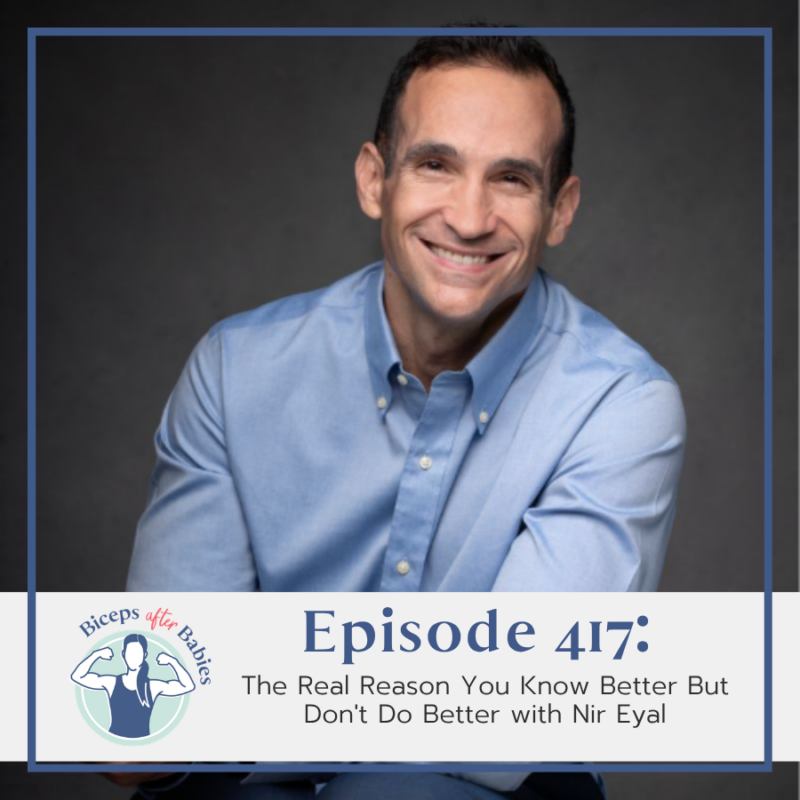
Have you ever thought, “I KNOW what I’m supposed to do… so why am I not doing it?” That’s exactly what I’m diving into in this episode with behavioral researcher and bestselling author Nir Eyal. We talk about why having the information, the plan, and even the desire to change isn’t always enough, and how the beliefs we have about ourselves and our circumstances can actually keep us stuck. We get into quitting, limiting beliefs, pain vs. suffering, and how changing the way we see a situation can completely change what we’re able to do. If you’ve ever felt like you know better but just can’t seem to do better, I think this conversation will really make you stop and think.
Follow me on Instagram and Tiktok!
Highlights
- The Inspiration for Beyond Belief: Readers Who Did Not Apply the Advice 3:46
- Motivation as a Triangle: Behavior, Benefit, and Belief 8:57
- How Beliefs Influence Motivation and Action 10:07
- Recognizing Limiting Beliefs: The Metaphor of Seeing Your Own Face 14:46
- Why People Quit and the Brain’s Primary Objective 19:07
- Identity Labels Can Become Personal Limitations 23:34
- The Buddhist Principle of the Second Arrow 30:00
- Chronic Pain, Sickness, and Illness 32:29
- Quitting Too Soon Versus Making a Deliberate Decision 41:46
- How Limiting Beliefs Appear to Be Facts 46:38
- Being Judgmental Toward Yourself 55:35
Links:
Nir's Website, LinkedIn, Instagram
Nir's Books:
Beyond Belief https://a.co/d/0e5K3njG
Hooked https://amzn.to/4o8wR5e
Indistractable https://amzn.to/4g26jk9
Free belief change guide:
www.nirandfar.com/beyond-belief-live
Bonus content and the 30-Day Belief Transformation Journal are here: nirandfar.com/beyond-belief
Introduction
You're listening to Biceps After Babies Radio Episode 417.
Hello and welcome to Biceps After Babies Radio. A podcast for ladies who know that fitness is about so much more than pounds lost or PR's. It's about feeling confident in your skin and empowered in your life. I'm your host Amber Brueseke, a registered nurse, personal trainer, wife and mom of four. Each week my guests and I will excite and motivate you to take action in your own personal fitness as we talk about nutrition, exercise, mindset, personal development and executing life with conscious intention. If your goal is to look, feel and be strong and experience transformation from the inside out, you my friend are in the right place. Thank you for tuning in. Now, let's jump into today's episode.
Hey, hey hey! Welcome back to another episode of Biceps After Babies Radio. I'm your host, Amber Brueseke, and I am so excited for you to hear today's conversation because the whole time I was nodding along and saying, yes, yes, yes. This is what more people need to hear. So be honest with me for a second about something. How many books have you read? How many podcasts have you listened to? How many Instagram posts have you saved? And then did absolutely nothing with that information. Like you nodded along the whole time. You're like, yes, that's exactly me. That would be so amazing. I should do this. And then you just kept doing the same things that you were doing before. I call it double tap culture, right? We double tap, we save something, we consume, and then we move on. And at the beginning of this conversation that I had with Nir, he kind of blew my mind that Plato was writing about this experience 2,500 years ago. Like it is a deeply fundamental human experience. So why does this happen? And even more importantly, what do we do about it? And that is exactly what today's guest on the podcast has spent the last 17 years researching. Nir Eyal is a behavioral researcher, a former Stanford professor, and the author of three books, Hooked, Indistractable, and his newest book, which was what we're talking about here on the podcast today, Beyond Belief. I ordered this book. I read it in three days and I was nodding my head along the entire time. So today on the podcast Nir is breaking down why knowing what to do is usually not the actual problem. He talks about what the missing piece of the motivation puzzle really is and how your beliefs are literally, not just metaphorically, but literally controlling what you're able to see and achieve. I guarantee this conversation is going to shift something for you. So let's dive in.
Amber B 02:44
All right. I am so excited to have this conversation with you, Nir. Welcome to the podcast.
Nir Eyal 02:49
Thanks Amber. Great to be with you.
Amber B 02:51
Yes. Okay. So I was turned on to this book by my friend, Monica Packer. She, she said, I think you're going to love this book. So I ordered it on Amazon and I read it in like three days. I blazed through it. It was fantastic. I mean, the whole time I was nodding my head. So I'm just really thrilled to have you on the podcast to share about it with my audience. So let's start out. This is your third book, correct?
Nir Eyal 03:13
Yes.
Amber B 03:14
Okay. So the first book is Hooked. Was Hooked your first book?
Nir Eyal 03:18
Right.
Amber B 03:19
Okay. And that was about habits. And then you wrote Indistractable, which is about distractions. And then now Beyond Belief, which is all about beliefs. Is there a through line through those three books or are they three complete separate topics that you just got interested in?
Nir Eyal 03:36
No, no, there's definitely a through line. And this is a really a culmination of, what is it now? 16, 17 years of research into human behavior. And so my specialty, I used to teach at the Stanford Graduate School of Business and later at the Hasselblad Institute of Design at Stanford. And my expertise is really about how do you design for behavior? So Hooked was about how do you build habit forming products? And the model has been used with companies like FitBot to help people get hooked to exercise companies like Duolingo to help people get hooked onto learning a new language. And then Indistractable explores the flip side. If Hooked was about building good habits, Indistractable was about how do we break those bad habits that can lead us towards distraction. And then with Beyond Belief, this came out of frustration for me. I wrote Beyond Belief. The genesis of it was that I started getting some funny phone calls and the phone calls came from readers. You see, every week I do these office hours where anybody can call me. They've read my books. We can talk about anything they want to talk about. I love hearing from my readers and you know, maybe not every call, but maybe one out of 20 calls would sound something like this. Somebody would call and say, Hey, I read your book Indistractable. You know, distraction is such a big problem these days. A lot of people found value in it, but some people would call me and they'd say, Hey, I read the book. I really liked it, but I just wanted to let you know that it didn't work for me. And I'd say, Oh, tell me more. Why didn't it work? What happened? You know, I've spent five years writing that book. There's 30 pages of citations to peer reviewed studies. It changed my life to make myself indistractable. You know, let's go step by step. Tell me about step one. How'd step one go for you? And they'd say, Oh, you know, uh, I read step one. I remember reading it. I just didn't, um, I didn't do that one.
Amber B 05:19
Yeah.
Nir Eyal 05:20
Okay. No, I understand. Maybe you skipped it. Maybe it was a little difficult for you. Okay. Let's go on to step two. How did step two go for you? You know, Nir, I read step two. I really enjoyed that part of the book, but you know, I didn't do that part either. And people would wait for months to tell the author of a book that they had read that the thing that they didn't do didn't work.
Amber B 05:41
Yeah. Right. Weird.
Nir Eyal 05:43
At first. Yeah. At first I thought, well, what, what's going on? Did I write a bad book? Is it my readers? What, what's what, what did I do? And then I realized, you know what, if I'm honest with myself, I've also done this. Like I have bookshelves full of books that I haven't read. I've listened to all the podcasts and the YouTube videos and talk to the experts and gurus to get advice that I haven't put into practice. And so I really wanted to know why, like why is it that even when we know exactly what we should do and we want the benefits of those behaviors, we don't do it. Like,
Amber B 06:18
Yeah.
Nir Eyal 06:19
Isn't that such a fascinating question? It turns out it's not a new question. In fact, the Greek philosopher Plato asked this question 2,500 years ago, he called it a crassia, the tendency to do things against our better interest. So this is not a new question. I just don't think anybody had really answered it in a way that that was practical. And so that's what I spent the next, the last six years of my life researching and diving into is, is what's missing when we know what to do. We want the benefits of doing it, but we're not doing it. What's the mystery here? What's, what's missing?
Amber B 06:48
Yeah. That's so interesting. I was going to ask you and I think you answered the question. I mean, I mean I call what you're saying where it's like you read something and you nod at like a double tap culture. Like we double tap things on Instagram. That sounds really great, but then that's where it stops. Like we don't actually do anything with that information. So I was wondering if that was a new phenomenon, but very obviously if Plato's talking about it eons ago, this is, this is not something that is just around because of our social media culture. It's a deeply human psychological issue that we're, that we're dealing with.
Nir Eyal 07:17
That’s right.
Amber B 07:18
So you've teased it, but what is, what is the answer? Why, why do we do things when we want to do it is in our best interest and yet we still don't actually take the action we know we want to take.
Nir Eyal 07:32
I'm glad you asked. Because I wanted to know, too.
Amber B 07:35
That's the cliffhanger. Go read the book.
Nir Eyal 07:37
Yeah. Yeah. Okay. Goodbye. I see it. No, I'll share every, I don't like to just tease these topics. I like to give people very practical, useful information. Uh, and so this is what I spent the past six years really looking into and it turns out that what we get wrong is the entire model of motivation. You know, I was an Econ major in college and what they teach you in econ is that in order to incentivize people to do something, if you want a certain behavior, you have to provide a certain benefit, right? That's how economic incentives work. If you want the salary, you show up to your job that if you have some kind of a benefit, you do the behavior. And as long as you know the behavior and as long as you know the benefit and why of why you're doing it, well, that's enough that there's a straight line between behavior and benefit. But come on now, look around. That can't be right. Cause if that was right, we would all have six pack abs and be multimillionaire.
Amber B 08:30
Yeah.
Nir Eyal 08:31
Because the information is not scarce. Maybe our grandparents could say, Oh, I just don't know what to do. Today, Google it, read a book, watch a podcast, like all the info. There's no more secrets. All the information is out there. You want to start a business, you want to get in shape, you want to raise a great family. Like it's all out there. Just ask. Right? So it can't just be that we don't know what to do. That excuse is gone. So what is it? Well, what it is is that our, our metaphor of motivation is like a straight line between behavior and benefit, but motivation doesn't work that way. Motivation is not a straight line. Motivation is a triangle that in order to sustain our motivation, which turns out by the way, to be the number one determinant of whether you will succeed. You know, the number one determinant of whether you will succeed. This is what studies have found. It's not your intelligence. It's not resources. It's not skill. It's not some special wisdom or information. It's whether or not you quit. That's it. You don't have a PhD for that. The number one determinant of whether you will succeed is whether or not you quit. So it's persistence. So what makes us persist? What makes us persist is sustaining motivation.
What makes us sustain motivation? You need three things. Not only do you need to know what you're going to do, the behavior, which these days is not very hard to figure out. What do I do? Then you need the benefit. Why am I doing it? But most importantly, the base of the triangle is you have to have the belief. And that's the part I think we don't explore enough that you need the benefit, the behavior, and finally the belief. Like, let me demonstrate. If I work for a boss who I don't believe is going to give me a particular benefit. Okay. Maybe I don't believe in their leadership. Maybe I don't believe they're going to give me that, that promotion I deserve, that raise. If I don't believe that my boss has my best interest at heart, that I'm not going to get the benefit. I'm going to quit. I'm going to lose motivation. Maybe I'll slack off and find another job. Conversely, if I don't believe in my own ability to do a behavior, even if I know exactly what the behavior is that I need to do, if I don't think I can do it, I'm not ready for this. People like me, don't do this. I'm not good enough. This is too hard, et cetera, et cetera. If I don't believe in my own ability to do the behavior, I'm also not going to do it. So you have to have all three at the same time, the behavior, the benefit, and most importantly, the belief.
Amber B 10:51
That's really good. One of the things I hear a lot of people saying a lot is that they lose motivation when they don't see results. And I wonder would you put that under the belief part of that triangle where it's, it's not that you don't see results. It's that you're making taking that as an indication that it's, you can't achieve it. Like it's not possible for you. And that would be the underlying belief that would make them quit if they're not seeing results.
Nir Eyal 11:16
Okay.
So that's what I used to think.
Amber B 11:18
Yeah.
Nir Eyal 11:19
And I don't think that anymore. Because when people say that they're not lying, they literally don't see the results, quite literally. So there's three powers of belief. So the rest of the book is really about, okay, if, if the key to success is persistence, if the key to persistence is motivation and the key to motivation is, is a belief, how do I use the powers of belief to sustain, you know, up, back up the chain. And so that's where we get into what, what I call the three powers of belief. The first of which is the power of attention, meaning the power of your beliefs to literally change what you're able to see. Okay. I’m not talking metaphorically.
Amber B 11:57
The filtering that we do.
Nir Eyal 12:00
Exactly. Yeah, exactly. Like literally. So, so let me give you, I'll give you a quick example of a study that blew my mind. So they asked two groups of people to do a very simple task. The task was look at this newspaper, flip through the pages and count how many images you see. Just count the images. How many pictures do you see in the newspaper? One, two, three, four, five. The two groups were people who believed they were lucky or people who believed they were unlucky. Okay. It wasn't a fact. They didn't follow these people around to see if they're actually lucky or unlucky. They just asked them, do you believe you're lucky or unlucky? And they took people who identified at either ends of those spec of that spectrum. The people who believe they were unlucky to do this task took on average two and a half minutes. Okay. The people who believe they were lucky took 11 seconds. Why this huge gap, two and a half minutes versus 11 seconds. Why the difference? Well, on page two of this newspaper, there was one image that said in big bold letters, there are 43 images in this newspaper, collect your reward. The people who believe they were lucky, saw that image, processed it, read it, got it from their chair, collected their reward and were gone out the door in 11 seconds. The people who believe they were unlucky, despite correctly counting the number of images, we know they saw the image because they actually did put 43 images on the form, but they took two and a half minutes because they didn't process what that image said. They literally didn't see what was right in front of their face.
So when people tell us I'm losing motivation because I don't see results, they don't see results. They can't see results. Their beliefs won't let them see results. So it's not their fault. It's not that they're being a bummer. They're not being, you know, it's just that reality isn't what you think it is. That none of us are able to process with our puny little brains. We process only 0.000045% of the information coming into our brains. It's a huge gap. Our brains literally can't process all that information. It's like I remember that movie, a few good men where Jack Nicholson says you can't handle the truth.
Amber B 14:15
Yeah.
Nir Eyal 14:16
That's exactly right. Our brains literally can't handle all that information. So they don't see reality as it is. You see reality as you believe it to be. So if you have these underlying what we call limiting beliefs, beliefs that decrease our motivation and increase our suffering, you will see less progress than someone else. You will feel more pain and suffering than someone else and your agency will decrease. And so you will be more likely to quit, not because you reached your limits, but because you believe you have.
Amber B 14:46
Yeah. Oh, so good. So if that's the case, I mean, you're making the case for like how important beliefs are and it's very hard for us as humans to sometimes see what our beliefs are. It's not like something I can touch and feel and taste, right? It's like, how do, how do we start to understand what our limiting beliefs are so that because it's so important, right? So we can start to shift them. So we can start to change them. What is the first step to starting to wake up to some of our limiting beliefs?
Nir Eyal 15:16
Yeah. I love that you use the word wake up because, um, the most important thing, the most important first step before you start changing your limiting beliefs is to realize that you can't see them. So the metaphor I like to use is that it's like your face. Yeah. So we all have a face. We can all see other people's faces, but you can't see your own face. Right? So if I asked you, Amber, look at your face, you can't look at your own face. You have one, but you can't see it. Not like the way you could see your hands or your feet. Even though you can see other people's faces, you can see other people's limiting beliefs, right? You know, you can see your kids, your spouse, your coworkers, your boss, you can see all their problems, right?
Amber B 15:55
That's really easy to see.
Nir Eyal 15:57
That’s so easy.
Amber B 15:58
Yeah. Yeah.
Nir Eyal 15:59
But when it comes to our own limiting beliefs, we can't see them. Why? Because to us, our limiting beliefs feel like facts, but they're not facts. A fact has a very specific definition. A fact is an objective truth. It is something that is true whether or not you believe in it. So for example, sorry to offend any of your listeners who might be flat earthers. I hate to break it to you. Flat earthers. The world is a sphere and it doesn't care what you believe. That's a fact. You cannot change facts.
Amber B 16:27
Yeah.
Nir Eyal 16:28
On the other end of the spectrum is what we call faith. Faith is a conviction that does not require evidence. God rewards the righteous. There's no amount of evidence that's going to convince someone who has that faith to change their conviction, nor should it. It's a matter of faith. But in between fact and faith is something completely different, which is what we call a belief, a belief. What makes beliefs so amazingly powerful and why I think all of us need to understand the psychology of belief is that unlike faith, which people almost never change and unlike facts, which we cannot change, beliefs are malleable. Hmm. So the most important thing I can give folks is to understand that beliefs are tools, not truths. Okay. So we'll stay with that for a minute. Beliefs are tools, not truths, not fact, not objectively true. It's a choice. They're tools because beliefs are predictions about the future. Can I, or can't I, should I, or should I not? Well, it's based on evidence. It's always based on evidence of the definition of a belief is a conviction that is open to revision based on evidence. That's the definition of a belief. The thing is these, this is evidence about what might happen in the future.
And so that's the most important thing to understand is that you don't see reality clearly. None of us do. You can do far more than you think you can. And then finally, the third fundamental truth is that what you believe shapes your perception of reality, doesn't actually change reality. We're not vibrating at the cosmic, whatever, whatever of the universe. That's not what we're talking about here. That stuff actually can backfire, but rather how, what you believe literally affects how you perceive reality. So if you give yourself that intellectual humility to realize that, wait a minute, I don't see the world clearly. None of us do. My brain won't let me. So how sure am I that I can't. Right? That, I think to me, that's incredibly liberating. And in fact, that's why I call them liberating beliefs. So the whole goal here is to take those limiting beliefs, identify them, see our face, right? How do we see our face? We have to reflect. We need a mirror. We need something outside of ourselves to see the truth, to see how we look. And that's exactly what happens when it comes to our limiting beliefs in order to, to help us understand that our limiting beliefs are not facts. They're not objective truths. They're just convictions based on evidence. In order to help us see that we have to have a process. And it turns out there's a great process to help us uncover those limiting beliefs and turn them into liberating ones. But the first step is to realize we don't see reality clearly.
Amber B 19:07
Yeah, that's really good. You mentioned, you mentioned that people are who are most successful at people who don't quit. Right. And so this idea of like staying in it, even when it's hard and not quitting is obviously like nine tenths of the battle. And a lot of, a lot of my listeners struggle with, they start something, they're all excited, they have the motivation and then they, they quit. Right. They don't, they don't follow through or they, you know, life just happens and they stop doing whatever it is that they said they wanted to do. And they'll, and they'll give reasons like, you know, I'm too busy or it's not working. Right. That's when I hear a lot. It's like, I'm not getting the results. Right. Life got in the way, too hard. Right. Um, and, and those are often cover stories. So what is happening underneath those cover stories?
Nir Eyal 19:52
Yeah. So why do we have limiting beliefs? Why would the brain have a system in place that reduces your motivation and increases your suffering?
Amber B 20:01
That's a great question.
Nir Eyal 20:03
Counterproductive. Yeah. Why do we even have limiting beliefs? Well, it's your brain doing your brain's most important job. Your most, your brain's most important job is not to make you happy. It's not to give you a great body. It's not to help you be fulfilled or meet your full potential. Yeah, sorry. Your brain doesn't care about any of that stuff. Yeah. Your brain's primary directive is to keep you alive. That's what your brain thinks is more important than anything else. So what's the best way to keep you alive? Well, the brain is going to think, what did you do yesterday? That got you here today. So the brain is constantly going to feed you these lies to keep you doing whatever you did and whatever you believed yesterday, because whatever you did yesterday,
Amber B 20:48
Because you lived yesterday.
Nir Eyal 20:50
Exactly, it worked yesterday. And so you're alive today. So keep doing what you've always done. Yeah. So if your brain doing its job, it's trying to keep you safe. Right? So new things are risky, but old things are safe. So if I want to keep you alive, I just want to minimize risk. Keep doing, keep believing what you've always done. So knowing that fact that this is what I call the brain hates changing its mind. The brain hates changing its mind. You are hardwired to not want to change your mind. But of course, if you don't change, you're stuck, right? That life requires us to grow, to change, to evolve. So we have to be aware of our brain's tendency to pull us back into limiting beliefs. I have to do this myself. Sitting with this material for years and years, I constantly have to remind myself, wait, that's just a limiting belief. That's not serving me. What's a new liberating belief that I can adopt instead. And so having that consciousness, being aware that my brain is always trying to suck me back into passivity to keep me safe. I can say, thanks, I appreciate the suggestion, but I'm going to, I'm going to try something else. Now the good thing is you don't have to change your beliefs. Okay. If you come into this saying, um, you know, I'm, I, I hate exercise. No, I love exercise.
Amber B 22:06
Yeah. Right.
Nir Eyal 22:07
Or I, I, I'm not good at this. No, I am good at this. Like, you know, affirmations that don't typically work because the brain has a pretty good BS detector.
Amber B 22:17
Sure.
Nir Eyal 22:18
So it can't be out of thin air. Your, your, your new, uh, liberating beliefs have to be grounded in some kind of, of evidence. Uh, that's the very definition of, of these liberating beliefs. But what we want to do is to ask ourselves, there's a, there's a bit of a process which we can talk to. It comes from what's called inquiry-based stress reduction. What we're going to do is essentially collect what I call a portfolio of perspectives. Okay. We're not going to rush in there and be, and say, uh, I believe this. Now I'm going to believe that. It's almost like, um, when you go buy shoes at the shoe store, okay. You look at a bunch of shoes, you let, you see the ones you like. You don't say, Oh, give me that one. No, you say, Hey, can I have this a size smaller, a size bigger, just to make sure it fits right. We try it on for size. We see how we feel. And if we like it, we get the pair that fits. It's exactly how we should think of beliefs, that beliefs are not fixed. We can change them. Beliefs are tools, not truths. The thing we want to avoid is sticking with beliefs that we've always had just because we've always had them. One of the worst things I've heard, I hear one of the most dangerous phrases in the English language is I am, whatever comes after I am be very, very careful. Right. Right. I'm not good at this. Uh, uh, I, I am suffering from such and such. I am whatever, insert limiting belief right after that, because now you're fixed. That's who you are. am a Sagittarius, right? I am, uh, you know, Myers Briggs, whatever, all these things are, are nonsense because what you're doing is you're creating a limitation based on your label. Right. Which is what, what, what I love so much about your show, you know, Babies After Biceps, sorry, Biceps After Babies. I got the order wrong. Sorry. That's so fantastic because how many people have this limiting belief that, Oh, exercise is not for me because I am a mom.
Amber B 24:11
Yeah. Yeah.
Nir Eyal 24:12
What does that mean? Like you can't exercise. Is it like your eye color? Are you deciding who you are? Yeah. So we have to be very, very careful. Most importantly of these limits because of these labels, because our labels can become our limits.
Amber B 24:24
Yeah. And then would you also say, I mean, one of the things that I love that you talk about a lot in the book is this idea that beliefs are malleable and that they can either be helpful in reaching your goal or harmful in, in reaching your goals. And so would you then argue, cause what you're talking about is, is a, is a identity label, right? And that's a, there's a deep connection with what that identity means and what that type of identity does. And that can either again, help us or limit us. So would you be in favor of identifying the identities that would be more supportive of the goals and, and trying to program those into us and then obviously leaving the identities behind that are getting in the way of progress?
Nir Eyal 25:01
Absolutely. Absolutely. So this is what I had to do with my own ADHD. So I was diagnosed with ADHD a few years ago. And I remember at first it was a very, it was very satisfying because it explained so much. And this is why we love, you know, those Cosmo quizzes. We love the personality.
Amber B 25:16
Tell me who I am.
Nir Eyal 25:17
Tell me who I am. Right. Because it, you know, and of course, you know, it's called the PT Barnum effect that, you know, that's why you read an astrology chart for any Zodiac and you'll say it feels just like you. Yeah. That's how they're written. Yeah. And so we look for these diagnoses and especially today on social media, you know, if you want to look for a malady, you'll find it, right? You'll find, Oh, I have anxiety. I have imposter syndrome. Uh, you know, what, what, what a crock of shit. I mean, there, there's no such thing as imposter syndrome. It sounds like it's medical. It's not in the DSM. It's not a diet. Right. Nobody walks into a doctor and the doctor says, Oh, I'm sorry, you have imposter syndrome. No, it's not a thing, people, it's a limiting belief.
Amber B 25:58
Yeah.
Nir Eyal 25:58
So for me, for my ADHD, which, you know, I was properly diagnosed, I did take the evaluation, but at first it was, it was very comforting because it explained so much about my struggles. Sure. Right. But then it started to backfire. Every time I would get distracted, I would say, there's my ADHD, right? I have a chronic brain disease in air quotes, right? That I'm, it's never going to go away. Why do I struggle with this? Is it always going to be here? How am I going to finish this, this task I'm working on? And guess what happened now? All of my attentional resources were focused on my suffering and I wasn't concentrating on the thing that I wanted to do. So the belief became reality. The belief became reality based on my perception. So a label or a diagnosis is like a map. Okay. I'm not saying ADHD isn't real. That's not what I'm arguing at all. I'm not saying it's not hurtful. It's not difficult, but a label or diagnosis is like a map. Okay. So here's the treasure map. X marks the spot. Here's your goal. And you're here on the map. And so we should use that diagnosis or that label as a way to navigate, to get to our goal. But you're not the map. I'm not the label. Okay. That's not who I am. It's something that's meant to help me on my path. So if you're struggling with something, that's just information. That's just information.
You know, if you really want the unlock, here's the secret to accomplishing your goals, to sustaining motivation, whether it's physical goals, whether it's, you know, uh, financial goals, whether it's relationship goals, it's the ability to separate pain from suffering. That's it. Like that is literally it pain is not suffering pain and suffering happen in two separate parts of the brain. So what creates people who can sustain motivation is that they get the same information. They feel the same pain, but they process it completely differently. Like for example, let's say right now, uh, if, if Amber, you told me, Hey, uh, Nir, I have to stop the interview because I'm getting heart palpitations and I'm getting sweaty and my muscles feel really sore right now. If that happened right this second, we'd have to stop the interview and rush you to the hospital because something would be seriously wrong. But if you had those exact same symptoms, the same information, the same thing was happening, but you were in the gym, you would tell me you're having a great workout.
Amber B 28:25
Yeah.
Nir Eyal 28:26
What changed? Context.
Amber B 28:28
Yeah. The content.
Nir Eyal 28:29
What change was the story, the belief in one context, if that's not appropriate in another context. Yeah. That's what's supposed to happen. So the major unlock here is that when you feel those same feelings, I don't want to do this. I'm not ready. This hurts. This is too hard. I'm not cut out for this. That's not who I am. How can you process that information differently? So now when I get distracted, what's the story I tell? Is it I have a chronic brain disease? No, it's, this is a skill I'm getting better at. What does that liberating belief do to my motivation and my suffering versus all you have a chronic brain disease, right? What does that do in terms of focusing my attentional resources onto what matters versus what I can't change now? Is it a chronic brain disease? Is it not a chronic brain disease? Who knows? Who cares? I'm not a doctor, but for me, I found that I'm much more likely to do what I want to get back to work. And you know what? I've written three bestsellers, even though I have ADHD, you know, the story now is, Hey, when I'm into something, when I love something, I don't get distracted. It's when I'm doing shit I don't want to do. It's boring.
Amber B 29:40
Yeah.
Nir Eyal 29:40
That's when I get distracted. So when I'm into a topic, Oh man, you can't tear me away. So there's a benefit there. Again, it's just a story. It's just information. So for, for folks who are following you, what's that story I can tell myself when I'm exercising, you know, I used to be clinically obese and not just overweight, but actually clinically obese. And today I'm 48 years old. I'm in the best shape of my life. And what changed for me was that story that I tell about fitness. It's not this sucks. It's hard. I'm hungry. I don't have time. The, all these limiting beliefs I used to have. Now, the liberating belief that I constantly repeat to myself literally every day is this is what it feels like to get better. For, for years, I had to put on a post-it note and I had it everywhere. Now I've memorized it. This is what it feels like to get better. So now the same exact symptoms, the same information that's entering my brain that used to be suffering is no longer suffering. You know what? If I'm trying to cut and I'm on a calorie restriction before, Oh, I'm hungry. Oh no. What's going to happen. I'm hungry. I'm okay. This is what it feels like to get better. I'm hungry. Okay. Who says that's suffering? It's not suffering if I don't believe it is.
Amber B 30:55
Yeah. Yeah. Have you heard of the second arrow? That sounds like the Buddhist principle of the second arrow. Yeah.
Nir Eyal 30:59
This is very Buddhist. In fact, yes, yes. Yeah. It's interesting. I didn't start from a Buddhist perspective, but the science is definitely showing us that there's a lot of evidence that Buddhism has been right about this for a long, really long time. Why don't you share that story? Actually, it's a really good metaphor.
Amber B 31:14
Yeah. I mean I, you'd probably do a better job of it than I would. I just know the concept is this idea that like there's the first arrow, right? That's the pain, right? We all go through pain in our lives. There's, we're going to have things that are negative that happened to us. And so pain happens, but then the suffering is optional because then you have the second arrow, like the twisting of the arrow, uh, that, that is optional. And you don't have to do that. And to me, what you were saying is like the suffering becomes the mind chatter around it. It becomes how we process that suffer or that pain. And it either makes it better or worse. Like you're saying, uh, if we, if we have this experience, we can have mind chatter. It's like, it's not supposed to happen like this. I'm never going to be successful. And that's going to cause suffering. Or I love this idea of like, this is how it goes. This is, this is the process. Like everything's going, right? Everything's going right. What if this is exactly how it's supposed to unfold? And like, I'm getting better, you know, going through this. And I think that's such an empowering way to go through life because there are going to be crappy things that happen and not adding more crappiness to that is going to be a much more fulfilling way to go through, through your day to day.
Nir Eyal 32:18
Yeah. And what, what blew my mind is, you know, I kind of thought, all right, I can accept this when it comes to motivational speeches and work hard and self-discipline, but it's so much deeper than that. Like that same line of thinking that you just described literally causes chronic pain. You know, in the book, I talk about people who have been able to reverse fibromyalgia and chronic back pain and all these things that I thought, well, you know, that's, that's, that's, that's a fact, right? Like if you have chronic back pain, by the way, I used to have, I used to have terrible back pain. And, um, and chronic pain, by the way, is different than acute pain, you know, just like pain isn't suffering. Sickness is not illness. Sickness and illness are two separate things. Sickness is in the body. Okay. A broken bone cancer, that's sickness. Illness is in the brain. And did you know that 80% of our healthcare spending 80% goes into illness, not sickness. Things like insomnia, uh, depression, anxiety, ADHD. Like, these are things that we perceive not things that are, you know, a broken bone that we can see on a test. There's no ADHD X-ray. There's no ADHD blood tests. There's no anxiety blood tests. These are perceptual. So not that they're not real. They're all real. Sickness and illness are equally real. But one is reinforced and amplified based on our beliefs. So with my back pain, how did I get into this chronic pain pain loop? So chronic pain is defined as pain that has no physical symptom, nothing that we can see and yet persists after six months, because after six months, the body look typically, if it's a brain and a body that's operating correctly, your brain actually will learn to turn down the pain signal. Because again, pain is just information.
You know, for example, we know that when we show doctors scans of people's spine, did you know that they cannot determine who has pain with a slipped disc? So you can have a, we can show a doctor an X-ray of a spine and there's no correlation between whether someone has a slipped disc and whether they feel any pain. Yeah. What, how can that be? Because the brain can tune out suffering. It literally can ignore information. So this is what's happening right now, right? I'll prove it to you. This second, your brain is absorbing 11 million bits of information. 11 million bits. That's like reading war and peace every second, twice. I imagine 2000 pages of texts every single second. That's what your brain is currently absorbing. The light entering your eyes, the sound of my voice in your ears, the ambient temperature of the room. Your brain is processing that information, but conscious awareness, what you call the real world, that's only 50 bits per second. So your thoughts can only process about one sentence per second. So your brain cannot see reality clearly. There's too much information. You see reality through this tiny keyhole of attention that we call the real world. So if the brain right now can, can, can exclude all this information, it's not processing in conscious awareness. It can also exclude pain, like literally just tune out pain. And so in the book, I document people who use hypnosed sedation, for example, which is so wild.
Amber B 35:37
That was wild.
Nir Eyal 35:38
So wild.
Amber B 35:39
But surgery without like anesthesia is wild.
Nir Eyal 35:42
Yeah, I would not. I honestly, I would not believe it unless I saw it myself. I have seen the video of operations where people undergo surgery without anesthesia, like serious operations, scapula cutting into flesh, metal screws yanked from bone without anesthesia. How is that possible? It's done because some people learn, it's not, it's not in their genes. It's not some magic. They're basically just using the power of attention, the power of their beliefs to move that attentional focus on the 50 bits. That doesn't include suffering.
Amber B 36:15
Yeah. It’s wild.
Nir Eyal 36:16
And so if we can do that during the pain of surgery without anesthesia, you tell me we can't do that in the gym. Of course you can.
Amber B 36:25
That's crazy. Um, yeah, that blew my mind. My husband's actually a surgeon and so I'm reading this and I'm like, that is insane. That, that are the power. I mean, this is, this was in the attention section if I remember correctly, like it's the power of your attention of like where you place your attention matters and you are in charge of where you place your attention. And so if you can be in control of that and intentional about it, I mean, it's amazing what you can do with the power of your brain. Yeah. It's wild.
Nir Eyal 36:51
Yeah. And how crazy it is that it's not, it's not actually unique. So I profiled this one guy by the name of Daniel Gistler who goes through this surgery after learning hypno sedation. And it turns out tens of thousands of people do this all the time. Like it's not that unusual. It's very well documented. And I'm a very skeptical guy. I don't like any of the woo woo. I want to see the science. The science is amazing about hypno sedation. The science is now there's a new technique that we call pain reprocessing therapy that, you know, we used to have, I'm sure your, your husband will know all about this, but you know, in the medical community, we used to obsess about pain. You know, you go to the doctor, they take your vital signs and one of the vital signs, a new vital sign, how’s your pain?
Amber B 37:28
Pain is the vital sign.
Nir Eyal 37:29
Exactly. How's your pain? How's your pain? How's your pain? And what that did was create this generation of people who are constantly focusing on their pain. And they're, we were constantly told that pain is suffering. That pain is bad. Escape pain. So what did that do? That made us suffer more because we were over fixating on it. Right. And so what's happening now is that there's this, that now the pendulum is really swinging the other way. So for example, how did I cure my back pain? I knew that there wasn't any physical cause, right? But what I, so what I started to do was I started using pain reprocessing therapy, which, which kind of tells you the opposite of the traditional advice. When I first had terrible back pain, it was, Oh, you know, if you're getting one of those pain spasms, back spasms, you should lay down, rest, ice it, heat it, you know, just don't make it hurt. Don't make it hurt. Cause that could be, make it worse. And so I would go down this anxiety spiral just like I used to with my ADHD, you know, and make it worse and worse and worse because it's called the fear, pain, fear loop. And when you fear something, it makes the pain worse. When the pain is worse, it makes you fear it more. And so you get down this terrible spiral, which is the cause we think of chronic pain. It's called neuroplastic pain.
And so the antidote to that was proving to myself, collecting evidence to change my belief. My belief was my back pain is because something's broken and it's never going to go away. And what if I keep feeling like this and it's going to get worse? And of course that's what happened versus, Hey, it's information. Pain is information. So now whenever I do get that spike of back pain, sometimes it still happens. Not as much as it used to. I don't avoid it. I do the same movement 10 times. Like I literally will do the same thing 10 times to teach my brain. Okay. It's information. I'm safe. I'm safe. I'm safe. Right. It's just information. And by doing that, you're lowering the volume of that pain. Now, again, this doesn't work for physiological pain, right? If you have a broken bone, don't do this.
Amber B 39:32
Sure. Yeah.
Nir Eyal 39:33
But if it's pain that persisted for more than six months, your brain should learn to tune out that pain. If there's no physical cause that we can detect. So this is, this is how we do it. And again, it's by changing these beliefs. It's telling yourself you're safe versus worrying and stressing and increasing the fear around what might happen.
Amber B 39:52
What I love about that is that you're not, it's not like you're ignoring the pain, right? You just say it's information and then you're retraining your brain of how it processes that information and, and your, and your relationship to that information, right? Before it was really scary and awful. And I want to get out of this. And then you're retraining that, that relationship. It was interesting. Um, I've had four babies and that, that pain cycle that you were talking about the fearing of pain, and then you experience more pain and then it causes you to fear it more. That's the whole idea of like hypnotherapy when it comes to birthing babies. It's like if we don't fear the pain and if we breathe into it and know it's, it's natural and normal and we're bringing the baby down and all of those things. Um, I just remember that really sticking with me and during labor.
Nir Eyal 40:34
Just curious, by the way, did you find that, um, it was easier or less painful with each successive delivery? Or was it the same?
Amber B 40:43
Uh, no, my fourth was actually my hardest.
Nir Eyal 40:46
Really? Interesting.
Amber B 40:47
Yeah. I got, um, I have four babies. My first two, I had epidurals and my last two I didn't. So I've experienced it multiple ways with multiple kids. Um, my third was great and easy. And then my fourth was not. Um, and I, I mean, I think different babies, different positioning, but yeah. No,
Nir Eyal 41:04
It was, uh, like because of complications or just,
Amber B 41:06
No, it just was really painful. And like his birth was just, it was, uh, a lot more painful than my, than my previous one. Actually, after I had him, I, I said, I, if I had a fifth, which I'm not going to, uh, but if I had a fifth, I don't know if I do epidural or natural because my third one was great. And I loved my third one. And then my fourth one wasn't, wasn't so awesome. Um, okay. I have, I have, I would love your thoughts about this idea about quitting, because I think sometimes when I'm talking with clients and, and they're there, there's a kind of quitting that happens accidentally, right? It's like, we just kind of stopped doing the thing that we kind of know we're supposed to do, or we want to be doing, but we just kind of stop it. But then it's like the thoughtful thinking about quitting and making a decision about it. Um, so is, is there a version of quitting that, that is thoughtful and, um, and you know, it's the right fall to quit this thing versus the just falling off the wagon type of quitting. And did you see any difference in that psychologically?
Nir Eyal 42:07
Totally. Absolutely. Absolutely. So, um, it's not that quitting is bad. It's that quitting for the wrong reasons. Quitting too soon is when we get into trouble. Quitting too soon is a destruction of your potential of your, of, of, of what you don't want is to live your life in regret of, ah, why didn't I do that when I had the chance?
Amber B 42:25
How do we know if it's too soon?
Nir Eyal 42:28
How do we know if it's too soon? Okay. So there's three criteria. There's three easy things to remember. Okay. Uh, and again, it's not that quitting is bad. It's like quitting too soon is the problem. So the first criteria is, am I still learning?
Amber B 42:42
Oh, I like that.
Nir Eyal 42:43
So, you know, there's many things in life where, uh, where you hit a plateau where, uh, persistence, uh, doesn't really pay off. So, if you are still learning from something, uh, that's okay. Like for example, let's say that I knew that if you tried something five more times on the sixth time, you're going to succeed. You're going to go on five more dates and the sixth one, you're going to find the love of your life. You're going to make five more sales calls and the sixth one, you're going to close that deal. Right? So if I knew that, if I had a time machine and can travel into the future, even though you're failing right now, if I knew that because you're learning on the sixth time, Hey, you're, you're gonna, you're gonna get what you want. You're going to succeed. How quickly would you want to fail? You'd be like, yeah, bring it on. I want to fail. I want to fail. Come on, let's get to the sixth time. So that's the first thing. So are you still learning?
The second criteria is have you met your mile marker? Now your goal, your mile marker. So what this means is, okay, so here's what happens when we just have kind of a lofty goal. Okay. I set my new year's resolution January 1st and, uh, uh, I'm just going to get in shape this year. Here's what invariably happens. When it gets difficult. That's when I start getting this chatter in my mind of, uh, I don't have time today. Let me, let me skip. Uh, I'm not ready for this. It's too hard. Maybe next year. And then that's when you have this kind of quiet quitting that you described. Whereas when you set a mile marker in advance, so I am going to go to the gym every day or do some kind of physical activity every single day for 30 days, 60 days, 90 days, it doesn't matter. Set the number in advance because that way, when you know it's going to get difficult, despite the fact that you want to quit, you're committing in advance for a set number of days and you're not even going to consider the possibility of, is it the right time to quit unless you meet those number of days? Okay. So set the mile marker, whatever it is, set it for yourself. It could be six weeks, six months, whatever it is. Set that date that you know, I will not even consider quitting before that mile marker.
The third criteria is does persistence pay? There are some things in life where persistence won't make a difference. So for example, if you're working at a company with a really crappy culture, okay, you dread going to work in the morning. Uh, people there suck. They're not very motivated. Every time you come home, you're, you can't, you know, you can't wait until five o'clock so that you can leave the office. You are not going to outlive that company culture. Okay. You're not going to change everybody at the company. So persisting banging your head against the wall is not going to make a difference. Persistence doesn't pay in that circumstance. However in other areas of our life, physical fitness being one of them, sometimes you hit that plateau and nothing, nothing, nothing, nothing, nothing, nothing. And then something happens, right? Something will change and now you're seeing amazing results. You, you, you break through your personal record. You can see the scale start to move, but it takes a lot of nothing, persisting for a long period of time. And then something will happen.
So those are the three criteria. Have you set your mile marker? Are you still learning and does persistence make a difference? And so if you meet those criteria, only if you can say, Hey, yes, I met my mile marker. I'm not learning anymore. And persistence doesn't make a difference. Okay, now you can quit.
Amber B 46:07
Yeah. And then it's a decision that you're making, right? It's not just a falling off. I think, I think that's a huge difference with a lot of people. It's just a falling off. There's no active decision making process. And I think that,
Nir Eyal 46:17
But even in the falling off, there's, there's always a decision to be made. Right. Like, am I going to go? No, I don't feel so good today. I'm a little achy. Oh, the kid, you know, my kid is sick. You know, there's something happening. It's always, it always feels like a good reason.
Amber B 46:32
Yeah. Yeah. Yeah. Excuses are always very logical. They make sense.
Nir Eyal 46:35
Yeah. They feel like facts. Yeah. Always feel like facts. That's the whole thing about how you can't see your limiting beliefs because to you, you know, it's like, it's like your face. You cannot see that it's a belief, not a fact.
Amber B 46:45
Yeah. Oh, that's really good. Uh, I'm curious, is there a belief that for you that you had to shed to write this book or get to the next level or, or see that next step of progress in your life?
Nir Eyal 46:58
Oh my gosh. You know, they, they say research is me search.
Amber B 47:01
Oh yeah. Did it push you?
Nir Eyal 47:02
This entire book is for me. I mean, I'm, I'm super glad, you know, became a New York times bestseller. I'm super glad that people are enjoying it and that's great, but I wrote it for me because I got, I had, you know, I, I, I had all kinds of issues. I still had issues. Of course, everybody's struggling with something. Um, but man, has it changed my life in so many ways? I mean, there's no area of my life that hasn't improved since I did this research. Probably the most significant is, uh, what it did to my relationships. Um, so I'll, I'll tell you with, with, um, particularly with my mom, do we have time? Is it, do we?
Amber B 47:38
Yes. Yeah. I would love it to hear it. Yes.
Nir Eyal 47:40
Right. So, um, you know, my, my mom, I believe was a, is a very judgmental person. And that was something that I believed for decades and decades that my mom is very judgmental. She's very hard to please. Uh, you're nodding your head vigorously. Maybe you also have a mom or an ignorance.
Amber B 47:55
No, I just I remember this part of the book. I enjoyed this part of the book. No, my mom was wonderful. Love you, mom.
Nir Eyal 48:01
Yeah. Yeah. Okay. Good. Good. So maybe you have somebody in your life who you also have a little friction with. And, uh, so when it was her birthday a few years ago and I want to do something nice for her. So I sent her some flowers. The problem is I was in Singapore and she was in central Florida and getting flowers to the other side of the planet. Not so easy, but I stayed up late. I called the local florist. I made sure they had exactly the bouquet I knew she would love. And I was sure that she was going to call me the next day and tell me what a wonderful son I am. And that's not what happened. What happened was shoot. Yeah. I called her up the next day and I said, Hey mom, happy birthday. Did you get the flowers? I said, and she says, yeah, I got the flowers. Thank you. But just so you know, they were half dead. So don't order from that florist again. To which I said, well, that's the last time I buy you flowers. And I, I'm, I'm not proud that I said that, but that's what I said. And my wife who was sitting right next to me, you know, we worked together, she's my editor and, uh, she knew about the research I was doing. And she, she, she looks at me and she says, Nir, would you like to do a turnaround on this? To which I said, no, I do not want to do your touchy feely hocus pocus. I want to vent, right? That's what we're told to do. When someone offends us, when someone hurts our feelings, we're supposed to speak our truth. We're supposed to tell them how we feel or, you know, we have to, uh, get it off our chest. And, uh, I knew enough at that point to realize that that's not very helpful because just like we don't see reality clearly, you know, there's 11 million bits of information that we process only through that keyhole of attention. We don't see reality clearly. We definitely don't see people as they are. We see people as we believe them to be.
So venting about people just reinforces what we already believe that's so like her. There she goes again. She always does this. She's so judgmental. So I didn't do that. I took my wife's advice and I did a turnaround. I sat down and I wrote down what was causing my suffering. And anybody could do this, right? Ask yourself, where are you stuck? This is this, this technique that we call inquiry based stress reduction. We ask ourselves, where are we stuck? Where's that thing? We know we're capable of. I really want to get in shape. I've had it on my new year's resolution for years and years. Uh, I want to repair a broken relationship. I want to start that business. I want to write that book, whatever it is. I want to do that thing. Why isn't it happening? Okay. What's my excuse? Why am I stuck? For me, the reason I was suffering was because my mom was too judgmental and hard to please. So I wrote down that belief. Now we do what's called inquiry based stress reduction, which comes from a technique that was developed by a woman by the name of Byron Katie. And she really channeled this technique. That's over 2,500 years old. In fact, Aristotle did something similar. It asks us four key questions. The first question is, is the belief true? Okay. My mother's too judgmental and hard to please. Is the belief true? Amber, back me up here. Clearly it's a fact. Who does that? If someone sends you flowers, you say, thank you. Right. You don't complain about the quality of the flowers. You say, thanks. Right. So clearly it's a fact. She was way too judgmental. Yes.
Amber B 51:06
Yeah. Sorry. I'm going to have to push back on that.
Nir Eyal 51:08
No, no. Amber, you're my friend here. Back me up. I need your support. So to me, it felt like a fact that she was clearly too judgmental. So let's skip the first question. Dumb question.
Amber B 51:20
Dumb question. Throw it out.
Nir Eyal 51:22
Question number two. Throw it out. This is why we have question number two. Is it absolutely true?
Amber B 51:28
It's like, it's like she knew that you would go past the first one.
Nir Eyal 51:32
Kind of. Yeah, yeah, exactly. When they, when they say it, yeah, it's, it's a fact. That's why I can't go to the gym. It's a fact. I don't have time. It's a fact. I have to be a caregiver to my parents and my kids. It's a fact that, you know, this thing came in the way it works. It's a fact. I can't, I can't, I can't, I can't. It's a fact. Right. You're going to argue with me. It's a fact. I can't work out. Yeah. Okay.
Amber B 51:53
Okay. Get to number two.
Nir Eyal 51:55
Number two. Is it a hundred percent true? A hundred percent true. There's no possible reason that my mom did what she did other than she was being judgmental and hard to please. There's no other way you could go to the gym other than because you, you know, because you don't have enough time. There's no way to exercise. No way?
Amber B 52:15
Yeah. Yeah.
Nir Eyal 52:13
Of course not. Of course not. When you sit with the first and second, the thing that you think was a fact, my mom is too judgmental and hard to please. That's not a fact. It's not a law of physics. It's a belief. Okay. Now the third question, who am I when I hold onto that belief? When I believe that my mom is too judgmental and hard to please, I'm short tempered. I'm not very nice. I become this 13 year old version of myself. I don't really like that. Think about it for, for the belief. What did you say was the most common reason people quit going to the gym?
Amber B 52:50
Uh, I got too busy. Life got in the way. Yeah.
Nir Eyal 52:53
Like I don't have time. Yeah. I don't have time. How do you feel when you believe I don't have time to exercise? How do you feel? Yeah. Not very motivated. Right. If you, if you have, this is called identity foreclosure. When you believe this is a fact, right? How does that make you feel? It makes you less likely to actually do the thing or even to entertain other possibilities. So now the fourth question, how so the fourth question is, who would you be without this belief? So if you just magically let it disappear, okay. It never existed. My mother's is too judgmental and hard to please. Let's say I, I just, just for sake of pretending that thought never enters my mind. It doesn't exist. Well, I all of a sudden felt lighter. I felt calmer. I felt more like myself. And so in just four questions and what two minutes, I realized that this thing I thought was a fact, wasn't a fact. It was just a belief that holding onto it made me suffer and that letting it go made me feel way better. Now I don't have to change my mind. Remember what we said earlier, the brain hates changing its mind. You don't have to change your mind. You're just collecting that portfolio of perspectives of their possible viewpoint. So, so let's do that.
Here's what you do. You ask yourself, could the exact opposite be true? Could the exact opposite be true? I don't have time to go to the gym. I do have time to go to the gym. How could that be true? Nobody's going to answer it for you. Answer for yourself. Or I don't have time to exercise. Well, I do have time to exercise. What might exercise look like? For example, in that case, does it have to be in the gym? Maybe not. There's other forms of exercise. So for me, my mother's too judgmental and hard to please. What's the opposite? My mother is not too judgmental and hard to please. How could that be true? Well, she did thank me for the flowers. She was just saying a statement of fact, the flowers weren't so nice. So do I know for sure that that was the only possible perspective? It could also be true that she was not being judgmental. Maybe she was just trying to help me not get scammed by this florist. Could be true. So now I've got two beliefs.
Let's do a third one. The opposite of my mother is too judgmental and hard to please could be I am too judgmental and hard to please. How could that be true? Well, wasn't either one who had rehearsed this script in my mind that I played out exactly word for word, the kind of praise I deserve to hear from my mom when I did this nice thing for her. And when that praise didn't come, I lost it. So who was being judgmental? I was.
Okay. Here's a fourth belief. The opposite of my mother is too judgmental and hard to please towards me could be, I am too judgmental and hard to please towards myself. That one actually turned out to be the most true because the more I thought about it, because I had put in all this time and effort and money into doing something and it didn't work out the way I wanted it to. I felt bad. I felt like I'd screwed up that I was less than I was somehow inferior because I had screwed up in some way. It was my fault.
Now this is a very important concept called misattribution of emotion. When we feel crummy on the inside, we look to attribute it to something on the outside. I can't believe she said that she's so judgmental. How could he do that? The stock market, the economy, AI is taking our jobs. There's war. There's all this stuff outside of us. That's what's causing our suffering. We constantly look to attribute our suffering to something else. And that's what I was doing to my mom. So of these four beliefs, which one was true? Which one was false? All of them? None of them.
Amber B 56:42
Yeah, none of them. Yeah.
Nir Eyal 56:45
Who cares? Who cares? We spend so much time fighting with each other about, well, when you said that you meant to hurt my feelings, I can't believe. Who cares? The one belief that I had, the thing that I thought was a fact, my mother is too judgmental and hard to please. There was only one way for me to stop suffering. She had to change so I could be happy. You don't know my mom, Amber, but that's not going to happen. Not going to happen. When we depend on other people to change so we can stop suffering. If you hold your breath, you're going to suffocate. The other three beliefs I could do something with now, does it mean I have to be best friends with my mom? Does it mean we have to like hop and skip in the park every day? No, it doesn't mean any of that. It just means I don't have to suffer.
So you can take that exact same procedure, the same steps we just described that come from inquiry-based stress reduction and use that for any where that you're stuck in your life. Like literally anything. I've done this with the relationship with my daughter, with the relation with my wife, with why I'm not going to the gym as much when I was struggling with that. You know why I'm having difficulty finishing my book or what professional, any of these places where you're stuck in your life, where you have suffering and decreased motivation. This is the key to come up with a new liberating belief. So now, so one thing that's not in the book, Amber, is that, you know, I, I had to share this chapter with my mom, the story I just told you.
Amber B 58:10
I'm sure she read it.
Nir Eyal 58:11
Yeah. She had to read it because I wasn't going to let her read it after millions of people get to read it. So I let her read it before the book was published to make sure it was okay with her.
And I honestly thought Amber that she was going to call me and say, wow, you know, Nir, I really appreciate how introspective you are and how you took responsibility for this. And you know, I expected her to say something like that. Of course, that's not what she said. What she did say was she read the chapter. She calls me up. She says, I told you those flowers were garbage. Yeah. So to be totally honest, did I feel the pain when she said that? Did I experience it as pain? Of course I did because that, that was my instinct, right? I spent 45 whatever years before I changed my mind on this, on that belief that she's too judgmental and hard to please. So the pain was still there. The information was still there, but it didn't turn into suffering. It didn't turn into suffering because as opposed to, ah, there she goes again. She's so judgmental. She's doing it again. No, now my new liberating belief that came out of this process was I say to myself, you see, we're all operating with the tools we have. We're all operating with the tools we have. That's my new liberating belief about my mom and other relationships in my life as well. We're all operating with the tools we have. Why would I demand that she act any different? It's like me asking her to speak Latin. She doesn't speak Latin. No, I want her to talk to me exactly the way I deserve to be spoken to. That's not going to happen. Why would I expect her to do that? It's like asking her to speak Latin. We're just operating with the tools we have and you know what, I don't suffer anymore. And what happens to my motivation level to work on that relationship with my mom? I'm not going to be in a relationship with someone who's judgmental and hard to please. However, Hey, we're all operating with the tools we have. She's doing her best just like the rest of us are. Wow. Completely changed our relationship and totally reduced my suffering.
Amber B 1:00:08
Yeah. That's amazing. I'm super curious if you are researching for a new book or what's, what's your next like research topic that you're excited about?
Nir Eyal 1:00:17
Oh, a funny, you should ask. I, we just are. So one of the things that really changed in my life after I changed my beliefs about my mom is that my relationship with my daughter completely transformed. My daughter is 17 and um, we, a few years ago, you know, before I wrote Beyond Belief, we had, I would call like the stereotypical teenage father-daughter relationship. That's completely changed. Like she is honestly, one of my best friends. She is awesome. We have such a great relationship because what I found was is that what I was doing to my mom, she was doing to me, right? Because I was judging her to be honest, right? Like this is where, by the way, all our suffering comes from. We judge things in our outside environment, good, bad, good, bad, good, bad. That's the source of suffering. We don't just take in the information. We're constantly saying, I like it. I don't like it. I like it. I don't like it. That's good. That's bad. And that's what I was doing with my daughter. And so once I changed my beliefs around my daughter, our relationship flourished. And so what we're doing now to answer your question, we're actually just, just yesterday, uh, we, we put up this a tentative website to start doing a book club. We're calling it Essentials for the Busy Mind, where we're going to read. I don't know about you, but you know, I, I, I used to, when I read a great book, it would just change my life. I could see the world differently.
And now I find myself, you know, spending time on YouTube or Instagram and you get all these like quick hits, but you don't get the deep lessons. And so I want, I miss like really engrossing myself in a, in a great book. Uh, but I just, I, I don't do it. I, I, I'll scroll on YouTube for 30 minutes, which is fine. There's nothing necessarily wrong with that. But I want to bring that, that, those great books back into my life. So that's what we're working on now. We're going to try having like this, this, this group that gets together, reads together, processes together, read, you know, uh, uh, uh, uh, implements what we read in these great books. And so that's what I'm working on right now. So we'll see if that works.
Amber B 1:02:18
That’s super exciting. That's wonderful.
Nir Eyal 1:02:21
And we’re doing it together by the way, we're, we're co-hosting it. So my daughter and I will lead the discussions together.
Amber B 1:02:25
Oh, what a fun thing to do with your daughter. That's really cool. Well, this has been fantastic and I can't recommend the book enough. Um, we'll definitely link it up in the show notes. Um, anything else you want to share about where to find you or how to connect with you or anything else?
Nir Eyal 1:02:39
I appreciate it. You know, so I, I made a, for your audience, a five-minute belief change guide. It's available to anyone. It's totally free. It's on my website. I'll give you a link for the show notes. Uh, there's, it's there's no cost at all. We just couldn't fit it in the final edition of the book. So I decided to make it available to everyone. So that's at my website, nirandfar.com, but near a spell like my first name. So that's nirandfar.com. And I'll give you a link for the show notes.
Amber B 1:03:01
Awesome. Yeah. We'll put it on the show notes, um, and links to the books as well. And, um, yeah, definitely go, go and read it. There's, there's so many great stories. We didn't even get into like the story about the rats and it's good story. So we'll, we'll have that little teaser. The rat story is a really great one for you to go, go and read the book. Nir, thank you so much for your time. This has been awesome and thanks for coming and sharing with my audience.
Nir Eyal 1:03:27
My pleasure, Amber. Thanks for having me.
Amber B 1:03:30
Okay. Wasn't that so good? I told you, I told you this one was going to hit. Here's the thing I keep coming back to. The reason most of us quit has nothing to do with lacking information or willpower. We have plenty of that. What we're missing is the belief, the belief that the behavior is actually going to get us to the benefit. And when that belief isn't there, our brains literally filter out the evidence that we are making progress. We can't even see it. And I see this all the time with my clients, where as a, you know, a neutral third party, I can look at their information. I can look at their data and I can point out where progress is being made, but they literally can't see it.
So here's what I want you to do. Nir put together a free five-minute belief change guide. And it's the practical step-by-step tool that didn't make it into the final edition of the book. And he's made it available to everybody at no cost. So I'll link that in the show notes. If you go to bicepsafterbabies.com/417, that's the number of the episode. You can grab it easily. And then seriously, go get the book Beyond Belief. I'll link that in the show notes as well. And if today's episode resonated with you, will you do me a favor and share it with a sister, a friend, a mom, a mother-in-law, anybody who you feel like would benefit from listening. And if you haven't already a rating and review on Apple podcasts or wherever you're listening to this podcast really goes a long way in helping this podcast reach more women who need this message. It takes like a minute and it genuinely means the world to me. All right, that wraps up this episode of Biceps After Babies Radio. Go out and be strong because remember my friend, you can do anything.
Outro
Hold up sister friend. Do you love Biceps After Babies Radio? If so, the best way to say thank you is to subscribe to the podcast and leave a review on iTunes. I know every podcaster wants you to leave a review, but it's because those reviews help the podcast to reach more people. And I do truly want to know what you think. If this particular episode resonated with you, will you also please share it? Either send the link to someone who would find it valuable or take a screenshot and post it to your social media and tell your friends and family why they should listen. Make sure you tag me at biceps.after.babies so I can hear your feedback and give you a little love. And you know, if you aren't already following me on Instagram or Facebook, that's the perfect time to hit that follow button. Thank you for being here and listening to Biceps After Babies Radio.

Leave a Reply