




Show Notes
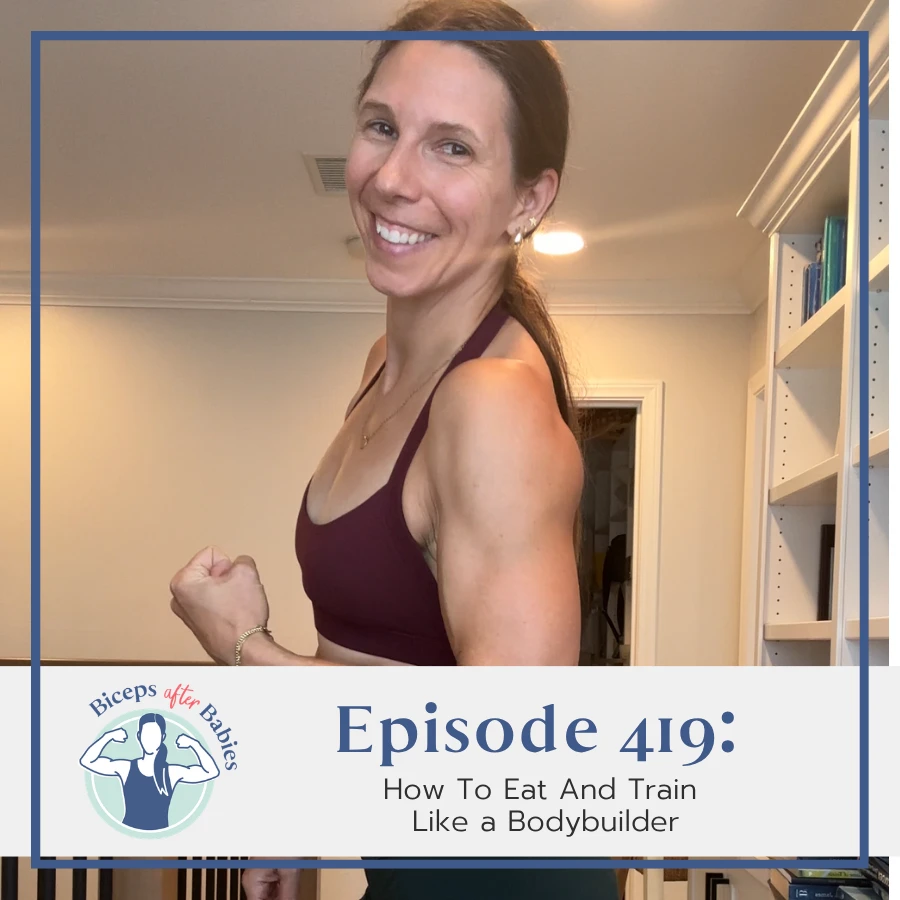
Do you have to step on a bodybuilding stage to eat and train like a bodybuilder? Nope. And in this episode I'm breaking down exactly how to borrow the strategies that build those incredible physiques, without ever putting on the spray tan.
I kick things off with a personal update: I'm officially, 100% committed to competing in a bodybuilding show. I'm wrapping up 2026 in a lean build (eating almost 2,500 calories and lifting heavy), with prep starting January 2027 and a show in my sights for May. I also share why I switched coaches partway through this journey, and why finding the right personality fit matters just as much as finding someone qualified.
Then we get into the five things I've learned that you can apply to your own training and nutrition, whether or not a stage is ever in your future. We talk about why most women only ever experience macro counting as a cut (and why that's a mistake), how preparing your body before a deficit sets you up to actually succeed in it, and the difference between “doing a cut” and actually locking in and doing it well.
On the training side, I break down the two levers that actually build muscle: smart programming (hello, progressive overload) and real intensity (hint: if you're stopping sets because you hit a rep number instead of because you physically couldn't do another one, we need to talk). And I close out with the most underrated variable of all — consistency, not just in your macros, but in your steps, cardio, sleep, and water, so you can actually read what your body is telling you.
Highlights
- My bodybuilding update: committing to a show, new coach, and my current numbers 00:00
- Tip #1: Cycle your phases instead of living in a permanent cut 12:02
- Tip #2: Prepare your body before you ever start a deficit 15:40
- Tip #3: When you do it, do it — consistency over perfection 19:36
- Tip #4: Train smart — programming and intensity 23:39
- Tip #5: Consistency across everything, not just your macros 33:42
Mentioned in this episode: Episode 414: Am I Competing In A Bodybuilding Show? and Episode 266: The 4 Phases Of Macro Counting.
Free workshop: Why Your Workouts Aren't Working
Introduction
You're listening to Biceps After Babies Radio episode 419. Hello and welcome to Biceps After Babies Radio, a podcast for ladies who know that fitness is about so much more than pounds lost or PR's. It's about feeling confident in your skin and empowered in your life. I'm your host Amber Brueseke, a registered nurse, personal trainer, wife and mom of four. Each week my guests and I will excite and motivate you to take action in your own personal fitness as we talk about nutrition, exercise, mindset, personal development and executing life with conscious intention. If your goal is to look, feel and be strong and experience transformation from the inside out, you my friend are in the right place. Thank you for tuning in. Now, let's jump into today's episode.
Amber 00:00
You're listening to Biceps After Babies Radio episode 419. Hello and welcome to Biceps After Babies Radio, a podcast for ladies who know that fitness is about so much more than pounds lost or PRs. It's about feeling confident in your skin and empowered in your life. I'm your host, Amber Briziky, a registered nurse, personal trainer, wife, and mom of four. Each week, my guests and I will excite and motivate you to take action in your own personal fitness as we talk about nutrition, exercise, mindset, personal development, and executing life with conscious intention. If your goal is to look, feel, and be strong and experience transformation from the inside out, you, my friend, are in the right place. Thank you for tuning in. Now let's jump into today's episode. Hey, hey, hey! Welcome back to another episode of Biceps After Babies Radio. I'm your host, Amber Briziky, and I am just sitting in my bedroom doing another solo episode. And today we're gonna yap a little bit about bodybuilding. I'll do a little bit of an update as to where I am in my bodybuilding journey. I did have an episode back, oh, what was it? A couple, a couple months ago. Let's see, August. August 11th, episode 414 was titled, Am I Competing in a Bodybuilding Show? So if you don't know the answer to that question, you should go back and listen to that episode because I I go through what brought this idea up, how I'm thinking about it, and kind of the decision where I was in the decision-making process back in August. Here we are a couple months later. It's October. So I'm gonna give you a little bit of an update about what I'm doing. And then I wanna transition this pretty quickly into things that I have learned so far on my bodybuilding journey. And I wanna be able to have you apply them to your journey if you want to. Right. So we're gonna talk about how to eat and how to train like a bodybuilder. Because maybe you don't want to go through and do a competition. Maybe you don't want to step on stage. You don't want to get in the heels and the sparkling bikini and the spray tan and all the things. You can still eat and train like a bodybuilder. And, you know, utilize that in your fitness journey. You don't actually have to step on stage. That's not actually a requirement. So I want to talk a little bit. I have five things that I have learned and that you can utilize in your own journey to eat and train a little bit better and change up your physique a little bit. But before we dive into that, let me give you a little bit of an update. Okay, so back in August, I was still on the, I'm pretty sure that I'm going to do a bodybuilding show, but let me take some of the first steps and tip my toe into the world and decide if it's something I actually want to go through with because I know that it's going to be a big commitment. So here we are a couple months later, and I will say I am 100% as of now. I guess things could always change, but as of now, I'm 100% committed to doing a bodybuilding show. And what that looks like in terms of time frame is I will finish out the rest of 2026 in a lean build. So the idea with this lean build is I am eating a lot of calories. I'm at almost 2,500 calories right now, and I am lifting heavy. I am really pushing the intensity in the gym. And the goal is to be able to build the maximum amount of muscle that I can in the in the next couple of months, get my body, prime my body, be real in a really good spot metabolically, calorically, with you know low levels of cardio to be able to enter a prep the beginning of 2027. And prep would go from 2027 January. The shows that we're currently looking at, there's a show the first weekend in May, and there's another one the end of May. So it kind of gives us some options of shows. So that's the plan now that I've made with my coach. Right now it's just about building, which has basically been what I've been doing all of 2026. I've I've basically been around 2,400 calories for most of 2026. I've been lifting heavy, I've been trying to, you know, build my body for the last year for sure, but really the last two years, I've been doing more bodybuilding. Um, but the last year, I will say I have been tracking pretty diligently, making sure I'm getting enough calories all of 2026. And I started bodybuilding maybe a year before that, where I was doing a little bodybuilding and I guess I should say mostly bodybuilding with some CrossFit on the side. And as of 2026, I've been doing almost all bodybuilding and very, very little CrossFit. So that's where I currently am at in the process. I also just switched coaches. So I did my first three months with one coach who I found. And I there's no shade to that coach. She is a good coach. I think she knows her stuff. It just wasn't a good fit for my personality. And I think that's something that's, you know, just something that like some people are gonna get along better than others. Some people personalities are gonna fit a little bit better than others. And while she was a lovely person, a great coach, I will never speak bad about her. It just wasn't the right fit personality-wise for me. And I knew that pretty quick going into it after I signed to the three-month contract. I I was pretty sure pretty fast that I just don't think that this is gonna be the right fit for me. But, you know, I did the three months, three three-month contract and then just decided to not renew that contract. I went and found another coach and I just started with her, and I am very excited. I think it's going to be a little bit better personality fit for me. You know, you won't you don't know what you don't know. And I had that experience with that other coach. And so then when I went to hire to interview and hire another coach, I knew the questions to ask. Like I knew what I was looking for because I didn't get it with my other coach. So that has been really helpful. So I just started with a new coach. She seems fantastic. I'm really excited to work with her. And that is our plan. Grow, grow, grow. Like I said, I'm eating almost 2,500 calories right now. Carbs are well over 300, 150 protein, 65 fat. And I think carbs are at 325. And that's been really fun. I'm not someone who has a hard time eating. That is not, I still am hungry sometimes. That is not a large amount of food for me to eat. I'm still focusing on really high volume foods. I had a big salad yesterday. I eat a lot of vegetables. So I'm definitely, I know some people when their calories get really high up and their carbs get really high up, they start to have the opposite problem that you have in a deficit where it's like hard to eat all that food. I don't know. I haven't hit that point yet. I it's not hard for me to consume the amount of calories that I'm eating, and I could absolutely eat more. So we'll see what happens over the next couple of months. But then prep will start and those calories will start to go down. So I'm trying to enjoy the holiday season. I'm trying to enjoy all of the, you know, pumpkin spice, everything, and Thanksgiving and Christmas, because I know come January things are going to change and things are going to tighten up and prep is really serious and it takes a lot out of you. And, you know, bodybuilding is an extreme sport, so you're getting down to a level of leanness that is not sustainable long term. You know, a lot of the things that I preach on this podcast is about sustainability. It, you know, I have podcast episodes about the difference between an achievable and a maintainable physique. And for bodybuilding, you're absolutely pushing way past that maintainable and into the achievable but unsustainable fat loss. And so, you know, it's a it's a different different beast and it is extreme. I will, there will be extreme things that I will be required to do. But I'm excited because I think when we do hard things, you learn a lot. You learn a lot about yourself, you learn a lot about what you're capable of. Um, I love to push myself in different ways and challenge myself. So I am excited about the prep, even though it's a little, it's a little bit of like nervous anticipation for what it's going to be like because it is my first time. I don't really, I have concept of what I'm getting myself into, but I've never done it. It's kind of like if you've read a book about swimming, that is very different than actually going swimming, right? I've watched all the YouTubes, I've listened to people talk on TikTok, I've, you know, heard lots of people's experiences about prep, but I've never done it myself. And so obviously that will be a different experience. So that's my little update of where I'm at in my bodybuilding journey. I am thinking about and considering doing some sort of like prep diaries on the podcast come January when we get into prep. So you can let me know if you'd be interested in hearing that. My thought of that is like just doing kind of a quick recording every week and giving you a synopsis of what I'm doing that week, what it's like, how I'm feeling, all those good things. Kind of like a like an audio diary, so to speak. So if that's interesting to you, let me know. If it's not interesting to you, no, I don't anybody, I don't want to record it. But I think it would be fun for me to look back on. And I think sometimes, I don't know. I I know that social media like has like a little bit of a voyeuristic mentality to it. Like I love to see what other people are doing, right? I I am like the nosy nelly. I want to see what you have in your Costco cart. I want to see the behind the scenes of everything. So even if I am not a marathon runner, I love to watch people like prepping for marathons. I love to watch people do their thing. And it's a little voyeuristic in that way. So I imagine that maybe some of you, even if you have no desire to do a bodybuilding show, there's a little bit of appeal to watching somebody else do it and sharing the behind the scenes of that. So if that's interesting to you, let me know. If so, I'll probably start that in January when I start prep and have more to talk about. And things are changing on a little bit more frequent basis. Right now I'm in a build, like it's always the same. Like my calories are always the same, my cardio is always the same, my lifting is always the same. So there's not much that's changing on a week-to-week basis, but that will change a lot more as we head into prep and as I, you know, prepare to step on stage. All right, that's enough about me and what I'm doing. Let's talk about you and how you can eat and train like a bodybuilder. Again, you don't have to step on stage in order to be a bodybuilder. A bodybuilder is someone who is focused on building their body. And you don't have to have a stage to do that. So I want to talk a little bit about some of the things that I have learned and some of the things that you can implement today to be able to train and eat a little bit more like somebody who is prepping for a show without going to the extremes. You may not know, but I think it's important to know because sometimes you'll see competitors pop up on social media and you'll see these really crazy, amazing physiques. And I think it's important to know that in order to get on stage as a bodybuilder, the what you have to put your body through is pretty extreme. People's calories get pretty dang low, their cardio gets pretty dang high. You are the rigidity is very rigid. The amount of foods that you're eating start to shrink over time, and it's it can get pretty grueling. People talk a lot about prep rain, meaning like it's harder to think, you get tired, your lack of energy. So it's a very extreme sport to get yourself as lean as you need to in order to step on stage. And and not everybody wants to do that. So if you want to build a great physique, but you don't maybe want to go to quite the extremes, here are five things that you can be adding in to get the most bang for your buck and get the best physique that you can create. So, number one is you must, must, if you want to eat and train and look like a bodybuilder, you must be cycling your phases. This is the biggest mistake I think people make, especially because when most people find macro counting, they are looking to lose fat. And so the first phase that most people enter is a cut phase. And so they're they're starting with a calorie deficit, they're trying to cut calories, and they're trying to lose fat, which is fine. But it is really sad to me that most people don't understand that macro counting is not synonymous with cutting. Macro counting means you're just paying attention to and manipulating your carbs, fat, and protein. And you can manipulate it up, you can manipulate it down. And there are different phases that we can utilize in our in our training. And if you want to hear and go way more in depth into those four phases, you can go back and listen to episode 266, the four phases of macro counting, cut, reverse diet, maintenance, and bulking. And I talk through those different four phases. But it's important to understand that if you are going to be a bodybuilder and you're gonna build an amazing physique and you're gonna look like a competitor, you need to be spending most of your time at least maintenance, but probably in a slight surplus. Competitors, people who you look at their physiques and you're like, man, she looks amazing. She has so much muscle and she's so lean and she's so toned. Those people didn't build those physiques by being in a deficit. There's a reason it's called bodybuilding. You have to build your body. And so if you talk to any competitor, the amount of time that they're spending in prep is usually, you know, the average prep is usually somewhere 16 to 24 weeks. Okay. And then after that, most competitors take an off season. And that off season is at least months, but for a lot of competitors, it's a year, two years of eating more calories, growing, and then going through a prep again. And so the majority of the time can and should be spent in phases outside of a cut. If you've been in a cut for months and months and months, it's time to get out, babe. It's time to get out of a cut. It's time to spend some time at maintenance, it's time to spend some time recomping. So at maintenance, you're eating enough calories, you're able to build some muscle, maybe lose a little bit of fat in the process. And that is an important phase that so many people and so many women miss because all they know is cutting. And so if you want to train like a bodybuilder, if you want to look like a bodybuilder, you need to be spending way more of your time at maintenance at least, and even you know, growing, going up into a slight surplus. Now, I don't recommend a surplus for you if you have an excessive amount of body fat. Usually I would recommend a surplus for someone who is at least under 22% body fat and is looking to put on muscle. There's a lot of really good research that's come out recently that's shown if if you're you know above that 22% body fat, you can be at maintenance and your body has plenty of access to calories via your fat storage to be able to build muscle. So I don't really recommend going into a surplus unless you are on the leaner side already. But you can build a ton of muscle eating at maintenance and you know, doing, like I said, a little bit of a recomp phase. But that should be the majority of the time should be spent eating more food, building your body, and then doing short cuts to be able to reveal it. All right, number two, and this is one that I wish that I could just like preach from from to everybody who would listen to me. And that is the more you prepare your body before the cut, the more successful your cut will be. Again, this is like such a shame that most people find macro counting when they're wanting to lose fat. And so they find macro counting and they immediately go into a deficit. If I could have my way, I would have everybody spend time at maintenance tracking macros, learn to track macros at maintenance, eat at your maintenance calories for a good period of time before going into a deficit. Then there's a couple of reasons for that. One, you're able to learn a new skill because macro counting is a skill. You're able to learn a new skill without the pressure of also trying to be in a deficit. So it's way easier to learn how to count macros and how to finangle things and move things around to be able to fit into your daily calories and your daily macros if you do it at maintenance. So that skill of macro counting is way easier to learn at maintenance. So that's the first reason. But the second reason is because so many women go into a cut before they've actually prepared their body or primed their body to be able to handle a deficit. A deficit is a stress on your body. It is, this is why it should be done for a short period of time. And if you if you are already under-eating, or you've been a chronic under-eter, or you've slowly eaten less and less and less and less and less over the years, and now you're trying to put yourself into a further deficit, your body is gonna fight that. Your body doesn't like that. Your body doesn't like to be in a deficit, it doesn't like to be underfed, and it's gonna fight against that. And so the people who are the most successful going into a deficit are the ones who have set their body up for success before the deficit. They're eating plenty of food, right? You can't cut your calories if your calories are already low. You gotta have somewhere to cut from. And so clients who take the time to figure out exactly what their maintenance is, push their maintenance to as high as possible, eat plenty of food, have their body in a low stress state, because again, being in a deficit is stressful for your body. So having your body be in a low stress state because you're eating plenty of food, bringing your cardio down, making sure you're not entering a deficit, already having tons of cardio, because then we got to start layering cardio. If you're already doing four hours of cardio a week, now we got to layer more cardio on top of that as you go into a deficit. Whereas if you're coming to me and you're already eating plenty of food, you've been tracking for a while, you've been eating at maintenance for a while, your body isn't is not stressed, you are your cardio is low, you're not doing a ton of cardio already, your step count is fairly low. Well, now, babe, we have we have tons of area to go, right? We can cut calories, we can add steps, we can add cardio. But so many people try to cut calories from calories that aren't there because they're not eating very much. They're trying to add cardio when they're already doing a crap ton of cardio, and they're trying to increase their step count when they're already doing 15,000 steps a day. It's just like you have nowhere to go. And so if you want to train like a bodybuilder, you want to eat like a bodybuilder, you need to make sure that the time before you go in a deficit is a focused period of time for you and that you actually have time before the deficit, that you are preparing your body, you are preparing mentally so that you can go into the deficit, you can execute it, and you can get the heck out of there. You know what? Nobody wants to be in a deficit for a year, and your your body definitely is not going to be receptive to being in a deficit for a year. So set your body up for metabolic success, go into the deficit, execute that deficit with consistency, get in and get out. All right. Number three, and this kind of is a segue from number two, and that is when you do it, freaking do it. When you do it, do it. Like when you go into the cut, do the cut. Put your all into it, lock into the cut, execute the cut, and get the heck out of there. I see too many women who take their sweet time and are 65% consistent and they're wondering why it's not working, and then it just drags on and on and on and on. Rather than getting in, executing at a high level, you know, we're talking 80, 90, 95% consistency, and then getting the heck out of there. I did a post recently on my Instagram where I was, I had just been flipping back through my macros first account and I was looking at, you know, the past couple of months as I've started this bodybuilding journey, and I was looking at the number of stars that I've gotten in macros first. And so if you're not familiar, you get a star. I believe it's if you're within 10% of your calories and your macros for the day. It might be 5%, but it's it's somewhere in there. It's like it, it's within a percentage of what your set number are. So if you're too far over or you're too far under, obviously you're not gonna get a star. And I was flipping back. And over the last, you know, 40 plus days, I think it was like 46 days, I had not hit my macros three times. And those three times I didn't hit them, it was like not by a lot. It was, it was not me going over 700 calories. It was like a little bit here or there. So out of 46 days, that's three days that I wasn't fully locked in and consistent with my macros. And I think people hear consistency and they think one of two things. They either think consistency is perfect, which is not, it's not. Consistency is not the same as perfection. But the reason that a lot of people's brains go there is because if if I label consistency as perfection, then if I can attain it, then I swing to the other way. Right. It's a way that we like kind of get away from ourselves. It's a way that we can let ourselves off the hook where it's like, oh, I have to be perfect. Oh, I wasn't perfect. Oh shoot. Well, now I can just like do whatever I want. So that's one reason that we like. A lot of us will equate consistency with perfection. So consistency is not perfection, but consistency is more than 80% consistency, right? It is approaching that like 85, 90, 95% consistency. I would say 90% is where I would have most people aim for. Not 100%, but 90%, which is most more than most people do. So 90% looks like out of the 46 days, I am maybe not hitting my macros four of them, right? Because that would be 10%. So my three is well within that. But most people are giving themselves so much leeway that they are missing one day a week or even two days a week, right? Especially if you're looking at the weekends. So here's a little bit of experiment for you. If you are currently tracking, go back and look at the last month and count how many days you did not hit your macros. If it is more than three, you have some opportunity for growth. And that's not to make you feel bad. It's not to make you feel ashamed. It's not to make you throw up your hands and quit and say, oh, well, I'll never get there then. It is to look at that as some data of saying, hey, there's an opportunity here for more consistency. And more consistency is going to breed more success and more results. So if you are, you know, off more than three days out of the last 30, there's an opportunity for you to lock in a little bit further and to do it and do it well and then get the heck out of there. All right. Number four, we're gonna move into training. Because if you're going to build your body, you have to train smart. Yes, we've talked a lot about nutrition. Nutrition is what is going to support what you're doing in the gym. Okay. You need to have both. But muscle does not grow because you eat protein. You have to have the stimulus from the gym first, right? So you could force feed someone a ton and ton of protein. They're not going to build any muscle unless they also pair that with going to the gym. So your training, if you're wanting to look like a bodybuilder, feel like a bodybuilder, be a bodybuilder, your training is going to be one of the most important levers that you pull. And you have to train smart if you want to actually grow muscle. There are two aspects to this that are both incredibly important. Your programming, I'll talk about these both individually. So number one is your programming, and then number two is your intensity. So let's let's break those down individually. Let's first start talking about programming. Programming means what you are doing when you go to the gym or when you show up at your home gym. It's what you're doing with your time there. Now, if your programming changes week to week, you got to stop there. You are not building a lot of muscle. I'm not saying you're not building any muscle. I am saying you are not gonna build a sustain like a substantial amount of muscle. You are not gonna look like a bodybuilder. You are not gonna build a lot of muscle that way. If you are changing every week what you are doing, and sometimes you're going to group fitness class, and sometimes you're doing your own thing, and you know, you show up at the gym and you're like, oh, that was really, I saw this really cool reel on Instagram, and I'm gonna do that workout this week. Just stop. You're not building an appreciable amount of muscle doing that. I'm gonna hold your hand when I say this. You need to be on a good progressive overload program. What does that mean? It means whatever you did this week Monday, you do the exact same workout next Monday, and you do the exact same workout next Monday, and the next Monday after that, and the next Monday after that, and the next Monday after that, and the next Monday after that. And every time you're doing that workout, you're trying to push something. You're trying to increase the weight you're lifting, or increase the reps, or decrease the tempo, or increase the execution of the lift. Every week you're trying to beat last week. And then you come back and do it again and again and again and again and again and again and again and again. And you do that for eight to 12 weeks at a time where you're doing the same workouts over and over and over and over again. Now, I can hear some people in their head being like, but that's so boring. I know. Well, I don't actually think it's boring because I think for me, I will tell you how I think about it. It what is not boring is the every week trying to beat last week's version of myself, right? So I have my numbers from last week. I know exactly what I lifted last week. And my goal this week is to do a little bit better. So that's that's what gets exciting for me. It's like, yeah, the the lift is the same, but pushing myself and trying to beat last week's version and then beat it again and then beat it again, that's where the excitement comes for me. But that's how you build muscle. So maybe it's boring, but it's actually effective. And if you want to eat and look and train like a bodybuilder, you got to have a good progressive overload program. Now, if you want to learn more about progressive overload, you want to understand more of the science behind it, you want to understand what it looks like to actually integrate it into your own workout plan. I do have a free class where I teach a lot about this stuff. If you go to bicepsafterbabies.com forward slash workshop, you can sign up for a free on-demand workshop. You can watch it whenever you want. The title of it is something like why your workouts aren't working. And I basically talk through why so many people spend time at the gym but don't actually see those results in the mirror. So if that's you and you're like, I spend time doing this and I don't see results, then that class is gonna be very helpful for you. Or if you're someone who's like, yeah, I don't spend time in the gym now, but I want to make sure when I start that it's effective, that class is also gonna be really helpful for you. So that's bicepsafterbabies.com forward slash workshop. So that's programming. Programming is very, very important. But the other piece that I see that I think too many people aren't aware of is intensity, the intensity that you're bringing to your workouts. So I talked about progressive overload and I talked about how you're trying to beat your version from last week. However many reps or sets or weight you lifted last week, this week you're trying to do a little bit more. And that's not just because you're trying harder. Like the whole idea with progressive overload is that it happens because your body gets a little stronger from last week. You break it down in the gym, it recovers, it gets a little bit stronger. And so now your capacity to lift is more than it was last week. Right. So progressive overload isn't something that you necessarily have to do, it's a byproduct of lifting with intensity. But what I see at the gym all the time, all the time, is people who are not lifting with enough intensity to actually do anything. So here's a good question. If you are currently lifting at the gym and you are doing a set, why do you stop the set? If you stop the set, like a lot of people, because you hit the number of reps, my friend, I'm gonna hold your hand, but you are not building a whole lot of muscle. We never want to stop a set because you hit a certain number of reps. What determines that you stop a set is that you cannot do it anymore. That you literally are getting close enough to mechanical failure that you can't lift the weight anymore. Like you're you're giving it all you can and your muscles are not contracting anymore. That's what's called mechanical failure. It's when literally somebody could put a gun to your head and say, do another rep and you would give it all that you have, and the the rep would not go up. That's mechanical failure. Now, you do not have to be training to mechanical failure every single time. In fact, the current literature shows as long as you're within one to two reps shy of failure, you're good. You're you're gonna be able to build muscle. The problem is if you've never taken a rep to failure, you have zero idea where one to two reps within failure is. And so a lot of people, they stop their reps because they hit the number of reps that they were supposed to hit for that set, or they stop because it starts to burn, or they stop because it gets uncomfortable. None of those are reasons to stop. The only reason to stop is that you're getting close enough to that mechanical failure where you're actually not able to lift the weight anymore. And what you will see if you start to film your lifts, this is why I really recommend everybody starts to film your lift, even if you don't know what you're looking for, film your lifts because you'll start to, you'll start to see things and notice things. But what you'll see if you start to fail your lifts or film your lifts, as as you get closer to failure, the speed at which you lift is going to slow. So if you think about, let's say, let's say um, I don't know, I'm working to squat. Let's let's do something like a dumbbell curl. Okay. So if I'm doing a dumbbell curl and I'm filming myself, the first rep might take, I don't know, one second. Okay. Then I get to number five, I'm still doing one second, I get to eight reps, still one second, I get to nine reps, now it's like 1.2 seconds, I get to 10 reps, now it's like 1.5 seconds, I get to 11, it's like almost two seconds, and I get to 12, and now it's like a five-second grind to get the dumbbell up. That's not because I'm intentionally slowing the dumbbell. It's because I'm giving it everything I have, and that is my that is how much my muscle is able to contract. That is that slowing of the bar, that slowing of the dumbbell is indicative of you getting closer and closer and closer to failure. So, one way to start to know if you're pushing the intensity enough on your lifts is to film yourself and and look at your your reps and look at the last rep that you do and look at the first rep you do. And if you showed those two reps to somebody and you said, Hey, can you tell which one of these is my first one and my last one? And they're like, I can't tell, they look the same to me. You are not reaching the level of intensity. You are not pushing yourself hard enough in order to actually grow muscle. Your body doesn't actually want to grow muscle. I don't know if you know that. It has no desire to grow muscle. It's actually a very expensive metabolic process that your body only does if it is forced into doing it. And the way that we force it into doing it is by making it a necessity, by showing our body that our current capacity does not, it cannot sustain the stress that is being applied it. So our body wants to be able to meet its match, right? It's like it wants to be able to be able to do whatever it is that the surrounding environment is requiring of it. And so if we show our body by pushing towards that mechanical failure, that hey, there's this stressor out here, and I cannot currently meet the match for that stressor. Your body's like, okay, fine, fine, fine, fine. I will go and I will get you a little bit stronger. So the next time you meet that same stressor, you'll be able to do it. That's that's why your body builds muscle because it's forced into it. You have to, you have to push it a little bit. And so if you're not bringing enough intensity to your lifts, you're never gonna build muscle. Okay. So these two things, your programming and the intensity that you bring on a day-to-day basis to the gym, are the two things that are going to push your body to be able to build muscle. And it's what's gonna make you look like a bodybuilder. All right. The last thing is consistency. And I know blah, blah, blah, blah, blah, consistency, it's so boring. Amber, talk about something else. I know, but if you've ever followed a bodybuilder, the amount that they lock in, the amount of consistency that they bring is incredibly impressive. And I'm not talking, we've talked about macros, right? Like that's really important. Bringing consistency to your macros. Yes, we've talked about that. But I'm talking about consistency in things that maybe you don't even think about. Consistency with your step count. Some days do you get 15,000 steps and then other days 4,000 steps? That's not very consistent. And when we are trying to work with your body to be able to lose fat and we are trying to read data and feedback from your body, the less amount of variables that we have, the less amount of fluctuations you have on a day-to-day basis, the more that smooths out the data and we can actually see what's going on. But if you have one day that you have 20,000 steps and the next day that you have 5,000, and then you have 15, and then you have 17,000, and then you have 2,000 steps, what's happening is you're introducing a whole lot of variables to your body every single day. And you might find that the days that you have higher step count, you're gonna have a little bit more water retention, a little bit more inflammation, and you may see a spike on the scale. So, like the numbers are just kind of wonky when you have such a wide variety with your steps. So, one of the things that I do is I track my steps daily, but I also have a range that I'm trying to hit between. My current range is I'm trying to hit between eight and nine thousand steps. And I would say, not every day, because obviously, like sometimes you go to walk places, you know, like you can't always control it. But I would say five or six days out of the week, I am within that thousand-step range. Like I do what I can do to land within a thousand steps so that I have consistency day after day after day after day. Do you have consistency with the amount of cardio that you're doing per week? Some days are you taking an hour spin class and some weeks you're not. Some weeks you're going swimming and some weeks you're not. Again, we have to live life. So I'm not saying that you tell your friends you can't go on a hike with them because that would put you over your cardio for the week. But I am saying that the again, the more consistency that you can bring to the inputs into your body, the more we're gonna be able to see the clear trend and we're gonna actually see what your body is doing. So, are you bringing consistency to your cardio? Are you bringing consistency to your training? I train five days a week, every week. Like every week. I train when I go on trips, I find gyms. If I'm gonna be gone for a weekend, I'll make sure to get my training sessions in before I leave. But my like come holler high water, I'm going to get those five training sessions in a week. Again, more consistency. So I have the same number of training sessions a week. I'm doing the same lifts every single week. I have the same cardio every single week. I keep my step count as consistent as possible. I keep my macros consistent as possible. I drink about the same amount of water. I try to get the same amount of sleep, right? The more consistency you can bring to your plan, the more successful you're going to be, and the more you're going to be able to see the data, understand your body, and be able to manipulate things to be able to get your body to go in the direction that you want it to go. So again, I'm not saying you have to go to the level of extreme of, you know, hours and hours of cardio like a competitor would, or really, really low macros like a competitor would, or really high step count like a competitor would. But I do think bringing that mindset and looking at what you're currently doing and asking yourself, is there an opportunity here to be more consistent? Especially if you're someone who you feel like the scale swings wildly, like up and down and up and down, and you're like, I never really know if I'm losing fat or not because there's so many, like I can swing four or five pounds per day. What would happen if you smoothed out all those variables? You drank the same amount of water every day, you ate the same macros every day, you got the same amount of sleep, you had the same stress relieving measures, you got the same amount of cardio. What I find with a lot of clients is that they start to realize that, oh, those days that I sleep less, my scale weight is up. Those days that I'm extra stressed, my scale weight is up. The days that I have extra steps, the scale weight is up. And when we can smooth those out, you can see the data so much more clearly of how your body is actually responding. You get rid of the lot of the noise of the water weight noise. It's always gonna be there to some extent, right? Like our body is has so much water in it. However, the more consistent you are with some of these variables, the more it's gonna smooth out that data and make a whole lot more sense. All right, so those are my five tips on how you can train and eat like a bodybuilder. So just to recap, one, cycling your phases, making sure you're spending more time out of a deficit than you are in a deficit. Number two, prepare before the cut. So the most successful people are gonna be ones who go into a cut with a plan. They've already set themselves up for metabolic success, they've eaten a lot of calories, they've decreased their cardio. So when they go into a cut, they have levers available to them. They can decrease their calories, they can increase their cardio, they can increase their steps. Now, all at once, right? We're not gonna do that all at once. But I'm just saying you have things available to you, have tools available to you to be able to create that deficit. Number three, when you do it, you do it. You don't mess around. You get in, you get out, you lock in, and then you get out of there. Number four, you train smart. Remember, we talked about programming and intensity. Those are the two most important things when it comes to building muscle in the gym. And then number five, consistency, not only with your macros, but with as many variables as possible that you're able to be realistic with of just maintaining consistency on a day-to-day and a week-to-week basis so that we can smooth out those variables and be able to understand a little bit more of what is going on with our body. So I hope that you found that interesting and helpful. And again, you don't have to step on stage to look like a bodybuilder. Obviously, you're not gonna get stage lean, but I honestly don't think stage lean looks that great anyway. I think I like people who have a little bit more meat on them, a little bit more fat on them, plus you're gonna feel a whole lot better with a little bit of fat. So you can get lean, and that's one thing. Getting stage lean is a step, a step even beyond that. We don't have to get stage lean, but you can eat and train and look like a bodybuilder without ever having to step on stage, especially if you follow these five things that I talked about in today's episode. All right. Hopefully that was interesting to you. Again, let me know if you are curious about me doing some more podcast episodes during my prep. I think that would be really fun, but I want to hear from you. And I want to know if you think that would be really fun. Like I said, that would start in January because dun dun dun, that is when we're planning to start prep. All right, this wraps up this episode of Biceps After Babies Radio. I'm Amber. Now go out and be strong because remember, my friend, you can do anything. Hold up, sister friend. Do you love biceps after babies radio? If so, the best way to say thank you is to subscribe to the podcast and leave a review on iTunes. I know every podcaster wants you to leave a review, but it's because those reviews help the podcast to reach more people. And I do truly want to know what you think. If this particular episode resonated with you, will you also please share it? Either send the link to someone who would find it valuable or take a screenshot and post it to your social media and tell your friends and family why they should listen. Make sure you tag me at biceps.after.babies so I can hear your feedback and give you a little love. And you know, if you aren't already following me on Instagram or Facebook, that's the perfect time to hit that follow button. Thank you for being here and listening to Biceps After Babies Radio.
Outro
Hold up sister friend. Do you love Biceps After Babies Radio? If so, the best way to say thank you is to subscribe to the podcast and leave a review on iTunes. I know every podcaster wants you to leave a review, but it's because those reviews help the podcast to reach more people. And I do truly want to know what you think. If this particular episode resonated with you, will you also please share it? Either send the link to someone who would find it valuable or take a screenshot and post it to your social media and tell your friends and family why they should listen. Make sure you tag me at biceps.after.babies so I can hear your feedback and give you a little love. And you know, if you aren't already following me on Instagram or Facebook, that's the perfect time to hit that follow button. Thank you for being here and listening to Biceps After Babies Radio.

Leave a Reply