






Show Notes
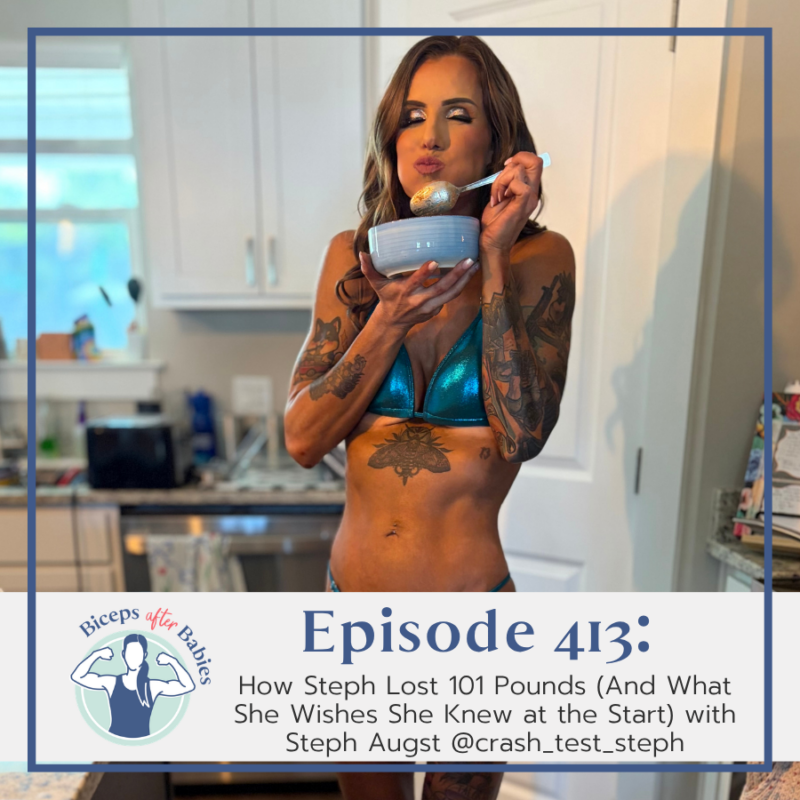
Joining me for today's episode is Steph, an Air Force veteran, dedicated mom, and content creator whose fitness journey eventually led her to the bodybuilding stage. She is here to pull back the curtain on her incredible 101-pound transformation, proving that when you commit to small, almost boring habits and stay consistent through the slow seasons, remarkable things are possible. We dig into the specific “crisis point” that sparked her journey, the step-by-step process of layering habits brick by brick, and her path toward competing. Steph gets incredibly honest about the challenges of life after the show, including navigating a reverse diet and overcoming a scarcity mindset around food. Most importantly, she shares why the secret to long-term success is deciding exactly what you are willing and not willing to sacrifice. If you have ever felt like your goals are out of reach, or your progress is moving at a snail's pace, this conversation will remind you to trust the process and keep showing up.
Follow me on Instagram and Tiktok!
Highlights
- Steph's Rock Bottom 04:27
- Discovering the Power of Community 08:40
- Building Nutrition Habits One Layer at a Time 11:28
- Learning to Measure Progress Beyond the Scale 14:29
- From Weight Loss to Competitive Bodybuilding 19:06
- Lifestyle Habits Versus Bodybuilding Precision 27:52
- Creating Time by Integrating Healthy Habits into Family Life 33:05
- Experiencing the Bodybuilding Stage 39:12
- Why Reverse Dieting Was Harder Than Contest Prep 44:22
- Steph's Advice for Someone Facing a Long Journey 49:33
Links:
Steph Augst’s Instagram and Tiktok
You're listening to Biceps After Babies Radio Episode 413.
Hello and welcome to Biceps After Babies Radio. A podcast for ladies who know that fitness is about so much more than pounds lost or PR's. It's about feeling confident in your skin and empowered in your life. I'm your host Amber Brueseke, a registered nurse, personal trainer, wife and mom of four. Each week my guests and I will excite and motivate you to take action in your own personal fitness as we talk about nutrition, exercise, mindset, personal development and executing life with conscious intention. If your goal is to look, feel and be strong and experience transformation from the inside out, you my friend are in the right place. Thank you for tuning in. Now, let's jump into today's episode.
Hey, hey, hey! Welcome back to another episode of Biceps After Babies Radio. Today's episode is one of those stories that is just going to remind you of what's possible. When you make a decision, you show up and you stay consistent even when progress isn't happening. My guest today is Steph. She's a registered Air Force veteran, a mom, and a content creator, and you might know her from her bodybuilding series on TikTok and Instagram. And in this interview, Steph takes us all the way back to her heaviest weight, which is 226 pounds, and the gut punch moment in Japan that really became, she called it her crisis point, but it was kind of her rock bottom, her wake-up call. And from there, she's going to walk us through how small, almost boring habits, how she started to really just layer them brick by brick by brick, and those changes added up to a 101-pound transformation over about 18 to 20 months that eventually led her all the way to getting on a bodybuilding stage.
Steph's story is really inspiring, and even if you're not wanting to compete in bodybuilding, a lot of the lessons that she learned along the way and a lot of things that she shared in that 101-pound weight loss are going to be very relevant to you if you're in some sort of journey yourself. So we dig into the whole process. We dig into her show and then what's happened after the show and why it was almost harder than the actual prep itself and how, during that time, she came up with this idea of micro dosing chocolate to keep herself sane, which I think is such a brilliant idea. Plus, she'll share some of her honest take on the 80-20 rule, how she deals with scarcity mindset around food, and how she balances it all as a busy mom of, you know, teenage kids who had their own athletics that she's helping them participate in. So if you've ever felt like your goals are too big or your progress is too slow or it's too far away, this episode is for you. So let's get into it.
Amber B 03:04
All right. I am so excited to welcome Steph to the podcast. How are you doing?
Steph Augst 03:08
I'm doing great. I'm excited to be here.
Amber B 03:10
Yes. I'm really excited for you to share your story. I recently started following you on TikTok and I just, I love your enthusiasm. I love your story. I love watching all of your, you know, everyday happenings and I'm just really excited to introduce you to my audience and have them know and love you as well.
Steph Augst 03:29
I appreciate that. I just stumbled upon the podcast when I met you through, I think, TikTok.
Amber B 03:35
Yeah.
Steph Augst 03:35
And I have loved every single episode. I've gotten a chance to consume. This is exactly like this content that I want to, like, facilitate putting out into the world. So it's perfect match made.
Amber B 03:46
Yeah, match made in heaven. I love that. Okay. So I want you to get a chance to be able to share your story because I think there are so many, there's so many women who are living different parts of your story and being able to hear how you've trans, you know, gone through it and what you've learned, I think will be really helpful. So will you start with just taking us back to before your show, before, you know, you had a TikTok to win. Maybe life was hard. You felt like you felt stuck. Maybe you're at your heaviest weight. Was there, like, tell me a little bit about that experience and was there a specific moment where things like started to flip for you?
Steph Augst 04:26
Sure, of course. So this kind of moment I've reflected on many, many times in the context of, you know, thinking about where I came from. So I don't repeat any history that doesn't align with my goals, but way back when before TikTok and all that, the bodybuilding and all that stuff, my heaviest was approximately 226 pounds. I am 5 foot 8, for whatever context that's relevant for, and life at that height and that weight was very hard. It was very slow, literally, and just in general, uncomfortable. And it happens very, very sneakily. You don't realize that it's coming up, right? It's all of a sudden, you're this big. I don't know how else to say it, you know what I mean? But there was this moment, this, like, I, you know, I was a prior substance abuse in the Air Force, and I feel like we reference crisis or rock bottom a lot to, like, kind of jumpstart people into their changes of behavior, so to speak. And my crisis, if you will, was taking the kids to Universal Japan. We were stationed in Okinawa, Japan, and we had this magical once-in-a-lifetime moment to go to Universal Japan. And while we were there, if you're unfamiliar with how Japan works, it's very, you know, it's very walkable. They designed the kind of, like, infrastructure of the city around walking, and at my height and weight, I didn't have the ability to participate in that type of travel, I guess. And so the moment, my little, like, I don't know, light switch where I was like, oh my gosh, I gotta do something, was when I had to stop at a convenience store to buy socks because I had done so much damage to my feet that I actually started bleeding through my socks into my shoes. My knees hurt, my hips hurt, and that, I'm not exaggerating, I had to replace my socks. And when that happened, and I had to take away from my kids kind of, like, vacation to go to the convenience store to buy accessories to accommodate, like, the position that I was in, I realized, like, wow, like the decisions that I've made that led up until this point are now negatively impacting my kids. Like, I'm interrupting their vacation to tend to my injuries that I have given myself purely from my size.
Amber B 06:52
Wow. Wow. So then that's the crisis moment. So what did you do next, right? Because I think we hit that, you hit that rock bottom, you have this realization, oh my gosh, it's not just impacting me, and it is impacting you, but it's also impacting the people that I love. So then what's the next step?
Steph Augst 07:09
Right, of course. So that's probably the most intimidating part. It's like, okay, I recognize there's a problem. But what do I do now?
Amber B 07:15
Yeah.
Steph Augst 07:15
And this couldn't have been the more, a more chaotic time in our life. Because right after that, we were moving back to America, we're moving to Florida. And basically, once we completed the international move, and I got my dogs home, that was an ordeal. And we got everyone settled and set up for school and sports. And once I got everyone else's things taken care of, I googled the closest gym to my house. And it happened to be this group fitness gym. It was a very, very cool setup. It wasn't quite CrossFit, but very similar Kool-Aid, you know what I mean? And so we did the group fitness classes. And I literally was just like, I'll do anything, right? This location is so close. They have classes that start really early in the morning before I have to worry about kids in the school. And I was just like, I just have to commit to showing up. And I think this gym offered like a five-day free trial. And I was like, I will go to all five days, period. And so I basically started at that gym. And that was the tipping point over the fence, so to speak, where I was like, I got to find something. I got this clean slate. I don't know anyone here. I don't know anything about Florida. But this gym is right down the road from my house. You know what I mean?
Amber B 08:27
Yeah. Yeah. And it's something I'm going to do it. I'm going to commit to it and I'm going to get started.
Steph Augst 08:32
Yep. Yep. At least the five-day free trial, right? Because it didn't cost me anything, but showing up.
Amber B 08:37
Yeah. Sure. Other than your time, right? Like you just show up.
Steph Augst 08:39
Exactly.
Amber B 08:40
Yeah. And so then after the five days, how was it?
Steph Augst 08:43
Well, so this gym was a fantastic, wonderful community. I think that group fitness is very underappreciated. I feel like there's all different types of group fitness and there's all different types of classes and you really do got to find what works for you. But what I found that worked for me was I'm a very bubbly person. I like hanging out with my friends and my girlfriends and whatever and it basically was that but in like a 40-minute hit workout style, so to speak. So I got excited to see my friends in the morning. We were like playfully competitive with each other, trying to make each other better, faster, stronger, and I just like fell in love with like the community and like showing up and it felt like if I didn't go to class, maybe I would be letting someone down or someone, you know, we would like hold each other accountable, so to speak.
Amber B 09:34
Yeah. Yeah, that's awesome. So that was the workout side of things. How long did it take you? Because I assume you had to change other habits. How long did it take you to like feel like you were confident enough in the gym that that box was checked to where you started checking some of the other boxes?
Steph Augst 09:50
So I recognized pretty early on. I think I wanted the exercise to be enough. Like I didn't want to change anything else, right? That was hard enough. Just, you know, that type of workout. We were in a, you know, a warehouse with no air conditioning. I was like, this seems like enough. I shouldn't have to do anything else. Yeah, and I did just that for a few months and then, you know, I started weighing myself on the scale and ultimately nothing was happening. Now, you know, body recomposition is a whole separate conversation, but I was getting very frustrated and disappointed by seeing like nothing happening on the scale and I'm like, okay, I guess I have to adjust something else and I've gotten really good at going to the gym consistently, even if I didn't hit all five days a week. I hit most of the week and most of the week was always good enough for me to make it to the next week. And so I think the very next thing that I adjusted, so to speak, was trying to get a step goal. I think I was trying to meet a step goal and at the time it was just the arbitrary, you know, 10,000 steps. That was just the recommended across the board and I was like, let me try to do that. Let me get really good at that. And I practiced that and I did not like that and I was not very good at that. 10,000 steps is a lot of steps when you don't do that many normally.
Amber B 11:02
Totally. Yeah.
Steph Augst 11:03
So I was like, all right, that adjustment is not going to work. Let me just track protein and I just kind of like started experimenting with like, what's something I can add on top of like, if going to the gym is the first brick, what's the next brick for me? And it did end up being tracking protein. I was like, I'm not going to worry about macros. I'm not going to worry about calories. I don't even know how much I'm supposed to be eating or whatever. I'm just going to make sure I'm hitting my protein goal and that was it. And same thing with the protein goal is just an arbitrary number. I think I picked like one gram of protein per body weight and I was like, let me just shoot for that, which at the time, you know, that was a lot of protein. So that in and of itself was a whole chore to figure out. And then once I got really good at that, it was like, okay, well, let's track the rest of my calories. What meals am I eating? I didn't even know what I was eating a day and that was actually quite a shocking experience for, because I guess just based on my size, I was like, well, I must be eating too much food every single day. But I actually learned that I had days where I did eat a lot of food. I was well over, we'll say three, four thousand calories, but then I would have days where I ate maybe nine hundred calories, you know, a day that was just coffee and energy drinks all day long and I didn't actually sit down and eat any solid food or what have you. And so just even just learning that and obviously the averages were probably greater calories in than calories out, but just learning how inconsistent my relationship with food was helpful, you know, even not even knowing what to do with that information. I was just like, oh, wow, you know, some days I'm sure just not eating enough food.
Amber B 12:37
Totally. Yeah, that's swinging back and forth like a lot of times people say I'm not eating that much food and what they're doing is they're looking at those 900 calorie days and like I'm not eating that much food, but then you average it out with the days that you're eating 4,000 calories and it ends up, you know, being a caloric surplus.
Steph Augst 12:52
Exactly.
Amber B 12:53
But knowing that and understanding that it means that you can start to shift it and start to change it and I assume that you went from big swings from 900 calories to 3,000 calories and tried to average it out to where you were eating. You were fueling your body. Well, most days.
Steph Augst 13:06
Yeah, exactly. And actually the way that that happened. So I feel like you know, all these different systems and all these different parts and pieces are all directly connected to each other. But the the gym was like, okay, I've gotten really good at the gym. What else can I do? And so a group of girls and I started running and we started signing up for local foot races. Well, I don't know if you've ever ran any type of distance in Florida, but it's very, very, very sweaty to say the least and I found that I was getting like sick. I was like getting nauseous. That was actually how I learned about electrolytes. Yeah, how to replenish those. But then that was also how I learned how much like carbohydrates, for example, I needed for fuel, you know, so I kind of a lot of this stuff. I just figured out the hard way as I got into it. I was like, wow, running is miserable. I want to vomit every time I run. Why is this and it's like, oh, I didn't eat enough to literally support the run and my body has no idea what's happening and it's very upset with me. Yeah, so then all of a sudden when I started feeling with the correct amount of carbohydrates and that really helped shift my perspective with food because I think that was what initiated that concept for me, like the black and white concrete concept that food is fueling the different activities that I want to engage in.
Amber B 14:18
Sure. Yeah.
Steph Augst 14:20
And so that was when I started regulating those calories and trying to figure out my macros and stuff like that.
Amber B 14:25
That's amazing. And so you ended up there. You're told like your total weight loss ended up being a hundred pounds. Is that right?
Steph Augst 14:33
101 pounds on the dot.
Amber B 14:35
That's crazy. Okay. So when did the scale start moving and talk about your relationship a little bit with the scale as it as it started to go down?
Steph Augst 14:47
Okay. Okay. So the scale didn't move. I want to say gosh for probably at least three months and then when it finally did start moving it was not much and I did I'm going to be honest that was discouraging. So I very quickly had to I so I had to track my weight for various like competitions and challenges. We were signing up for at the gym. If I if it wasn't for data recording purposes, I probably wouldn't have done it because it was frustrating to be like man. I'm working out multiple times a week. I'm hitting my protein goals. I'm, you know, trying to get more steps in why am I not losing any weight and I just kept telling myself just trust the process. This is what body recomposition is. It's probably there's some probably something happening underneath all this all this way, you know what I mean? Once I started I don't know that there was like a definitive black and white activity or I changed so many things over time that it was really hard to attach. It was probably all of it, right?
Amber B 15:46
Sure.
Steph Augst 15:46
But the first six months I probably lost like 10 or 15 pounds but people started making comments and that was when I was like, do I look different? I started looking at old pictures. I'm so grateful. This gym takes pictures of all their classes, right? I would have never done that and at first I was not super excited about it. I was like, man, this isn't my favorite quality, but I like all the other parts here, but I'm really glad they did that because it's another form of measurement, right?
Amber B 16:12
Sure.
Steph Augst 16:12
And so when people started making comments like, oh, hey, I noticed, you know, you lost a little bit weight. I started looking at these old pictures and I was like, oh my gosh, I am losing weight. And then that's when all of a sudden, you know, the scale started moving. I started like recognizing that I was getting good at doing more burpees in a shorter amount of time. I started recognizing my big milestone of mine was being able to climb the rope to the top of the gym. And while I was like enthralled about all that stuff slowly, but surely the scale was like following behind, but my mind was like preoccupied and celebrating these other wins. And so as the scale started moving, I, my relationship with it became somewhat indifferent. So I guess, you know, at the beginning I was annoyed with it. As I started accomplishing other goals, I became indifferent with it. When I got into bodybuilding prep, that was a whole different thing because I don't know if I don't, it's hard to describe what I felt by it, but it felt like it kind of controlled my food. That's oversimplification, but the scale kind of directly determined to like the prep plan, so to speak. And so I didn't want it to go down too fast because I didn't want my skill or I didn't want my calories to drop too fast. And then obviously if it went up, it was like, oh my gosh, how's this going to affect my meal plan for the week?
So I think during that time that was probably the most, I don't know, anxiety inducing time that I hung out with my scale, so to speak, because it felt like it kind of controlled what I was going to do the next week. And then now that, so I finished my bodybuilding competitions and I'm in what they call improvement season. Now my relationship with my scale is, I tried to think about this, you know, and prep some of these answers, but I couldn't come up with anything besides a little bit confusing because I don't actually know what normal is anymore. So when you prep for a bodybuilding competition, you drop down to an unhealthy body fat. You're not, you're not in a maintenance body fat. You're not at a maintenance weight. That's, you know, me losing a hundred and one pounds was kind of a touch and go, so to speak.
Amber B 18:20
Right, that's not where you're going to live.
Steph Augst 18:22
Exactly. So now I got to get my essential body fats back up and I got to restore, you know, all those things, but I don't know what a normal number is. And so, you know, as I'm watching the scale rise, I'm not necessarily worried about the number. I am recognizing it's not negatively impacting me, but I do feel this sense of like, it's almost like a, I guess I don't feel like I have an identity with the scale because I was, you know, I was, I was a teen mom. So I was a high schooler. Then I was pregnant. Then I was overweight. Then I was underweight. And now I'm like, what am I supposed to be?
Amber B 18:58
Yeah, sure. Yeah, you're like trying to find what's the, what's the middle ground here? Did you go straight? So you're, you know, started at 226. You're making these changes in your life. You're starting the gym. You're thinking more about protein. You're changing some of your nutrition and the scale starts going down. At what point did you decide to flip from like, I'm just doing general weight loss to, you know, be a healthier version of myself to I now want to compete in bodybuilding and entering a prep. You see what I'm saying? Like were you, were you sliding down and just like slid into that or was there a period where you like hit a weight, maintain there and then you're like, okay, now I want to push the envelope.
Steph Augst 19:36
Yeah, that's actually a great question because I do think, I think that's relevant to talk about as it relates to bodybuilding because I think bodybuilding is a little bit over. I don't know what the word is. I love bodybuilding. Obviously, it's completely changed my life. It is glamorized because of the sparkly bikinis and makeup. I get that.
Amber B 19:52
Yeah, for sure.
Steph Augst 19:53
And so people see that part and then they kind of like delete or negate that. This is an extreme sport. It's competitive, you know, and people kind of separate those two things because those sparkly bikinis are so distracting, you know, yeah. And so that first, so bodybuilding wasn't a factor. I was just like, I, you know, I can't, I got to be able to take my kids on vacation. I got to be able to like, you know, get them to and from practice and it not handicap anything in their lives, you know, and so that was the only really thought or goal and my gym was hosting a essentially like a CrossFit competition and I, a girlfriend of mine from the gym wanted to sign up for the competition and we signed up for it and we did all right. We were right in the middle. We didn't come in last. We didn't come on top, but I really got hooked on that like competitive thing and I was like, oh my gosh, what else can I do? You know, what's next? So we started signing up for foot races. We started signing up for different fitness competitions. And once I had been doing all those with some sort of regularity, I was like, okay, let's like take it to the next level. So there was never like a number so to speak.
In fact, when I reached out to my coach, I think I was still I want to say I was 171 pounds. I think when I contacted my coach and even when I reached out to her, I was like, look, I might be jumping the gun. Okay, but I've been consistently like recording my food. I've been consistently exercising. I feel like I've reached a stage of consistency where I can take it up to the next level. And then I sent her some pictures and I was like, what do you think? You know, is there can we work with anything here? Do I need to keep working on myself and come back to you later? And she was like, no, I think we got a great foundation. Let's get started. And that was kind of like how that transition happened. All this weight loss took well. So by the time I hit the hundred and hundred and one on the dot, so to speak, that was I want to say 18 to 20 months. So it's a very like slow. Well, I don't know some slow is relative, you know, I'm in my 30s. So and compared to the rest of my life is very fairly quick. But in and in the middle of it, it felt very slow. But the first year was had nothing to do with bodybuilding. It was just just just lifestyle thing. Yeah. Yeah. And then I guess I got kind of once I got into the lifestyle, I was like, okay, what what's next? What's next? Yeah. What can I accomplish now? You know?
Amber B 22:18
That's awesome. Okay. So you were in the 170s. You started with your bodybuilding coach and what was prep like? How long was prep? And where did you get down to with with your weight? I guess like 126 125.
Steph Augst 22:35
Yeah. So I when I stepped on stage for my first, so I did two different competitions within the same kind of like season. I guess is is how you refer to it. My first competition. I stepped on stage at 125 pounds. So I lost approximately 15 pounds on my own before I started working with my coach. And then once I hired my coach, I kind of I lost and you know, the rest of it the other 50 pounds. I guess I definitely want to lead with, you know, prep is so so individually tailored to to the individual.
Amber B 23:06
Yeah. Yeah.
Steph Augst 23:07
It's you know, it's very unique for everyone that signs up for it and commits to it. My prep was quite long. So I started prep in July of 25 and I stepped on stage in March. So the first time I got on stage was I guess about nine months after I had started prep and all the timing was kind of cool because when I moved to Florida, it was July. So I started at that gym in July and then the next July I started my bodybuilding prep March was when I did my first show. My feedback at that show was that I was a overconditioned. I was actually underweight and so for the next show we tried to put on some weight and wouldn't you know it it takes a long time to lose weight takes a long time to put it back on too. So
Amber B 23:50
Yeah, yeah. Oh, it's crazy.
Steph Augst 23:53
Yeah prep was pretty crazy. But the first chunk of it. I, so I immediately started in a calorie deficit. Yeah, and the specific numbers were like I hung out around 1700 calories, which doesn't if you're into like any type of athletic sports, it's not a lot of calories. Yeah, you can't do endurance running with that. You can't really do a lot of sporting stuff with that. But because I was so big because I was carrying so much body fat on my body. I was just living off of myself. So I dealt with fairly minimal hunger and my body was able between the calories that I was putting in and then the weight that I carried on my body. I was able to use myself as fuel. Does that I feel like does that make sense?
Amber B 24:40
Yeah, it's like you're burning your fat, right? Like the fat right energy source that you're using.
Steph Augst 24:44
Exactly. So if I had been a smaller girl or if I had been I don't know, whatever my, whatever my weight is supposed to be at this height if you're in a normal bodybuilding offseason when you're not coming into it off off prep, I would imagine it would have been a lot more difficult but because I was overweight that really kind of supported the the diet part of it if you will and then I really did step up so I quit the gym that I was at because I decided to you know, change goals and the intensity of everything I do and I was doing really took it up a notch. So I started weight training five days a week. I was still doing cardio. I was still running actually my husband and I signed up for one of those run Disney runs. We signed up for a marathon and if you don't know anything about run Disney, you have to sign up for it like really far in advance. So it's kind of like this thing that was in the background of my head where I was like, oh, yeah, I'm going to do a marathon in the middle of all this. Yeah, that was in January, but I was it wasn't really on the forefront because I was excited about the sparkly bikini, you know, I wasn't really thinking about the marathon. Yeah, but then so during prep I had the marathon coming up. I had some other foot races that I had signed up for in the local area. I was you know, so I was running and training for those I was bodybuilding. I was dieting. I was doing, I was doing a lot at the same time. It all ended up working out. I finished the marathon took over six hours, but you know, I did do 26 miles.
Amber B 26:13
Wow. Awesome. That's so crazy. Okay. So wait, was your, when you told your bodybuilding coach that you were doing a marathon? How did he or she react? Because I feel like that's like two months out from like your show doesn't seem like the time to be I don't know running 26 miles.
Steph Augst 26:29
So it's definitely not the time to be doing that and I don't think she knew how to react but I'm just kind of like I'm doing this. Oh, by the way, I already signed up for this way before I talked to you and then it costs a lot of money. So I'm going to do it kind of no matter what I'm not eating enough for it. And I was wondering if you could give me some extra food for that weekend or whatever. Yeah, and it was just kind of like a so she's really cool. She's very flexible. She's very accommodating to the individual and she was like, okay, this is what we're going to do, you know, and we basically built a plan around it. We were like, we're going to do this macro plan until the marathon weekend. And then after the marathon weekend, I had eight weeks until I stepped on stage and she was like, we're going to go straight into a meal plan and the difference between the meal plan and the macro plan is she's actually picking the exact food that I'm eating. So, you know, you're going to have this breakfast of, you know, oatmeal and egg whites and then you're going to have this lunch of chicken and rice and this yada yada yada that way she had maximal kind of like control of what was entering my body and we could kind of minimize any type of inflammation or any, you know, GI distress or issues that we could run into and and essentially create, you know, what's the what's the best environment we can create over eight weeks, which is, you know, kind of a challenge if you will, but yeah, you know, we did the best we could with what we had to work with.
Amber B 27:50
Yeah, that's awesome. What would you say were skills that were different during the lifestyle period when you're losing weight, right? I assume that the skills and way that you were approaching it was very different during that period of time versus the period of time when you're prepping for a show. How do you compare and contrast those and that experience for you?
Steph Augst 28:12
Yes. So I think lifestyle if I could call it that before I transitioned into bodybuilding that felt very it felt very focused on habit forming. What what am I, you know, if you know, if you want to wake up at the same time every day, you got to set an alarm to wake up the same time every day. Those types of habits were what I was trying to focus on and build and so the skills were really just like pattern repetition and it didn't necessarily, you know, it's hard to depending on which pattern I was trying to repeat some of them were harder. Some of them were easier, but it was kind of just a matter of like, you know, forming routine forming habit with bodybuilding. I feel like the that was a lot different because I feel so bodybuilding if there's anything off it's going to reveal it. I think it was it was it was such a so precise. It required such precision compared to like a lifestyle change that I mean, it's another version of a lifestyle change, but it's on the more extreme end. But I felt like when I was in bodybuilding prep, it was like that revealed anything that was going on with my mental health, my physical health, my social health, you know, relationships. I felt like there were spiritual moments when I was in bodybuilding prep and I'm so all of that was very challenging to face, but I'm so grateful for it because you know, you can't fix a problem if you don't know it exists. And so as I started like identifying like, oh, this is an area that I didn't even know I was insecure about or oh, this is a relationship that I didn't even realize. I wasn't nurturing properly or you know, I started running time management. Gosh, time management was insane because my kids are also athletic. So I got you know, my son does soccer. My daughter does volleyball. I got to work out a bunch and now we all got to eat and we're all eating different foods. So just that skill in and of itself was probably the most difficult to come up with. I said a lot of alarms on my phone. It was kind of a joke how many alarms I had going off on the phone all day long, but I think that was kind of for me. That was the difference lifestyle was a little bit more forgiving in the context of like you're just building routines just building habits bodybuilding prep was like if there's something wrong you have to fix it or you're not going to progress.
Amber B 30:30
Yeah, it's like a thinner margin of error that you're dealing with.
Steph Augst 30:34
Correct. Yes.
Amber B 30:35
Yeah. So a lot of well, I'm just really curious because obviously you're a busy mom. You have kids like you have a house you have jobs like you have a very full life and I think you were able to figure out a way to make this intensity happen right for a period of time, check the boxes get your water in, get your steps and get your workouts in eat your meal plan, and you know a lot of times people struggle with making it happen, you know, they're like this idea like I don't have enough time and I'm busy and all of these things. So I'm curious how you were able to make that switch into making it happen even in the context of a very busy life and what advice you would have for somebody who maybe is struggling feeling like I just don't have enough time to make health a priority or I don't have time to get my workouts in or whatever. What advice would you have for them?
Steph Augst 31:31
Sure. So I think the first thing is you kind of have to identify what you're even good. Like what are you willing to even give up for change? Like what are you even committed to and so for me one of the things that I didn't really want to give up was having like a decompressive down period at the end of the day with my husband. So after that we put the kids to bed. We usually hang out for an hour doing whatever random stuff and that's a very important precious valuable time to me. So I was like, okay, if I'm going to lose that hour of my day and I still have to do X Y & Z and check all these different boxes. Where else can I put it? And I think it just really requires intentional. Well critical thinking but also being creative. Yeah, kids do a lot of different sports and my kids are a little bit older. So I have that going for me. There's you know, a lot of nuances when your kids are younger and are less independent, but I found that you know, if my kid was in practice, you know, if my son's on the soccer field doing soccer practice, I can get my steps in walking around the field. So I just be doing laps around the field, if there was like a doctor's appointment or something that I wasn't present for I would be in the parking lot, you know getting my cardio and doing laps or whatever around the parking lot and I think just finding where where is a hole that I would have otherwise been. I don't know sitting in my car like scrolling on my phone or something where I could plug it in and then you know, the other thing that I tried to do was at the house, you know, I also like to like all other, you know people I like to chill out and relax and enjoy my time and not constantly be running around.
So I just found creative ways to like squeeze in a couple extra steps. I bought a walking pad. I was walking on the walking pad while I was watching movies with the kids or while I was playing video games with the kids. I started taking the dogs for walks. The dogs benefited from the bodybuilding because I wasn't very consistent with that and then my kids wanted to help me take the dogs for walks and then you know, my daughter she's she's a teenager now and she liked I started asking me to go on the walks to like talk about her day at school and get away from you know, dad and the boys at the house and and and figure out what's going on. And so they all kind of bled into each other and it was like a positive feedback loop where when I started carving out time here and there it fed other time if that makes sense.
Amber B 33:49
Yeah, how did you make food a priority because I feel like that's a place that a lot of people really struggle with consistency, especially when we have parties and weekends and like all the opportunities to go off of plan how I'm just curious if you are able to share your mindset around those things not because everyone who's listening wants to do a bodybuilding show, but I do think bodybuilding as a discipline can show you can take skills and apply them to a lifestyle person and it's going to make a lot of difference as well. So how did you do that?
Steph Augst 34:25
Very, very similar to how I like budgeted time. So it's kind of goes back down to like what are you willing to give up something that was very easy to for me to give up was like liquid calories. I was like, I don't need liquid calories. If I'm going to have calories. I'm going to chew on them. There's like a psychological satisfaction to like chewing on calories. So I was like cool soda gone not not even going to miss it, but I didn't want to give up chocolate. I was like this is like an indulgence that is very precious to me. I've quit a lot of vices in my life. I was like, you know what I've quit enough vices, you know, I've quit drinking. I've quit smoking and I don't want to give up chocolate. I want to have something so I just started budgeting those types of things into my day. I kind of joked about it when I was in my reverse series on on Instagram and Tiktok about how I was like micro dosing chocolate because I was on a micro macro plan and transitioning to the macro plan off of the meal plan, you know, when you're on the meal plan is so strict. You can't have anything.
Amber B 35:25
Yeah.
Steph Augst 35:25
And so going back into the macro plan. It was kind of like whoa. I don't want to like completely take the reins off. So how can I balance the best of both worlds? How can I like stay aligned with my goals and have my chocolate and it was just a matter of like pre planning how I'm going to do that. You mentioned social events and there was like a couple of times where we were actually I did all three of my family members’ birthday parties during my body prep and then I did Thanksgiving during bodybuilding prep. I did Christmas. I didn't didn't think about any of that stuff. If you guys do decide to do a bodybuilding competition, maybe consider the time of the year that you're doing but it was just a matter of like, okay, if I can only participate in a portion of this which portion do I want to participate in? So if I'm going to have a slice of birthday cake, I'm probably not going to participate in the dinner and I'll bring the chicken and rice to dinner or there was just an event where I was like, honestly, like when I really reflect on this event, it's just not it's not something that I want to participate in like there was a couple of times where we went out for sporting events and we would be at a restaurant celebrating the kids or whatever and I was like, you know, I'm just going to bring I'm just going to bring my meal prep. This isn't really a restaurant. I'm super excited about. This isn't necessarily a meal. I want to you know, spend calories on and you know, it was just a matter of like, where do I if you know, I don't want to make it sound like these calories have a choke hold on me. But when you look at them as this like valuable contributor to your life and the fuel that they are to me, it makes me very appreciative of them and I want to be intentional with how I use them as a result. So if I want to use some of them on chocolate, I need to plan it out ahead of time. If I want to use some of them on birthday cake, I need to plan it out ahead of time and I really need to be honest with myself and be like, do I want to use it on this crappy pizza at some random, you know, gas station or whatever or do I want to spend it on something else?
Amber B 37:21
Yeah.
Steph Augst 37:21
So I was kind of like approach that I tried to take to food to balance, you know, how can I eat in a way that aligns with my goals, but then also like not be miserable. I love chicken and rice. I don't want to eat it for every single meal every day for the rest of my life. I'll eat it every day, but I also want chocolate.
Amber B 37:39
Yeah, for sure. Well, I love what you're saying, which I think is such an important point because over and over you've said it you just have to you have to decide what you're willing to pay. It's like, it's like how much are you willing to pay in terms of effort and time and money and energy and all the things and what are you willing to cut out and what are you not willing to cut out? And I think that's such a great question that I don't think enough people ask themselves. They just say I just want the results but it's like, yeah, but what is it worth to you? And I love that you had boundaries on that. You're like, I'm willing to give up looking calories. I'm willing to you know, not not drink anything that has calories, but I'm not willing to give up chocolate and I think when you can go in with that kind of a plan of this is what I'm willing to do and this is what I'm not willing to do then you can just execute at such a higher level than if you're always trying to make that decision in the moment of what I'm right.
Steph Augst 38:26
It gives you confidence. You walk into the whatever scenario and with confidence when you go, you know, and I know that a lot of people have a lot of different feelings around food, but I benefit greatly personally from looking up the restaurant menu ahead of time. I think that whenever you just like when you're grocery shopping, if you go to the grocery store with no list, no plan, haven't and you haven't eaten. Yeah, you're going to buy all kinds of stuff that you probably wouldn't have otherwise bought. If you go to the grocery store or you know, whatever if you do your Walmart grocery pickup with your list, you're not even exposing yourself to those things and it's just kind of a similar mindset where it's like just be intentional with your decisions. Just be thoughtful like treat yourself like you're responsible for yourself, you know, yeah, so.
Amber B 39:12
So walking on stage in a very sparkly but very small bikini takes a lot of confidence. What was tell me a little bit about show day? What was that like for you? What was it like stepping on stage? Was it what you imagined it was going to be?
Steph Augst 39:28
Yeah, it was awesome. I felt like I felt like a rock star. It was so cool that that was the smallest article of clothing. I have ever worn in front of like the public and that part was daunting ahead of time because I think I was so hyped up in like the physique part and the and the like, oh, look how big my shoulders are getting. I can't wait for everyone to see my hamstrings that it was the background that I wasn't focused on was like, oh, everyone's going to see like way more butt cheek than I've ever shown before.
Amber B 39:55
Yeah, yeah,
Steph Augst 39:56
You know what I mean, but there's so many when you're actually there and actually on stage, there's so many different things going on at the same time that truly and honestly when I reflect back on that, you know, the whatever the 10 or 15 minutes that I spent on stage total. It was do not trip. Yeah, you're not trip ball to heel ball to heel ball to heel, you know what I mean? And then when I'm in my pose because there's various mandatory poses you have to hit it's like, okay, don't move. Don't shake. Don't wobble. Let them know you've been practicing. You know what I mean? Don't you know, just hold still hold still hold still my husband and my kids were there and they're there in the crowd and they're shouting and all that stuff and when I got off stage the kids were like, did you hear us screaming? Did you hear us screaming? It's like I didn't hear anything. I'm going to be honest.
Amber B 40:39
Yeah. Yeah, I was so focused.
Steph Augst 40:40
I didn’t see anything. Yeah, I just didn't want to break an ankle. And so I didn't I appreciate you guys being there. I did not hear a word you said I didn't hear anything my inner monologue.
Amber B 40:51
Yeah. Yeah. Okay, so you did the goal, right? You've accomplished the goal and then a lot of times that happens and people are like lost. They're like, okay now what I like did the goal now what? So how has competing changed? Maybe how you see the world how you see your identity. You see what your body is capable of and then what is next for you?
Steph Augst 41:11
Okay, so I'm I recognized during I was in prep for a while and I recognized like there is a lot of build up to this show. Even though there was two shows there was a lot of build up to this display of work and then kind of nothing afterwards. So during that time, I recognized like wow, these goals are really like my a big driver for me. They're the reason why I keep doing what I'm doing. Like if I did mess up my planning for the day and I was on my walking pad doing steps at 11 o'clock at night crying because I wanted to be in bed. Those were the days where I was like, okay, but you know, the show is only eight weeks out the shows only whatever out and that's what kind of got me through those moments. Yeah. So that was when I was like, oh, I I'm a goal-oriented person. I have to be working towards something or I very easily quickly. Just don't won't do anything. I'm very quick to just, you know, sit on the couch and not do anything. So I immediately signed up for a 5k. I just looked up a 5k and I was like, okay, I'm going to do a 5k in May my show my last show is in April. I'm going to do 5k in May during that 5k ran with a girlfriend of mine. I talked her into doing the race with me. She invited me to do a half marathon. So I'm like, okay, cool. And now I'm training for a half marathon and I recognize like if I just have these little goals to work towards that'll keep me focused on something. I also recognize that like not everything can be a physical goal, you know, I kind of touched on bodybuilding revealing that if there is anything that maybe isn't a strength of yours in multiple parts of your life, whether it be mental physical spiritual, you know social that's somewhere where you need to also have goals, right? It's not just like climbing the rope to the top of the gym. You also need to make sure you have goals with your relationships. You need to have goals with with the way you're fueling yourself. So one of the things that I started doing was like I really want to buy builders use a lot of artificial foods a lot of artificial ingredients to try to like maximize how much content they can trick their brains into consuming that doesn't weigh any calories or whatever.
Yeah, and I was like, I really want to move away from that and I want to challenge myself to eat a lot more whole food and be a lot more natural. So now some of the goals that I have are like food oriented how much how many things can I make from scratch at home? How many you know what I mean? Like how what can I what highly processed snack food for my kids? Can I turn into like a homemade whatever, you know, I have some dough for homemade Pop-Tarts in the fridge right now and I'm like just really excited about figuring out what I can do with those skill sets. You know, I have little goals that I'm working on with my husband. Like what can we do to enhance the quality of our relationship? So I think just finding areas in your life where maybe you could do better even if you're even if it's going well, even if it's going great, you know, could you turn it up a notch is it you know, if you're on a dial and you're at like a seven or eight could you turn it up to a nine, you know see and so it's just staying really goal-oriented and like where where can I fine tune something? Where can I challenge myself to do a little bit better? That's what kind of keeps me motivated forward.
Amber B 44:09
Yeah, that's awesome. Tell me talk to me a little bit about the reverse process after the show and was there anything that surprised you about that experience?
Steph Augst 44:19
So I follow a lot of bodybuilders. I consume a lot of bodybuilding content because it's just something that I'm really really into. I've got a big fan of the sport and I kind of had an idea just, you know, through the fellow athletes that the reverse was going to be a challenge, but I think at the end of the day when you hear someone talk about something, you just don't know what it's like until you do it yourself and the reverse was surely the most difficult part for sure. It was crazy. I don't know how I didn't I heard all the warnings. They were all the exact same things that I experienced. You know, I didn't experience anything unique in my reverse that a million other athletes didn't experience but something about transitioning from you know, when you're locked in on show day, that's such a huge driver for your actions and it's so so easy to just quickly be like I'm doing this because the sparkly bikini that's it, you know black and white concrete, whatever after show day. It's like, all right, but like what you know, what would happen if I didn't hit my step goal, you know, yeah, yeah, right. What would happen if I didn't eat my meal plan for today, right, you know, is it really that big a deal if I miss a couple of days whatever and so that was when I really started challenging myself with like, okay, where is like normal or like “healthy” mindset and relationship with food because yeah, you can't live black and white like measuring your food to a gram. It's just not I mean you can try to do that but you're going to eventually run into days where you're the battery in your kitchen scale dies or you know, whatever you're going to be in a position where you're separated from those types of tools that you've used to keep your life so rigid and frankly at the end of the day, it's just not that comfortable. You know what I mean? It is extreme and in its nature. So it's like, okay, what's that happy middle ground and you're like wildly swinging from like, okay, I don't want to eat, you know food that's not on my meal plan. That's going to make me feel bad, but I also like don't want to you know, eat chicken rice forever. I want to be like a normal human and go to birthday parties and go to social events and hang out with my friends and when your body is that low and weight and body fat and all that stuff and then you start reintroducing it to food. It's like that scarcity mindset is crazy because biologically like being honest, you're basically starving yourself and you switch into like survival mode when you get to that low body fat you train your body like we don't have access to a lot of food.
So, you know, we got to live with with what we have. So the second you introduce yourself to more food, it's like you're a wild animal. You're like ravenous. So you're truly like battling yourself against like, okay, how do I and that was where the micro dosing chocolate came in where it was like, okay, if I know I have a treat that I'm going to look forward to every single day, then I don't have to have that scarcity mindset like I'm never going to eat again. I'm never going to have this again. I'm never going to whatever again. I'm not going to go another eight weeks without a Reese's peanut butter cup, you know what I mean? So I started putting these little treats in and I started like really challenging myself to recognize like I really like the 80-20 rule, you know what I mean? I think that that's like a very I know everyone's little mantras are different, but when I look at the 80-20 rule and I'm like if I have a yogurt parfait, six out of seven days of the week, then on day seven, I can have the ice cream sundae and my body is not going to know the difference. It's going to be such a minimal whatever, you know, nonsense impact that it's not even going to be picked up on my body's radar. And I think looking at food like that was a lot more helpful to get me through the reverse and I've had I you know, I've had a very successful reverse last couple weeks I've been kind of bored. And so that that's probably where all the learning how to make all this different food came from but I think like just recognizing you just you have to do so much self-reflection, you know, you have to recognize like where am I struggling? What is a challenge for me? You know, is it sweets? Is it indulgences? Is it you know, what is it? Is it laziness? Is it sitting down more than standing? Is it you know, not getting the steps in and then how can I meet myself in the meet myself where I'm at? You know what I mean? Meet myself where I'm at but also recognize that I have to drink water. You know, I have to have sunlight. I have to have food that fuels my goal. It's very it's all over the place. You know, there's a lot of different stuff going on. So I try to I try to keep it simple. I you know, I'm like, okay, I'm like a plant, you know, I got it. I gotta get in the Sun. I gotta water myself. I need, you know, nutrition just like your plants need fertilizer or you know, like you would take care of your dog, right? You got to feed water your dog. You got to take it for walks all that stuff. It's like just keep it treat yourself like you're responsible for yourself, you know, like you take care of your kids. You got to take care of yourself. Yeah, so that's how you kind of like in that balance. You like taking your kids out for ice cream, but you're not going to take them out for ice cream every single day because it's not good for them. You know what I mean? But yeah, yeah, take them out for a treat once a week after a soccer game. No big deal.
Amber B 49:31
Right. I love that. Okay, last question for somebody who is maybe sitting here and is like the prior version of you right has like a hundred pounds to lose. It feels impossible feels like it's going to take forever. What's one thing that you want her to know or maybe one thing that you wish somebody would have told you at the beginning of this journey?
Steph Augst 49:54
So I think that it you really have to swallow how slow and excruciatingly boring it is, right? Yeah, consistency is boring. It's not glamorous. It's not a sparkly bikini, but that consistency is what's going to like put you in a position to be somebody that your kids are proud of and like putting myself in a position where my kids were as proud of me as I was of them was probably the most rewarding and fulfilling experience. I could have gotten out of any of this, you know to hear, you know, my kids like check me and make sure I was getting my step goal in or you know asking me like what my plans were for working out or you know, my son was like telling me that he was bragging about me at school. I'm saying that I was stronger than all of his friends dads and all these cute little things. You know what I mean? My daughter's like mom, you got to show my friends your biceps flex or whatever. I do the same thing for them. You know, I'm like, oh my gosh, look at this picture of my daughter spiking her volleyball. Look at this picture of my son blocking a goal, you know, they're doing the same thing for me now. And so that whole, you know, be somebody that your kids are going to be as proud of as they as you are of them. That's kind of like my driver.
Amber B 51:17
That's so cool. That's awesome. Steph, this is awesome. This has been so fun to hear your story if people are wanting to connect with you or they're wanting to follow you, where can they where can they go?
Steph Augst 51:28
All right. Well, I'm on Instagram. I was doing a fun bodybuilding series. I'm in my office here off season now. So now it's just kind of day in the life stuff. But if you want to follow me on Instagram, it's a crash_test_Steph and then I'm also on Tiktok. It sees a lot of the same video content, but I do post most of my content on Instagram.
Amber B 51:50
Awesome. Okay, we will put that all in the show notes to and link out to all of your your socials. So but thank you so much for coming on. This was fantastic. And I really am. It's so awesome to listen to your journey and how far you've come and how much work you've put in. I mean, man, I'm celebrating you. That's that's a big big deal of what you've been really you.
Steph Augst 52:12
Thank you so much. It's an honor to be here. I'm so excited. Thank you.
Amber B 52:17
Isn't Steph just the best? I just love her personality. I love how real she is. I love how she didn't sugarcoat how slow and boring this process actually was because that's the truth that that nobody wants to hear right? Everybody has this idea of like the sparkly bikini and it's so glamorous and it's so wonderful but consistency isn't glamorous progress is often slow or we can't often see it in the ways that we want but that is what works. There are a few things. I want you to sit with from this episode first the small habit stack. I really appreciated that Steph you started with one change, right? She started with the gym and then when that felt easy and consistent then she had a protein then steps then she started tracking more foods. That is literally how sustainable change happens. he didn't try to change everything all at once. She did one thing at a time and focused on consistency. The second thing Steph's question of what am I willing to give up versus what I'm not willing to give up that framework is gold. You know for her giving up liquid calories was was an easy give up but she was never going to give up chocolate and building her plan around that made all the difference for her and then finally that idea of treating yourself like you're responsible for yourself feeding yourself getting sunlight moving your body just like you care for a plant or a pet or your kids. I think that is such a powerful a simple but powerful message. If you want to keep up with Steph you can go follow her on Instagram or TikTok. I've linked that up in the show notes and if this episode hit home for you, I'd love for you to share with a friend who needs to hear it and if you haven't already, please leave a rating and review on Apple podcast or Spotify or wherever you're listening to this podcast. It really does help the show to reach more women who need exactly this type of encouragement. All right, that wraps up this episode of Biceps After Babies Radio. I'm Amber. Now go out and be strong because remember, my friend, you can do anything.

Leave a Reply