






Show Notes
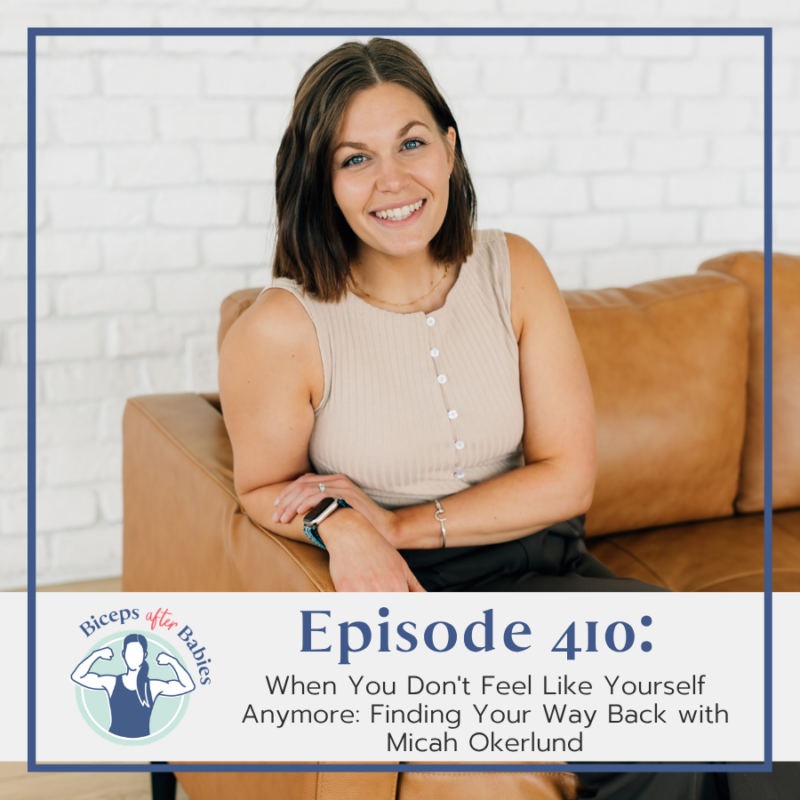
In this episode, I’m joined by Micah Okerlund, a MACROS 101 alumna, to talk about what happens when you no longer feel like yourself. After a difficult pregnancy and diagnoses including PCOS, insulin resistance, and endometriosis, Micah found herself exhausted, disconnected, and searching for answers.
She shares how learning to trust her body, let go of fear and judgment, and approach change with patience and self-compassion helped her reclaim her energy, transform her mindset, and find her way back to herself. If you've ever wondered whether lasting change is possible, this conversation is a powerful reminder that your future self is worth fighting for.
Follow me on Instagram and Tiktok!
Highlights
- Childhood Fears, Athletic Identity, and Feeling Betrayed by Her Body 06:43
- Reclaiming Energy, Feeling Like Herself Again, and Becoming a “Macro Scientist” 15:41
- Rediscovering the Woman She Used to Be Through a Voice Memo 21:46
- Recording Growth Throughout the Journey 25:03
- Learning to Trust Herself 29:09
- Embracing the “Let Them” Mindset 32:28
- Falling in Love With the Journey Instead of the “After” 35:40
- Why Micah Became a Coach 37:33
- Understanding the Complexity of PCOS 43:00
- The Message She Would Give Her Past Self 45:48
Links:
Micah Okerlund’s Instagram
Introduction
You're listening to Biceps After Babies Radio Episode 410.
Hello and welcome to Biceps After Babies Radio. A podcast for ladies who know that fitness is about so much more than pounds lost or PR's. It's about feeling confident in your skin and empowered in your life. I'm your host Amber Brueseke, a registered nurse, personal trainer, wife and mom of four. Each week my guests and I will excite and motivate you to take action in your own personal fitness as we talk about nutrition, exercise, mindset, personal development and executing life with conscious intention. If your goal is to look, feel and be strong and experience transformation from the inside out, you my friend are in the right place. Thank you for tuning in. Now, let's jump into today's episode.
Hey, hey, hey, welcome back to Biceps After Babies Radio. I'm your host, Amber Brueseke, and today's guest is someone that I think you may see yourself in. So my guest today is Micah Okerlund. She's a mom, she's a personal trainer, she's a MACROS 101 alumni, and gosh, if nothing else, I want you to listen to Micah introduce herself because she really knows herself. And I find sometimes, this is like a total side note, but I was just really impressed. When she introduced herself, she really shared who Micah is as a person and as an individual. And I find that a lot of us as women have lost that. And so I think it's just really inspiring to hear Micah introduce herself. So I think you should pay attention to that. But I digress. So Micah is a MACROS 101 alumni. She also has gone through TMCC, which is my Transformational Macro Coach Certification. And she has had a ton of change over the last couple of years with her physique, with her body, and internally as well. She recently put up a post in our alumni group talking about the change that had happened. And when I read her post, I knew I had to get her on the mic.
So in this episode, Micah takes us all the way back to childhood to some of the comments that put some fear into her about weight gain. And that fear followed her for decades. And she shares what a rough pregnancy, a scary emergency C-section, and then a string of health diagnoses that included insulin resistance and PCOS and endometriosis, all these things kind of coalesced around her and really made her feel like she was broken. She was exhausted every day. She was dealing with daily migraines. She gained a bunch of weight, and she just was feeling so disconnected from herself and like she wasn't herself anymore. And I've heard this from a lot of women. So if you're in that space currently, just know that that was exactly where Micah was. And she talks about that experience. And then she walks us through what it actually looked like to find her way back to herself and what it took and the process and the time that it took. And she does a really good job of specifically getting into things that had to change for her in order to create the outcome where she was able to lose 30 plus pounds. She was able to change her physique. She was able to get to the place where she felt in control with food, where she felt like she had control over her inner dialogue and where she was speaking kinder to herself. We talked about how she was able to let go of fear of judgment and specifically how she did that and how all of this changed her life from her energy levels, from not getting migraines anymore, from being able to feel in control with some of the health issues that she was dealing with and just have a complete transformation. So she does a really good job of taking us along on that story. So if you've ever looked in the mirror and thought, I don't feel like that person, like that's not me staring back at me in the mirror, this episode is for you. Let's dive in.
Amber B 03:55
I am so excited to welcome Micah Okerlund to the podcast. Micah, thanks for being on today.
Micah Okerlund 04:01
Thanks, I'm super excited.
Amber B 04:03
Yeah, so the reason that I reached out to you is because you put up a post in our alumni group, Beyond MACROS 101, talking about what has changed for you in the last year. So I wanna get into that and we will talk about the change that has happened. But before we do, I wanna just do a little introduction of you, who you are, what you like to do. Just tell us a little bit about Micah and paint us a picture of who you are.
Micah Okerlund 04:28
Yeah, so I am a mom to a three-year-old and not so many golden doodle, he was supposed to be many, turned out not to be many.
Amber B 04:36
Oh my gosh.
Micah Okerlund 04:36
Yeah, yeah, it was hilarious. But he's great, we love him. And his name's Teddy Lasso, so if you're a Ted Lasso fan.
Amber B 04:43
Love Teddy Lasso.
Micah Okerlund 04:43
He looks like a big teddy bear. And then I'm a mom to a sourdough starter named Ophelia and one too many plants.
Amber B 04:50
Wait, is that one of the three, is the sourdough or is that an additional child?
Micah Okerlund 04:54
I feel like the sourdough is an additional child.
Amber B 04:57
Oh yeah, yeah.
Micah Okerlund 04:58
She's a lot of upkeep, but I love her, she's the best. Yeah, I'm married to my best friend, Brighton, and we've known each other since we were teenagers. And I used to actually not like him, he used to drive me crazy. And he one day just, it was like a click overnight, he became my best friend in the whole wide world and the rest is history. Yeah, I love painting, I love anything artsy. Like if it's artsy, you've got me there. If it's outdoors, you also got me. If it's hiking, camping, powering, water, I will be there. I will take a sunny day any day. I also love books. I'm like addicted to audio books in the space of my life. Being a mom of a three-year-old, you just don't get to sit down and read very often. So I love reading murder mysteries, true crime, thrillers, fantasy, any of that. And then I'm like a major concert junkie. Like I cannot turn down concert tickets to save my life. If somebody like wants to get me a gift, just get me a concert ticket. I don't need items, I want experiences.
Amber B 05:59
That is so awesome.
Micah Okerlund 06:00
Yeah, I'm kind of all over the place.
Amber B 06:02
Okay, what I loved about that is like, I asked you about yourself and you had so many things to say about yourself. And I feel like sometimes as women we're like, I'm a mom and I'm married and like, we don't know what else it is we like. Oh my gosh, what a great example of like somebody who has discovered who Micah is outside of these other contexts. So bravo on that work.
Micah Okerlund 06:23
Thank you.
Amber B 06:24
That is amazing.
Micah Okerlund 06:25
Yeah, part of my journey has gotten me here. So did not used to feel that way. I did not used to think there was anything interesting about me.
Amber B 06:32
Oh my gosh.
Micah Okerlund 06:33
Obviously not to like, you know, say too much too soon, but yeah.
Amber B 06:36
So spoiler alert, the her introduction was part of like the manifestation of what her journey brought her to. So let's talk about that. So can you take me back a couple of years to maybe when you were at a different place in your life, a different relationship with your body, what did health and fitness look like for you when you were a little bit younger? What did your relationship with your body look like? Just kind of paint a picture for us of what life used to look like.
Micah Okerlund 07:02
Yeah, yeah. And this honestly takes me all the way back to my childhood. I'll keep it as brief as possible. But when I was a younger child, I was a little bit overweight and my mom wanted to help me understand the importance of taking care of your body. And so she signed me up for soccer and the rest was history. I became addicted to soccer. It was my sport. I was good at it. I loved it. And I played sports all through high school. I ended up doing cross country and track and hurdles and all the things. It was my favorite. But during that time period, there were comments said to me, whether it was by loved ones or coaches or students along the way, that made me very anxious about gaining weight back after I had just naturally lost it from being an active kid. And I was so, so concerned to a point that I actually, my poor mother, she'd pack these beautiful, amazing lunches for me growing up and I would throw them in the trash because I was so afraid to put on weight again, to have comments about my body said. And that really was bad for me. I later in high school ended up injuring my knee, had to go to physical therapy for it and learned the beauty of exercise to heal the body. And to me, I was like, that's magic here on earth. You can take care of your body through exercise. And so I actually went to college and became an exercise physiology major. Loved it. Through the beauty of college, I learned that physical therapy was not what I wanted to do. But I found this passion in personal training and specifically working with women who are beginners because at that point in my life, I had never lifted weights or anything. I had just started learning about the body and the abilities that you could, things you could do. And I started lifting weights and I started realizing like other people have gym fears like I have about going in and being around people. And so I started training at the gym of the college I was going to as a personal trainer. And I had 30 clients at one point, all female who were just like, oh my gosh, you get how scary this is. And it was so fun to connect with them.
So after graduating college, I decided this is what I'm gonna do. I'm gonna be a personal trainer. And then like life is and does, it knocked me off my feet. I found out I was pregnant, which wasn't a bad thing, but I just wasn't expecting it right away. And I had a very, very rough pregnancy to keep stuff simple. It just was not fun. I slept a lot. I was just down for the count. I had all these plans of how active I'd be during a pregnancy and all these visions of what I would do to keep myself healthy and happy. And it just went the complete opposite and ended in an emergency C-section where I almost lost my son. And post that, life just kept throwing the punches. I still at that point had never really taken off that personal training business. I ended up finding out I had endometriosis and painful water syndrome and PCOS and insulin resistance. I was like, I wasn't fully pre-diabetic, but I was borderline there. And it was like all of a sudden overnight, it felt like my body had just like betrayed me. Like, yeah, you know all these things about lifting weights and eating good or what I thought was good at the time, air quotes.
And yet all of this weight gain and all of these health issues just came up out of nowhere. And I got to this point where I was just like, what the heck body? Like, what is going on? And so between all of those fears of my childhood coming up and then all this massive weight gain from all of that going on with the diagnoses and pregnancy and all the glorious things that happen, I got to this point where I was just like, I literally just don't know what to do next. Like, I'm so confused. And that kind of got me to your doorstep.
Amber B 10:53
Yeah. I have to imagine in that, I mean, I'm glad that you started with childhood because I think, I mean, so often this starts in childhood, but it makes a lot of sense where you're saying, it was made very clear to me as a child that gaining weight was not good, that I don't want that, right? So it created this fear of gaining weight because that's bad and bad things are gonna happen and you should never do that. And so that gets internalized at a young age. And then that fear is manifested later in life and your body's broken and it's not working and all of these health issues are cropping up and the weight is coming on. And now that fear that you labeled so early in life of like, this is bad, this is awful, this is the most terrible thing, then happens to you. And so now it's like, now we have to look at it and we have to deal with it. But it makes a lot of sense as to why that would be such a tumultuous time because of that deep rooted fear of weight gain. So at what point did you discover MACROS 101? Did you discover my stuff? And what made you think that that was gonna be different? Like it was gonna be something different or you're gonna learn something different or it was gonna create a different outcome for you?
Micah Okerlund 12:00
Yes, and I love this question because this is something I'm so passionate about. Well, one, I found you on Instagram. I don't remember the day or what it was, but it was this chick who was explaining about food and it matched the science that I recognized from having studied sports medicine and nutrition and like all these different, you know, sports nutrition, like all these different things. And I was like, that makes sense to me. So I just clicked follow, like you do when you find cool content, you know?
Amber B 12:22
Yeah, yeah.
Micah Okerlund 12:24
And that was actually during my pregnancy. And I didn't really, like at that point in time, I wasn't trying to like lose weight or anything. Like I was like, this is normal pregnancy weight. Like I'm not stressed about this, you know? Like I understand my pregnancy is different, but like I didn't think anything of it. And so I just continued to see your content for like the next two years. And then it wasn't until it was just like, kind of like right after my son had turned one, that I really like, it was like, my body is not, it's not changing. Like I thought it would post pregnancy and start covering things. And I was just like, man, her content is like so interesting because the one thing that you kept bringing up was about women's bodies specifically. And that caught my attention because in college, we learned all of these amazing rules and things and all these like different stuff, but then they would say, and this is the part that would always kill me, is, but women are a special category. So it doesn't quite fully apply to them. But then they would never go on to explain what does that mean? Like things that change, like what are we supposed to do differently? We're not little men. So like, and then the more I would look up things, they're just like, there wasn't research, there wasn't answers. It was just like somebody guessing based off something or telling us to push harder and do more. And so I was doing those things. And I was like, but this lady keeps talking about like an approach that's personal to you. And I was like, that's so interesting to me. And she specifically is like talking about female. Like what does she know that I don't after four years of studying the body? And also the other big emphasis in college was all about building muscle, building muscle. And I felt like I can totally build muscle. Like I've been building muscle, but how do you have fat loss and keep your muscle? That was the part that I feel like never fully was covered in college well. And your content was talking about that. And I was like, so what's the secret? Like what is this thing? What are you doing? Yeah, what is it? And like when I officially like, it was one of your free like masterclasses that you did. I got on there and I was like, what does she have to teach? You know, like, what is this? And I learned about MACROS 101. And I was like, well, shoot, what if I just take this like a college course? What if I treat this just like, like it costs almost as much. So like, what if I put in the energy that I would put into in college, into this course, like what would happen? And just went in with this curious mindset of like, this could be the thing that changes for me. And yeah, I was so glad I was in that master course.
Amber B 14:56
At Newsflash, it did. So let's talk about, let's get into specifics of, you know, when we, one, when we change, often it's very hard to see that change in ourself because the change happens slowly and our brain does everything it can to like not actually see the things that we change. So I think it's really valuable that you're able to be in this place and look back and say, things have changed. I have changed. You know, I'm in a different place a year ago than I am today. And so I would love for you to explain a little bit of what that looks like. What specifically has changed? What have been the biggest shifts that you've seen in yourself internally and externally?
Amber B 15:33
Yeah. Oh my word. Like, and I could be here all day, but I think the biggest thing, and this goes back to like having PCOS. When you have PCOS, you are so tired all the time. You can like get the best night of rest and wake up and by eight o'clock, you need like a six hour nap. And then you wake up from that little, you know, you get 30 minutes, cause you have a three year old at this phase of my life, but you know, you wake up from the nap and you're tired an hour later and cravings are high. And mood swings. And like, there's just so many things going on. And I felt so foreign in my body. Like even just like someone like giving me a hug and like, you know, whatever. It just felt so weird. Like I was like, it doesn't feel like me. And I did not like that at all. I was like, I do not want to just like live in this body and have like my soul, my spirit, whatever it is that you call it, your essence. I didn't want that to not feel true to myself anymore. And so over this like last year, I think the biggest things that have changed for me is one, those energy levels. Honing into my nutrition and my exercise even more so gave me the energy. And with that fat loss that I had over time, it was like, I just feel like someone dumped this bucket of like energy on me. Like I don't know how to describe it. And it wasn't like overnight, but it was like one day overnight, I woke up and I was like, I didn't take a nap this week at all. When did that happen? You know? And with that energy level increasing, it just fueled me to push everything else and shift things and change things, set priorities, make goals. Like things just started naturally happening. I think the other big thing that changed for me was having experience playing with nutrition and my diet and like getting curious, being that macro scientist and trying to dive in for myself versus reading about it in a textbook. Like it is one thing, like I knew all the things. Like it was so funny. In macros, like I would watch your videos, it would say something, I'm like, I already know this. Oh my word, I know this. You know? And then it was like, okay, but if I'm curious and I experiment with this, does this really happen like it's supposed to happen? And I did. And so like, it's one thing to like be book smart, but it's another thing in like in college, a professor would call it bro smart. We'll call it sis smart, because we're women here at school. Sis smart,
Amber B 18:02
I love that.
Micah Okerlund 18:03
It's so cool to have that like wisdom from experience.
Amber B 18:08
Yes.
Micah Okerlund 18:08
And realizing, oh my word, I'm figuring out my own body versus what a textbook tells me should happen with women being a special category, you know? Yeah. It's so different. And so for me, like having that energy to fuel that desire to keep getting experience has changed everything.
Amber B 18:24
Yeah, yeah, I've heard it said before, wisdom is knowledge plus experience, right? So you can be book smart and you can have the knowledge, but when you attach experience onto that, that's when you create wisdom, which is kind of what you're pointing to. And then I also, I loved the cycle that you kind of drew as well, which is that, you know, I was experiencing a lot of drops in energy. I didn't have enough energy to make it through the day. I changed my nutrition, which gave me some more energy, because when we fuel our body, we have more energy. That energy created fat loss and that fat loss then created more energy, which created more fat loss, which created more energy. And you just get this like positive feedback loop of the cycle that kind of ramps you upward. And it sounds like it all started with the tipping point of like when we actually fuel your body right for you, which is maybe different from somebody else, then that can start that cascade and that positive feedback loop that becomes, yeah, a cycle upward.
Micah Okerlund 19:19
Yeah.
Amber B 19:20
One of the things that I have clients do in MACROS 101 is record a voice memo when they start. And then I encourage you to re-listen to that voice memo at the end of the program. Will you go, like, kind of talk about that experience of listening to that former version of yourself and what surprised you the most when you re-listened to it?
Micah Okerlund 19:39
Yeah. One was just how awkward it was.
Amber B 19:42
Oh, yeah.
Micah Okerlund 19:43
That was, I remember reading that in the instructions. And like I said, I was taking this like a college course.
Amber B 19:48
Yeah, you're like, I'm gonna do the dang thing.
Micah Okerlund 19:49
Yeah, and it's very important. Like, I was that like super geeky 4.0 kid in college. Like, I had to do everything right.
Amber B 19:55
We would have been friends, Micah, in college.
Micah Okerlund 19:58
Yeah. But also, I'm just a weirdo that loves to learn. I loved college. It was so much fun. Like, if class was canceled, I was mad. So anyways, but because I was following the instructions to the T, I remember being like, oh, this is so awkward to like talk to myself. But I actually have this best friend. She's been my best friend since high school. And we send voice messages back and forth all the time. Like, sometimes they get up to 20 minutes long. It's really embarrassing.
But I was like, I'm just going to talk like I'm talking to her and being as honest with her as I've ever been. Because at this point, she didn't even know I have these things. So I was like, if I was going to tell her everything on my heart and my soul right now, like, what would that be? And that's when I pushed her cord and started talking. And listening back to that, sorry, I'm trying not to get too emotional, was just like, wow, I was so broken. And just so lost feeling and floundering. Like I talked about how, you know, my mindset back then was just to be so unkind and so mean to myself. Things that I would never say to anybody, I said to myself every single day on the silliest, littlest mess ups or things. I felt like I would look in the mirror and just not even recognize my worth or care. And like these feelings of just feeling out of control and empty and alone. And so scared, you know, was just like so raw to go back and listen to. And it was also like, I remember just being so at war and angry with myself. I was like, I'm educated, I know about the body. And just like, even then like beating myself up, like, why can't I figure this out? Like, why do I need to take this course? You know, and just like really listening to that. Recognizing like, and I actually listened to the voice memo last night. Again, just to kind of like refresh. And other things that came out to me was like, I didn't have hunger cues back then. Like I couldn't tell like if I was hungry or not. I felt so uncomfortable in my own body that like I would hide it in clothing. And like, I just, oh, migraines. Like I forgot about how I would have a migraine every single solitary day. Like, I don't even remember the last time I had a migraine. You know, it's just like sitting back and hearing this person who was like, felt like a shell, so hollow. And hearing that now is like, the only reason I know that's me is because it's my voice.
Amber B 22:25
Yeah.
Micah Okerlund 22:26
And the difference is just like, oh, in a year I was able to grow that much. Like, man, that it, yeah, it's like, I don't know, it's so unreal to go back and listen to that. But I'm so glad I did it.
Amber B 22:45
Yes.
Micah Okerlund 22:47
I, oh, sorry, that's one more thing I wanted to say about that. I remember you were talking in a video and you said, this is another way to measure progress and growth if you don't see it on the scale. And I was like, okay, whatever, you know, Teacher Amber. But no, like going back and hearing that, even yesterday, listening to that, I was like, holy cow, what a way to see your growth than to listen to your own voice talk about the things in your heart and on your mind. Like, wow, sorry, okay.
Amber B 23:16
Yeah, I think this point bears repeating because a lot of times we are so quick to measure progress in only one way and it's usually a number, right? And so we are measuring progress with measurements or we're measuring progress usually with the scale and that becomes our definition of progress. And one of the reasons I have clients do a voice memo is because some of the biggest change that then will translate to an external change is the internal stuff that happens. And it's really hard to measure that. It's really hard to get an absolute data point in a number for where you're currently at and that shift that happens internally. And the voice memo can really kind of show that because you did have a physical transformation, right? Like you, I don't know how much weight did you lose?
Micah Okerlund 23:57
Overall last year, I lost 30 pounds.
Amber B 24:00
So you lost 30 pounds, right?
Micah Okerlund 24:01
Yeah, yeah. And in the time of MACROS 101, it was 13 pounds and five inches off the waist. And like that then at that time felt huge. Yeah. Like that was huge.
Amber B 24:11
And so it's like, I just wish more people understood that the internal transformation, like a lot of people will be like, oh my gosh, Micah, how did you do it? What, like, what did you change and all the behaviors that you change and things? And you did make those changes, but it's like this idea that like, okay, yeah, of course, Micah, you lost 30 pounds. So now you feel this way and you feel differently internally. And they think that the weight loss causes the change internally. And I think what most people will be surprised to understand is that that internal change of who you were then and the changes that you made over time is what drove the external change. The change happens first internally and then gets pushed out externally, not the other way around, which is the way that most people think that it happens. And that's one of the reasons I have you do a voice memo because it is a way to capture that internal change that is occurring.
Micah Okerlund 24:58
Yeah. And I would say even like more so, don't just take a voice memo at the beginning. Yeah. Take a voice memo at the end of your first cut, the end of your first reverse, the end of your first period of maintenance, during maintenance. Take so many voice memos because listening to yourself, we're really good at listening to other people say, but we don't always internalize it or do something because of, we hear what someone else says. We are so, like if we talk to our brain negatively all the time, that's how we treat ourselves. But if you go back and you listen to that growth that you're having over time, oh my word, so powerful. Because we are so much more powerful than we realize as women. We've got to listen to ourselves. And just see that growth over time. Like it is so cool.
Amber B 25:43
Yeah. One of the things that I talk a lot about is how growth often happens more from what we choose to let go of, than what we do. And I'm wondering if you are present to what specifically you had to let go of in the process of getting to where you are now.
Micah Okerlund 26:01
Yeah. So many things. I think the first one honestly was my fear of judgment. And I think you know this about me. I had my first, like I think my first hot seat in MACROS 101 was me crashing out and crying over judgment. I was so afraid of what people were going to think. I was like, people are comfortable with me the way I am. If I start changing, I'm gonna lose friendships. My family members are, they're gonna maybe pull away from me. Like there was just all these concerns that I was like, I can't do anything because of what others are going to think. And now I like just, I laugh at that because once I understood that that fear of judgment was just completely holding me back, when I cut that cord, everything started to fall into place. I stopped being so concerned of like what everyone else was doing to make their weight loss happen or their happy life happen. I realized like there was a million amazing women in MACROS 101 and later on and beyond. And I love these women. They're the coolest. But if I try to do their journey and try to concern myself with all the things that they're doing and try to do what they're doing, I am not going to be successful because I'm removing Micah from the equation. I have to keep myself at the center or the rest is pointless. If you involve others in your head when trying to figure out your life, you're gonna get nowhere. You're gonna spin your wheels. And that was like this huge aha moment for me that just kind of like fueled everything else. I didn't feel the need to appease people at parties and events and things by eating all the foods and doing all the things that they were doing. I did what I wanted to do, what I felt aligned best with what my goals and wants were. It was removing pressure, removing this need. I need, I need, I need. It was, I don't want that. So I'm not going to. Or, oh, I really want this. So I'm gonna go do that. And that was huge.
And then the final thing that like really kind of like sunk all that in for me was I kept seeing people like set goals. Like, I'm gonna do a cut at this timeframe because I have a wedding coming up or I've got this going on or I want to be, you know, feeling ready for that. Or I'm not liking how I'm feeling now. And I thought, oh, that's how I should make decisions, right? And then I was like, that doesn't align like in my soul with me. Like why? And so I dug into that and I realized rushing timetables to hit a date for some external something, if that doesn't align with me, then I'm gonna rebel. I'm a huge rebellious person when it comes to things like that. So I'm gonna pick a timetable that works for me and what I want to do. And so it became this like letting go of that judgment, letting go of that concern of others and really honing in on like, what is important to Micah? Not just what everyone else is doing or thinks or the influencer or whatever. What aligns with me? And that's when the walk became a run. It wasn't slowing before. It was just like, I got this. I figured this out.
Amber B 29:14
Yeah. I mean, what I'm hearing is like, you are doing what we talk about, which is like you're coming into your own and making your own decisions. And again, doing things that are right for you, not listening to shoulds or other people or like everybody's opinion about you. It's like really coming into home internally and then being able to make those valuable decisions on your own. And that's the whole idea of what I want my clients to get to is like, I don't want to be your babysitter. I don't want to like tell you everything that you need to do because that's just another person telling you what to do. And at the end of the day, it's like, you gotta live your life and I'm gonna support you and teach you how to work with yourself and how to understand the data and how to understand how your body's responding and all of that's really helpful. But at the end of the day, I am not you. You have to live your life and you have to do what's best for you. And so it's like feeling confident to be able to make those decisions. I love it when I see women get into that place of I am confident to make the decisions about my life because you are the best person to do that. There's going to be somebody listening who is like, okay, so you said you let go of judgment, but how, how did you do that, right?
Micah Okerlund 30:21
Oh my gosh, it's a million dollar question.
Amber B 30:23
Yeah, it's like a lot of women recognize that they do carry that fear of judgment and they're worried about other people think about them and they go to a dinner and they worry about everybody else thinking about things about them, about how they're making decisions about food and their bodies and blah, blah, blah, blah, blah. And so I think a lot of women recognize that they have that fear of judgment, but then it's like getting to the other side of how do you let go of that? So what did that process look like for you? How did you change? How did you let go of that?
Micah Okerlund 30:48
Yeah, this, I have to say, this was not overnight.
Amber B 30:51
Yeah.
Micah Okerlund 30:51
Like this is, and even a year later, I'm still getting better at this.
Amber B 30:56
Yeah.
Micah Okerlund 30:56
But a couple of things that I started doing, I won't say the phrase exactly how I say it with my husband and I, but we tell the audience in our head to buzz off. And because I realized I have this audience in my head that I'm like performing for and that I'm like trying to impress and trying to appease. And I realized if I just tell them like, dude, buzz off, and actually named my brain, I named her Bertha. Bertha, shut up.
Amber B 31:26
Shut up Bertha, get out of here, Bertha. I love that.
Micah Okerlund 31:28
Yeah, if you're not helping me, you're not serving me, stop. And like, I would literally tell myself that in my brain, like Bertha, stop. Yeah. You're not helping. Yeah. And then I would take a deep breath, try to ground and work on some nervous system, you know, techniques I'd been taught along the way. Yeah. And it was like, almost like, I don't know how to explain it, but like cutting like a train of thought. When I would cut those negative trains of thoughts or those fears and those like, oh, they're gonna, or that's gonna, when I would cut it, it would just slowly fall away. And maybe later on in the day, when I first started, like it would come back and I would get frustrated and stressed again, I would cut it again. And I would just like mentally have that conversation with my brain. Later on, I actually started reading The Let Them Theory by Mel Robbins. I think that's her last name. But I really loved a lot of parts of that book. The whole book wasn't for me, but there were some parts in there that I loved. And the thought of let them, let them judge, let them have their own opinions about it. Let them, because the reality is, is like their insecurities and their fears and their things that like I'm afraid of have more to do with them than it has to do with me. And if I always try to focus on their fears, I'm never gonna conquer my own. Like why take on the fear of the whole world when you can just work on you? And that like, when I would get a comment that I didn't totally love, in my head, let them. Let them think that I'm crazy, it's fine. Let them be judgmental that I didn't eat the cookie at the activity or the party. Let them, because I know what's important to me right now and what I actually want in this moment. And I'm okay with them not loving that. And it was kind of like cutting that off and then having that like, now here's what I'm gonna do next because of that, that really started to shift for me. And I don't really know when it clicked. I don't really know, but continuously having that and just talking kinder to myself of, no, no, Micah, you are good at this. Micah, you can do this. Sending those positive things back to my brain to almost like retrain it or something. I don't know the science there, but there has to be something along the lines of if you talk kinder and more loving to yourself, change is gonna happen. And when that's how you're talking to yourself, fears of judgments and concerns and what other people are thinking, they fade to the background. And then one day you just realize they're not there anymore, which sounds so dumb. And I honestly, if Micah, a year ago, I would have heard that she'd be like, oh, whatever. But it did, it was just consistent time working with my brain and talking to it.
Amber B 34:22
Yeah, yeah, and it's so good to set that up as the expectation too. This isn't something that changes overnight. It wasn't developed overnight and it's not gonna change overnight. But it's are you committed to the incremental process that happens of just continuing to show up and continuing to notice, continuing to see where you start to trip up and then working alongside with your brain to make a shift. And that repetition time over time over time, you look back then a year later and you're like, oh my gosh, I can't believe how far I've come. But any one of those days, the progress was very incremental. And I think that's what's hard about long-term progress and sustainable progress is like any one day can kind of feel like a throwaway. It can kind of feel like I'm not actually changing. Nothing's really happening because it's so incremental. And it's why it's so important to do those look backs on a longer term scale, because in a year you go back and listen to that voice memo and man, you can see the change. But any of those days you probably been like, I don't know, I'm not really changing that much. Like nothing much is happening. And so I think that that becomes really important. So I'm glad that you spoke to the time element because I think some people get frustrated that it's not changing faster and that's normal.
Micah Okerlund 35:35
I feel like it's so hard because we see social media every day of our lives.
Amber B 35:40
Yeah.
Micah Okerlund 35:41
And the number one thing we see there is someone's after. And any phase of life, like whether it's their sourdough bread journey of like, here's what my bread looks like. And then you're like, well, has your bread always looked that way?
Amber B 35:54
Did your first loaf of bread look that way?
Micah Okerlund 35:57
Did it look like mine?
Amber B 35:58
Yeah.
Micah Okerlund 35:59
Whatever it is, we always see somebody's after. Or when we see their before and after side by side, what we don't see is that gap of time of what it took. And that's why I think removing rushed timetables off the equation for me, like out of the room, whatever you want to call that, was so powerful because I had almost become obsessed with seeing all these people's before and afters. I'm like, well, when's my after gonna look like that? And then one day you look at the after and you're like, oh, wait, when did that happen?
Amber B 36:32
Yeah, yeah.
Micah Okerlund 36:33
Like what? And I think that's the problem is like, we have to almost like go touch some grass and remember like this is somebody's after. When they have put in time and energy and effort, blood, sweat, and tears, like all the things, you're not seeing the journey, you're seeing the after. And instead of becoming in love with obtaining some magical after, becoming in love with the journey that's going to get you there. Becoming in love with who you are now to love whoever that is in the future.
Amber B 37:03
Yeah.
Micah Okerlund 37:04
I think brings hope back to the equation, brings peace, brings the desire to keep trying, keep pushing those little stones further up the hill. Fall in love with the journey now, not who you're gonna be then. Because who you're gonna be then is gonna be a whole other person. It's not even gonna be who you think it's gonna be. But if you can love who's here now, then whoever that is then is gonna be so much cooler than trying to just skip the in-between because you can't skip the in-between.
Amber B 37:33
Unfortunately, yeah. You can't skip the in-between. Talk to me a little bit about what made you want to get into coaching, right? What made you switch from like, yes, I'm having my own journey, I'm having my own success, and now I want to help and serve other women in the same way?
Micah Okerlund 37:49
Yeah. For me, one, it was seeing this huge, like it felt like overnight almost. When I finally looked back, it was like, wait, when did that happen? I saw this change that I was like, I am not that broken, scared girl anymore. I am not hollow anymore. I'm this person who has this big, beautiful life. It's full, it's busy. But like, I don't feel like I used to. And I have, because of my health issues, I mean, at one point, I was literally in a women's clinic every single week to get these bladder installations for the problems I had going on. And I was in and out because of postpartum depression and anxiety at the same offices. So I had been in the doctor's office almost every day for a year. And sitting next to me were women who had struggles too. Some of them were excited because they were pregnant and had a lot of great things going on too. But I saw the faces of the women who were there because they weren't there for something fun. And I remember just like sitting on the couch one day and being like, I don't feel like that broken girl on the couch anymore. But I know that there are other girls on those couches feeling lost. And the advice they're given is so basic, so generic, get on birth control, push harder, eat less carbs. Trust me, I had the whole eat less carbs conversation. It ended with me coming home and literally emptying my pantry of everything, throwing everything away and my husband just standing in horror. And I was like, I do not want another woman to come home from a doctor's appointment and go through her pantry like I did and have that experience. Like if I can stop one woman from having that experience and the breakdown from that, then I will have done my job. And I was like, there are just so many women out there who feel lost, just need someone's shoulder to cry on when they get the diagnosis. They need someone to pick them up when they're ready to get back up. And then they need someone to run the race with them at their pace. And I want to do that for the rest of my life. I don't care how slow the races are, if I can still help them run that race and pick them back up and sit down when they need the break with them, then I will. Because I know what it feels like to try to run that by yourself. And to me, like with the few clients I have right now, my heart thinks about them every single day. I get so excited when they have these little wins that they realize their life is getting better because I'm like, oh my gosh, you're not feeling so broken anymore. And it makes me so happy that I can be a force to help other women find themselves again. And that's what it is. I just don't want anyone to feel like I felt a couple of years ago.
Amber B 40:56
That's so good. You went through coach training with me into TMCC. What did you learn? What was the biggest thing that you learned about being a coach through that process?
Micah Okerlund 41:08
Oh my word, 20 things. I learned that it's listening. Listen to what people have to say. I think one of the, there was this like, I don't know if we would call it an activity, but there was like a timeframe in the certification where we looked at like identifying different types of language and how people were talking to themselves or how they were phrasing things when in a coaching session with us. And I just remember thinking, wow, there's so much power in words. And I was like, one, I'm a big talker, if that's not obvious by now, but I was like, if I can ask follow-up questions and really start to understand what someone's trying to say, one, that gives women power because they feel heard. I think feeling heard is so powerful. But then two, when I finally am able to hear them and they know they're being heard, then I think we can start shifting things. Then I think we can start getting somewhere because so many coaches and programs out there are like, here's a quick fix, do this thing. Here's the rules, stick to it. If you don't, it's your fault, move on. And that's so sad to me. Why not dig a little deeper? Why not get down there with them and listen to what they have to say and then make a plan together? And that was so powerful for me to learn because just even with some of the clients I've been working with now, what Micah would do is totally different than what's gonna work for them. But taking time to ask questions and listen and take notes and then look back at those notes and say, what do we think about this? Has made all the difference. But yeah, language and asking follow-up questions, so powerful.
Amber B 42:55
Yeah, and with your current coaching, you do a lot of work with women with PCOS. What is something that you wish more people understood about PCOS or what is something unique about working with women in the PCOS space?
Micah Okerlund 43:10
Yeah, I wish people understood that PCOS is like the spectrum. We assume that PCOS is gonna look and be one way for everybody, but it could not be further from the truth. Everyone is so different. So like one woman with PCOS may have a lot of body fat. One may not have heart beat any at all. One may struggle fertility. One may get pregnant easy. One might have high energy levels. One may never be able to get out of bed. And you can be anywhere on that spectrum at any point in time. It's not set in stone. So learning to navigate your body with PCOS can be so hard when you try to follow someone's strict rules, because it just doesn't, day-to-day doesn't work for you. What's powerful with PCOS is learning to interpret your body. And that's what MACROS 101 did for me was you taught us to dive into data. You taught us to dive into all these different little markers and pieces and bits, because if I would have focused on just the scale, would have been a complete waste of time. But learning to focus on energy levels, mood, sleep, stress, noticing patterns, like, oh my goodness, this is so silly, but like I would get on the scale and be like, scales up, I must be sucking. You know, I was like, this freaking sucks. But then I also learned to look and say, oh yeah, wait, I don't technically have a period, but like I had some cramping and around this time period, it happens every month. So this would have been like a period for me potentially. So that bloating and that scale going up was this, or, oh, hey, I just traveled. My body's not loving that. This is why. And so to figure out my PCOS, it wasn't some like, cut all the gluten, cut all the eggs, or whatever, all the crazy, funny things out there that people will tell you to do. It was looking at how is my body responding? What does that mean? And what can I try next? Like getting curious about that was so powerful. And that's what I do with my clients is, I kind of like, we'll throw you into the water a little bit, start having you swim, figure out what's sticking, what's not working, where things are not, you know, changing or improving for you. And let's hone in on that. Let's play with some of those things and experiment and see where we can get to. And that's the thing with PCOS. It is not a hard, fast rule of, this is the things you should do for success. It is, let's start with some key things and let's just get curious about where we can go next. That is the key. It is not a checklist, could not be further from that.
Amber B 45:56
Yeah, that's really awesome. Just last question, just to wrap up. If you could go back and give yourself a message, right? And this would also be a message to maybe somebody who's feeling like they are in the position that you were a year, two years ago. If you could go back and give yourself, this woman a message from the place that you're at now, right, from the perspective that you have now, what would that message be?
Micah Okerlund 46:13
I think number one, be kinder to yourself, talk kinder. Stop putting yourself down. If you wouldn't tell that to your sweet child or the person you love most in the world, you certainly should not be saying that to yourself. And that's anything in life, not just whether or not the skill's up or down or if you feel like you ate the way you thought you should eat. In general, just talk kinder to yourself. And then be patient with the timeline. If you would try to see progress the next morning, the next morning, the next morning, you're gonna burn out, you're gonna get frustrated. Release that pressure to be perfect and have this all figured out right here, right now. Let time just gently take you along. Instead of trying to force yourself or be more rigid in it, let your body fluidly let things happen with the efforts you're putting in. And then choose to be understanding with your flaws and recognize you're a human. You are allowed to like wake up one day and just wanna eat cookies. We all have those days. And if you try to remove your humanity from the equation or being a woman for crying out loud who has hormones that fluctuate like crazy, if you try to remove all that from the equation, you're gonna be miserable. Let yourself be at the center of your equation. If you remove yourself from that center, you're doing someone else's plan and that's why you're stuck and that's why you're frustrated. Let it be true to like what you need in that moment. Don't try to go back and chase who you looked like on your wedding day or pre-college or pre-pregnancy. Don't try to go back to that version of yourself. That's not who you are anymore. You're a big, beautiful person who has so many amazing things who you are today. Chase who you can be tomorrow in your 30s, your 40s, your 50s, whatever it is, because who's around the corner is so beautiful and is so freaking awesome. The past is a great thing. It got you where you are today, but chasing with love that person who lies ahead of you leaves so much power and so much possibility. You're unstoppable and better days are ahead. Don't take yourself too seriously, but know that there are better days ahead when you're chasing your future you versus trying to get back to being someone who you're not anymore. You're someone cooler than that. Go forward.
Amber B 48:46
Oh, mic drop. That was awesome. So fantastic. Micah, this has been amazing. If people are wanting to connect with you, they're wanting to work with you, where should they go?
Micah Okerlund 48:55
Yeah, so I have an Instagram. I'm horrible at social media. I like let down my entire generation. So don't judge too harshly, but you can message me or, you know, get ahold of me at metamorphosis with Micah. And there's like a period between metamorphosis and with. And yeah, reach out. I would love to chat. Even if you don't have PCOS, I just want to be your cheerleader. I just want to cheer on any woman out there who is in the journey of trying to figure it out. If you want to link arms and run, I want to link arms with you.
Amber B 49:28
That's awesome. And we will link that up in the show notes as well. So you can connect with Micah. Thanks so much for coming on and sharing a little bit of your story. I think it's so inspirational to hear what change actually looks like. I mean, your point is such a good one. We often see befores and afters and we don't see what happens in the middle. And I think you've been really open and honest about what that middle process looks like and that it's messy and that it's not always linear and that it takes time. And I think it's just so good too. And that it can happen. I mean, I think that's the other thing that I want people to come away from this episode is like change is possible. It may look different than you think it's “supposed” to look, but it is possible. And so I really appreciate you coming on and sharing your story because I think it gives other women hope and it gives other women a path that they can kind of walk in your footsteps. So thank you so much for sharing your story.
Micah Okerlund 50:14
Thanks for having me. It was fun. I hope this helps somebody.
Amber B 50:17
Oh my gosh. Wasn't Micah just incredible? I mean, that moment where she talks about listening back to her voice memo. I cannot stop thinking about that. Like I said in the episode, change happens from the inside out, not the other way around. And Micah is such a beautiful example of what it looks like to do the internal work so the external results can follow. If you want to connect with Micah, you can find her Instagram. I linked it in the show notes, bicepsafterbabies.com/podcast. And then you can go and find her and connect with her. And if today's episode stirred something in you, if you heard Micah's story and you thought, oh my gosh, that's me, I want you to know that change is possible. It may look different than you expect. It may take longer than you want, but your future self is waiting for you. And it's one of my very favorite things that I get to do is help introduce you to that future self. That wraps up this episode of Biceps After Babies Radio. I'm Amber. Now go out and be strong because remember my friend, you can do anything.
Outro
Hold up sister friend. Do you love Biceps After Babies Radio? If so, the best way to say thank you is to subscribe to the podcast and leave a review on iTunes. I know every podcaster wants you to leave a review, but it's because those reviews help the podcast to reach more people. And I do truly want to know what you think. If this particular episode resonated with you, will you also please share it? Either send the link to someone who would find it valuable or take a screenshot and post it to your social media and tell your friends and family why they should listen. Make sure you tag me at biceps.after.babies so I can hear your feedback and give you a little love. And you know, if you aren't already following me on Instagram or Facebook, that's the perfect time to hit that follow button. Thank you for being here and listening to Biceps After Babies Radio.

Leave a Reply