






Show Notes
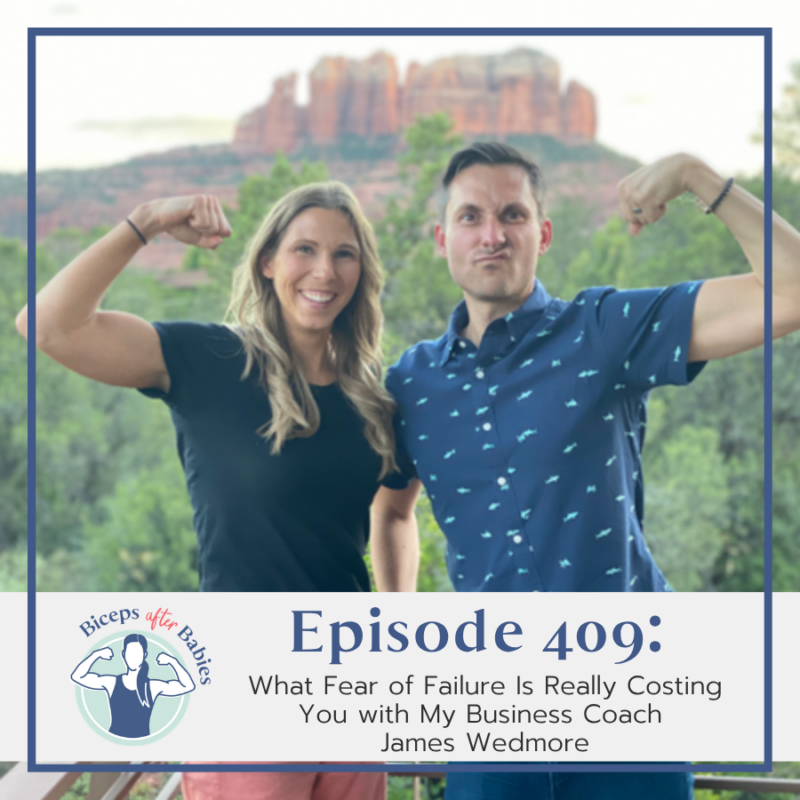
In this episode, I’m sitting down with my longtime business coach, James Wedmore, for a conversation that goes far beyond just business. We’re diving into the fear of failure, exploring why many of us stay stuck in what’s familiar and uncovering the real price we pay when we let fear call the shots. From reclaiming your personal power to finding the courage to step into the unknown, this episode is packed with the kind of mindset shifts that will help you transform every area of your life, whether that’s your business, your fitness journey, or simply becoming the version of yourself you know you’re truly capable of becoming.
Follow me on Instagram and Tiktok!
Highlights
- James Wedmore’s Background and Career Evolution 4:50
- Personal Growth, Identity, and Re-Evaluating What Matters 7:55
- Fear of Failure Exists Everywhere, Not Just in Business 11:39
- The Two Things Failure Blinds Us To 16:58
- Reframing Failure as Lessons and Experience 20:07
- Learning to Enjoy the Process 30:05
- Common Disguises of Fear: Logic, Perfectionism, Complication, and Constant Busyness 37:06
- Courage Is Choosing Differently Than Fear 43:36
- “Kill the Monster When It’s Young” 45:35
- “You’ve Always Been Okay” 4:10
- Understanding Personal Power 51:02
Links:
Join the 2026 Business Breakthrough Event at bicepsafterbabies.com/breakthrough
Other business BAB Radio Episodes:
What To Do When You Want To Quit in Fitness or Business with James Wedmore: bicepsafterbabies.com/89
Ask Amber Anything About Business Part 1: bicepsafterbabies.com/127
Ask Amber Anything About Business Part 2: bicepsafterbabies.com/128
The True Story Of How I Built An Online Fitness Coaching Business: bicepsafterbabies.com/250
Introduction
You're listening to Biceps After Babies Radio Episode 409.
Hello and welcome to Biceps After Babies Radio. A podcast for ladies who know that fitness is about so much more than pounds lost or PR's. It's about feeling confident in your skin and empowered in your life. I'm your host Amber Brueseke, a registered nurse, personal trainer, wife and mom of four. Each week my guests and I will excite and motivate you to take action in your own personal fitness as we talk about nutrition, exercise, mindset, personal development and executing life with conscious intention. If your goal is to look, feel and be strong and experience transformation from the inside out, you my friend are in the right place. Thank you for tuning in. Now, let's jump into today's episode.
Hey, hey, hey. Welcome back to another episode of Biceps After Babies Radio. I'm your host, Amber Brueseke, and I am very excited about today's episode because I got to sit down with somebody who has been in my corner since 2018, and it is my business coach, James Wedmore. Now, if you don't know James, he is one of the most well-known names in the online business space, and he has been instrumental in the growth of Biceps After Babies, in my own growth, in my own life. Obviously, I started coaching with him in 2018. Here we are in 2026. That's eight years later, and I have a lot of my success and a lot of the things that I've created to attribute to James in teaching me and helping me and supporting me and mentoring me to get to where it is that I am today. So having him on the podcast feels like a really special thing for me personally. And it's also a little like when you have two friends who you like love both of them, and then you want to introduce those friends to each other, and you just want them to love each other just as much as you love them. I kind of feel that way where it's like, I love James, and I love what he has to offer, and I love his teachings, and I've learned so much from him. And then I have you here listening to the podcast, and I want to introduce you guys to each other, and I just want you guys to enjoy and, you know, have him love my audience and have you guys love him as much as I do.
So in today's conversation, we dive into something that we're going to kind of frame in, in the business context, but it really is not only about business, and that is the fear of failure. And this is something that shows up all the time with my fitness clients, right? When I'm coaching in nutrition or I'm coaching in workouts, this fear of failure, the fear of if I set this goal and I don't achieve it, what is that going to mean about me is something that shows up in all of my clients. So again, the context that we're going to talk about is that of a business and fear of failure when you're starting or growing your business. But every single thing, I promise you, every single thing that James talks about is 100% applicable to a weight loss journey, to a fitness journey, to any goal really that you have set for yourself that is going to force you to grow and expand. Everything that we talk about in this episode is entirely applicable to you. We talk about fear of failure. We talk about just fear in general, how it shows up in sneaky ways that you might not even recognize and what it's costing you to keep going down that road. This is such a good episode. It's deep. So you may need to press pause at sometimes. I think I need to go back and like re-listen. I was trying to take notes as I was listening to James talk and I realized I just need to go back and listen and like push pause. And then there are moments where I was just like, I need to think about that for a little bit. So this is a really good one. It's really deep. And I can't wait to introduce you to my business mentor and my friend, James Wedmore.
Amber B 03:41
All right. Welcome back to the podcast. My business coach since 2018, Mr. James Wedmore. Hey, James.
James Wedmore 03:50
Wow. 2018.
Amber B 03:52
- I know that was, this was going to be my first.
James Wedmore 03:55
We were so young.
Amber B 03:55
I know. Well, that was what I was going to say. This is going to be my first question is like, so I met you in 2018, hired you as my first business coach, been my business coach since then. Um, the last time you were on the podcast was 2020. So that, I mean, blast from the past as well, five, you know, six years ago. So a lot has happened in, you know, since then. So, um, I would love for you to do two things, give a quick little introduction to you and who you are and what your world is like. And then my question I had for you is what has been the biggest area of growth for you in the past six years? So since 2020, the biggest area of growth for you. Yeah.
James Wedmore 04:34
Dang. That's a, that's a hard one. But that's really good. Okay. So what was the first one? Give a..
Amber B 04:39
Just give an introduction. Yeah.
James Wedmore 04:43
Yeah. Um, so I, uh, when I graduated college, I very quickly realized I didn't, I didn't want a job. I didn't want to be employed. And so I, I, it was just a perfect time of the internet was this, was this thing, you know, it's this thing called the internet. And I, I started my first iteration of, of an online business now, 19 years ago. And, um, and within a couple of years, I grew that to a $2 million a year, a year business. And that was basically around this model of something that I still do today, which is like the thing I'm the most passionate about, which is teaching. I love teaching. I think if teachers made more money, I would have just become a teacher, but I wanted to make more money. I wanted to work for myself. I want to make a lot of money and I wanted to teach. So I found myself in this, in this place. It's about this whole business around it. Um, I learned everything about video and I wanted to teach video on the internet. Um, and so I started creating a membership and online course and just a whole personal brand around that. And, um, long story short, people obviously started coming to me and saying, how are you doing that? And I found a whole new depth of passion and fulfillment with helping people how to do that with, with their niche and expertise. And I think, I think the reason I love that the most is that there's, there's the layer of helping people. And then there's been this layer of helping people that are helping people. And it like, it moves me to my core that you, you could have such an impact. I'm not looking for credit, but such an impact that like you're helping people to go help people that go help people. And that's just been a really fun journey. And what I realized is today, and I think we'll get into some of these things on the, uh, on our conversation is what's been really at a core is like my own desire for growth and personal growth and expansion and what that really means.
Business today, business has been for years for me since we were working together, has been a playground for that growth. It is the playing field that I step onto for my own growth and expansion. And I think when people see it that way, it changes everything. So when you throw a question at me, Amber, that's like, where have you grown the most in the last six years? I'm like, you know, I, I don't even know where to begin because there's just, there's, there's so many answers for me. Um, you know, I went around that time. I went through some really challenging stuff in my personal life. You know, I went through a divorce at the same time I lost my father. Um, it, you know, and like a lot of, you know, COVID's going on a lot of changes in the world. And, um, that was what we call the, the ego death or the shamanic death where things in your life have to, you know, fall away that are, that are no longer serving you. Um, but so much of the growth I think today that I've had, um, I'm trying to, I'm trying to wait to like chunk it up and like encapsulate all of it. That's why it's like so hard for me is in a way reevaluating what's important in your life. And I think it's very easy for entrepreneurs. And I understand this today. I went through this to like wrap your whole identity into business, especially when it's a personal brand business. Like we both have a personal brand business and it's like, it gets like, um, soul bonded to you. Like you are the business and the business is you. If you had sales today, it's a good day. And if you didn't, if someone refunds, it's a shitty day.
Amber B 08:09
Yeah.
James Wedmore 08:10
And, and you are the business and the business is you, and you are your accomplishments and all of that. And it becomes your singular focus. It's like you're thinking about it all day, every day. And, uh, and that was me for a very long time. Um, and, and that's really hard because it did really well. So like I would, I kind of became maybe like a workaholic, but I enjoyed all of it. And so I would have these days, and this is around like 2018 to 2020 where like, I'm, I mean, I'm working from the moment I get up, you know, start my day at nine o'clock and I'm working until seven. And it was, I was working six or seven days, but I had like, loved it and enjoyed it. I got so much of my needs met fulfillment and all of that. But I, I started to realize that I didn't have anything else outside of business. And, um, and today I do. And I think that's such a beautiful thing is like, you can have this business, but like, don't lose sight of everything else in your life that matters.
Amber B 09:11
Yeah.
James Wedmore 09:11
And, um, and that's just gotten so much bigger and so much more rich. And I, and I actually like playing this game of like the non-importance of business, um, which is an uncomfortable at first. It's uncomfortable. Like we're, you know, because we, we, I don't know if this will make sense to you, if it'll resonate to you. I don't, I don't know if it'll make sense to everybody, but it's like, there's something that feels reassuring when you're passionate about something where you're like, oh yeah, if I'm this excited, then it's like, that becomes my, like, if I feel this way, I know it'll be successful. And that'll be the thing that gets me over the edge. And so there can be this uncomfortable, weightlessness, unsettling feeling of like detaching yourself from it because it feels like it doesn't matter. But, um, and it's like, it should matter. And I should care more where'd the passion go. But I found a way where it's like, it does, of course it matters, but it doesn't need to feed my ego. It doesn't need to give me significance or self importance or anything. Um, and I've, I've found so much, like, so it's so freeing in that, but, um, but it still matters, you know, and that's a weird place to be in for the people. Like, yeah, I think you all have to go through that and then you get there. But, uh, but what my, my last thing I'll say is like what I'm most like braggadocious about to people, which I don't think people give enough credit to because they're just not there yet. And I but you would understand this is the, the, the game of longevity and sustainability.
I think some people, most people are so like fixated on like getting money or making something work or generating sales that they lose sight of. Like what you should really be doing is something that you could be doing for the next 12 to 15 years. And it gets lighter, it gets easier. It gets bigger. It gets more fun as you do it because that's where the juice is. And when I decided that was the game I wanted to play, I had to look at things really differently because some things are not sustainable. Some things are like, I can't do that long-term, you know, I'm running a sprint during the middle of a marathon race. It's not gonna, it's not gonna work for me. So I had to change a lot of those things about me and you know, here we are 19 years later, later doing it. So some of those things have, have worked. So it's a long answer. I'm sorry.
Amber B 11:25
Yeah. Well, what was so, so interesting to me is like the whole time you were talking, I feel like anybody who is listening to this, you could go back and you could replay that entire thing. And everything that you talked about in the context of business applies to you and your body. This idea of co-mingling, I am my body and my body is me, the tidying, the tying yourself to the scale. And if the scale goes up, it's a bad day and scale is down. I mean, literally everything you said is exactly what I see a lot of women doing when it comes to their own fitness journey and their body and trying to control it. The idea about longevity and sustainability, it's like, that's not how most people think about their, their nutrition and their, and they're working, working out. Um, and so anyway, if you're listening to this and you were just listening from the context of hearing what he was saying about business and you're like, well, that doesn't really apply to me. Go back and re-listen to it from the context of your body, your fitness journey, your goals, and every single thing that you said equally applies to your journey because it, because it's truth. It's truth in lots of contexts.
James Wedmore 11:23
Yeah. Absolutely.
Amber B 11:23
Yeah. So good. Okay. So the conversation I wanted to open today, because again, I feel like this is a conversation that is applicable, whether we're talking about business, whether we're talking about your health and fitness journey, whether you're talking about parenting or relationships or anything is the concept of failure. Um, it is whenever you're going after something that you want, that's big. There is oftentimes that fear around failure. Um, it prevents a lot of people from living a full life because they're so afraid of, of failure. Um, so that's the con that's the concept that I want to talk about today and kind of explore with you.
James Wedmore 13:01
I love that. Yeah, because I think this is, um, there's so much to unpack here. There's so much we can talk about it. Um, and, um, it really applies everywhere in your life. Okay. So the first thing I'm going to say is that what failure is, is a judgment. And that's just a fact. So when you are saying fail, failure, I'm a failure, it failed, whatever you are making a judgment. And most accurately, you're making a judgment of yourself and your past actions. And it's one of the hardest things for a particular type of person, especially, you know, in the world of entrepreneurs, every entrepreneur I know has it, including myself, that we're really hard on ourselves. And, um, you know, I took on a spiritual journey many years ago and my spiritual mentor, like that was the biggest thing that I still find myself struggling with from time to time is how hard I can be on myself. And the way that I am hard on myself today is that, you know, you, you go after anything and you give it your a hundred percent. And when you do that, there's always a part of you that knows that you could have done better. You could have done more. Like, why did I, you know, like, why did I do that cheat day? Or like, why did we, I knew I shouldn't have gone out or whatever. And then we judge ourselves for that. And we're really hard on ourselves. And the, one of the most beautiful things he's ever taught me is like how important it is that we don't do that to ourselves, how much that's hurting us, affecting our growth in ways that people don't really fully understand, um, that we, we have to be gentle with ourselves. We have to have that, that love, that self-love and compassion first.
So failure is a judgment. Failure is your, your ego beating yourself up and pointing out, highlighting what you didn't do right at the behest of what you did. And then that just becomes what you beat the drum to. Okay. So that's, that's the first thing is like, if we were just like, if we just chose to have more compassion for ourselves every day, like humans, like it's really hard to be a human, you know, like there's so many things out in the world. There's it's the world is so chaotic and busy, and there's so much to do just to like sustain and maintain. And, and I really do believe and prescribe to the philosophy that we're all doing the best we can. And it's true that we can do better, but we're doing the best we can every day. And so if you're doing the best you can with whatever it is, and then you want to be hard on yourself with it by calling yourself a failure, that's like the worst you can do because it doesn't compel you to do better. It puts you in learned helplessness. It puts you in that, what we call no man's land. You know, no man's land is like, you're, you're not compelled to move away from something and you're not driven to move towards something. And that's like this apathetic resigned life. And you stack on enough of those insults to yourself, judgments to yourself of I failed, I failed, I'm a failure. I'm a failure. Like the only logical thing would be like, why bother trying? And what most people do is they they're blinded. The failure, the label and interpretation of that judgment failure blinds them from two things. Number one, it blinds them from the good that they did do. It's, it's rarely binary. You know what I mean? Like, it's rarely like it's an absolute. It's like, okay, maybe I did, I did a few things that were not right, not accurate, not the best decision, but what about all the good that I did? What about how far I have come? What about the, the decisions that I did make the choices and the actions? So you're blinded to that and you make a generalization and that's just never rooted in accurate truth.
Okay. And then the second thing is that the judgment or label of the judgment failure blinds us to what I believe is the most important ingredient of them all, which is the lesson and my life. So first, I, like I said earlier, I love being a teacher, but I think the reason I love being a teacher is because I love being a student and I'm a student of life. And I love this little like Zen saying where the student goes to the guru and it says, you know, guru, you say that, um, life is like a school, but what's the difference between life and school? And the guru says, oh, that's easy in school. You learn the lesson first and then you take the test. But in life, you're given the test to see if you learn the lesson and the test is life experience. So what people are not present to is a context of life where every day in this present moment, you are living into the unknown. This next moment is nothing but certain. The future is anything but certain and you're moving into the unknown. And so the first, if that's a fact, that's a truth, right? The future isn't certain and we're living into a future and it's completely unknown, then you don't have an instruction manual for what's going to happen next. We just don't, we don't know what happens when we're going to turn left. We don't know what happens if we raise our hand and throw our hat in for this opportunity or start this business or go on a weight loss journey. We don't know what's going to happen and we're taking a leap of faith, but the brain doesn't like that. And the brain will use our past to keep us in a, in a, in a context of everything is predictable because it's safe, it's familiar, right? And so anybody who wants to live life that they would label an extraordinary life must have a context where they're living into the unknown of life. I'm, I'm taking a step into the unknown. And if you are taking a step into the unknown, well, look at the word, it's not known by you. So it is only logically inevitable that when you walk into the unknown, you're going to stumble.
So like the best metaphor I can give is if I said, Amber, you're going to walk into that room next door, but it's pitch dark. And you've never been in that room before. And you're going to have to stumble around in the dark until you find the light switch. That's life. That's how life actually is. So she's going to like trip. She's going to bang her head against the wall. She's going to bump into a few things, but inevitably through contrast and experience, she's going to find the light switch. And that's when you approach life that way, you realize that every one of those bumps, every time you're hitting a wall, it's like the average person calls that failure. I didn't find the light switch. Oh, I, I, I fell down, but it's the contrast that is required to get you one step closer to where you want to go. So, really failure is a 3d ego generated, um, generated idea. But what is really occurring is lessons. What's really occurring is experience to learn. And when I took that on in my life, everything changed. Everything changed is that, is that if I'm here to learn, then I have to be willing to go into the unknown to learn something new. And if I'm going to go into the unknown, I have to be willing to say, you're not going to get it right away. You're not going to get the perfect score. It's this guessing the right answer on a test. So you learn through the getting it wrong. And, and that's the new context that I have for, for failure is that there, there is no failure. And the only true definition of failure I could give to ever give to somebody, and I'm going to hesitate saying this because some people will put some shame on themselves. Um, but normally when I talk to business coaches or other business owners as their business coach, I can be a little bit more intense with them because entrepreneurs like the tough love, you know?
So I don't mean this to be judgmental and I don't want to make money, shame themselves, but the real true definition, only definition that exists of failure is the conscious decision to give up. Cause that's, that's within your control. If I walk into the unknown or if Amber walks into that dark room and she goes, I don't want to do this anymore and leave, that's her choice to leave. And it's her choice. And again, I don't want anyone to have shame or judgment on that. There's nothing wrong in saying, I don't want to do something anymore. There've been many business endeavors that I started going that path. And I said, this is not what I want to do. And I stopped like, you don't, I don't think you know this Amber, but I think it was back in like 2018. When we first met, I started creating a line of physical products and I was, I was still doing a lot of the stuff in the video space. So we had like these video products that we wanted to bring the marketplace, tripods and like portable, like teleprompters and stuff like that. And I worked with a company and we designed this and I'm going to be honest, I hated it. I didn't, I'm like, I don't like this. I don't like we did all this work and we'd spend months just trying to design this one little product. And, and then you get to that phase and like, okay, now what? And they're like, okay, well, you're gonna have to spend like all this money to get the machine, you know, molds made and dah, dah, dah, dah. And if you're lucky and if you price this right, like you're going to be able to make like $12 off of it. And I'm like, I don't only think that's my legacy, like to just make this little product that makes me $12. I could just, and I stopped and I said, this is where I get off. I'm not going to do this anymore. I don't look at myself as a failure. I look at myself as what a win that I discovered something that I didn't want to do and was honest with myself.
So, you know, even that, when I say that it's a, you have to put it in context for yourself. If you want something, and this is a beautiful thing. So this is like quantum physics. This is like some of the like woo woo stuff, but it's really true. If there's something in your heart of hearts that you want, science is telling us it's meant to be, you cannot have the thought form exist within you without simultaneously creating its probability for existence. So it exists as a possibility, right? So you go, I want this, whatever this is, it already exists as a possibility. So the moment what's heartbreaking is when the reason we quit, we still want it. And that's failure is, I wanted to start this business, but I'm going to give up because it got hard, because it's too tough, because I locked belief in myself. That's failure. If I said, I thought I wanted this. And as I went down this path, I realized I don't that's success because you're learning more about who you are and what you want and what matters to you. So in context, that really, really matters. Um, but if it's something you truly want and it's like, you have to get what I'm, I put a big emphasis on truly a lot of the things that people want in their life are what they thought they want, but they don't.
Right. A lot of people think they want a business because they just see how cool people look on Instagram, you know? And so you gotta be really honest with yourself because what, what it is, what you want is not so much a material end result, but it's how your experience of your day is every day. And that's a big difference. So like, do you want a business? Everyone says yes to that. Do you want a bunch of money? Yes. But if I said, do you want to be on a podcast like Amber's every day where you're like sharing and teaching and inspiring people? I'm like a hell yes. And some people might be a no. And that's what people lose sight of is like, yeah, you want the end result, but do you want the journey too?
Amber B 24:48
Yes.
James Wedmore 24:49
You know, and if you do, it's yours and it's going to be ripe with pitfalls, roadblocks, failures as part of it. But that's not really what a failure is. It's, this is where this is my next battle. This is my next lesson. So I hope that that makes sense.
Amber B 25:10
Yeah. And I really love the framing of teasing out when you want something, do you just want the end destination or do you want the journey too? Because I think we do a lot of that of wanting the end destination. We want the outcome. We want the shiny thing on the other side, but if, but we don't want to choose the path. We don't want to choose the process. And so we stay stuck a lot of times because when you say, when you want something, you're saying you want both. You want the path and you want the outcome. And that's very different. Yeah.
James Wedmore 25:42
And that's, that's it. It's like, as came over, like when you see someone who goes to the gym because they love the way it feels to, to sweat and move the body. Yeah. That's someone who's not sitting there going, Oh, I don't want to go to the gym. So I can't get the end result, you know? And, and that's how I've had to look at everything. If I go, and I really do believe for a lot of things, not everything, but for a lot of things, it's a choice. You can choose, you can choose to say, I'm going to enjoy this, or I'm going to choose an enjoyable way to enjoy this journey. And I think that's part of the way you have to hack yourself. You know, like if I'm like, okay, I want to lose some weight. The first thing I'm going to do is I'm going to sit there and say, what is something that will make me more active that I will enjoy? Yes. Like, Oh, I really like tennis. So like, I'm going to, I'm going to find a tennis club and tennis partner, and we're going to play twice a week. Cause I really enjoy it, you know? And then we're going to do that. Right. And I think that's just, that's the way I've always looked at business. And I, and I think that's a really important thing to say, because I see a lot of people that burn out and give up. And, uh, and burnout is a really, is a really beautiful lesson for us because burnout is like when your soul is saying no, but your brain says, yes, screw it. Let's do it anyways. And you can, you can only drive the bus for so long before something higher takes over and says, yeah, that's not how we're going to do this. And, um, you know, humans, we have a hard time letting go. We have a hard time changing things. And, um, and that's just the way it is. And it's hard.
So when you get really good at that, you're not forcing as much in your life, you know, you're not pushing too much. So when I teach business to people, people come to me and they say like, I feel like I'm approaching burnout and I feel like things have gotten so heavy. And the number one thing we look into within like 30 seconds is they're still saying yes and doing things in their business that they shouldn't be doing. And if they let those go, they wouldn't feel like they're approaching burnout anymore. But of course, then we have another conversation, which is that entrepreneurs, especially really struggle with letting go of control. So they're in this like between a rock and a hard place or like, I can't let this thing go, but holding onto it is burning me out. I'm like, well, what do you think is going to happen here? You know, like it's just the lesser of two evils, right? You're either going to keep holding onto this, working 14 hours a day, doing stuff that's unsustainable and you're going to hit a brick wall going a hundred miles an hour, or you're going to let it go. And either someone else is going to pick up the ball or they're not. And if they don't pick it up, you get someone else that does. So, you know, that's how all these things come into play, which is kind of fun.
Amber B 28:17
Yeah, so true. Um, so sometimes we are present to the fact that we have fear of failure and we have identified that as a sticking point for us. And sometimes that fear of failure, I feel like it gets hidden from even ourselves. Um, and it up and it manifests itself in the way that we make decisions or the way that we approach things. And, but we're not even present that what's underlying that is a fear of failure. So, so sometimes it can even be hard to like self-diagnose because you're like, no, it's not fear of failure. It's just that I want everything to be perfect, right? Like, right. You know, so it gets covered underneath, underneath these other ways. So I'm curious when you are working with other entrepreneurs, how, how do you see fear of failure show up and be manifested? What are symptoms of fear of failure that people might even not even link to what is underlying?
James Wedmore 29:06
It's great because what you're really pointing to is that fear masks itself.
Amber B 29:11
Yes.
James Wedmore 29:11
So especially entrepreneurs, they don't like the word fear. They don't like to say they're afraid because their whole identity is a part of being what? Fearless. I'm courageous. I, I'm unstoppable. So they can't be with, I am afraid a lot of them, them can, so..
Amber B 29:28
Yeah. Interesting.
James Wedmore 29:29
And fear itself is so, cause we're talking about two things now. Cause failure, failure is if failure has occurred, it's the judgmental label we put on past events that went, didn't go our way. Right. So if, if it's, if failure has occurred or the label deemed, I declared failure, we're describing the past. When we talk about future fear, we're talking about the future. Yeah. So you put those together and we're going to have this like beautiful, wonderful conversation, but any type of fear first and foremost is an internal response that we feel based on a prediction of how we think things are going to go. And we don't like how they're going to go. That's, that's all fear is. It's a prediction of what we think is going to happen and to the degrees in which we believe that and don't want it is the degree in which we'll feel fear in the body. Okay. So guess what? The, it goes back to what I was saying about we're walking into the unknown. So if it's unknown, we don't know what's going to happen. And if we don't know what's going to happen, guess what the brain does. It tries to protect you from that by saying this worst case scenario is going to happen. And it puts by default, something either in the past, real or imagined in front of you, because it's believe it or not for the average person, it's more uncomprehensible and more terrifying to be present to the unknown than to be present of, well, at least it's known what the future could be, even though I don't like it.
And so people don't really understand that, but fear itself is so crippling. It's one of the worst things. Every single person has to face it, deal with it. I mean, every, let me say this way. Every person has it. Yeah. Every person deals with fear. What I want for everyone is to face it and do battle with it. And basically we can, we can dive into that conversation, but to go back to your specific question, yes, fear masks itself. And so what we want to look for are where if, if we can get honest with one question, what do you want in your life? And this could be a business. It could be a goal. It could be something really cool. You want to create and accomplish or experience a big change in your life. If you are honest with that one question, and you can be like, this is what I truly, my heart of heart wants fear. You can snuff out and find fear when you find the hesitation around that. Where's the ‘yeah, but’, where's the part of me that like objects to it? Like, yes, I want this, but, but a part of me thinks this says that feels that, and that's where the fear arises. And so for different people, different, you know, masks for different folks, I guess fear will mask itself. For me, the biggest one that it got me with was logic. Fear would be a foot mask itself as logic. Oh, you know, there's already people doing that. So no one's going to want this. That sounds very logical or, Oh, well, you can't launch right now and do this because summer vacation and people are not around and blah, blah, blah. And I'd have all these good reasons.
And so for a lot of people, that's what it is, you know, but perfectionism is another one. Perfectionism is a coping mechanism or a success strategy, really, that people use to avoid being judged and criticized. But it's an impossible standard we hold ourselves because perfectionism itself doesn't exist. There's no such thing as perfect. There's not objective perfectionism. You can have someone's opinion of perfect, but as soon as you have one person's opinion of this is perfect, you'll have someone that says, no, it's not. So there's no objective perfection. And you even in your, your own mind don't have an objective definition of perfect. So you don't even know when something that goes back to the hard on yourself thing, you don't even know when it's perfect because even when it is like good enough, you're like, yeah, but you know, and you just beat it up and you judge it. Right. So we go, I'll wait until it's perfect. It needs to be perfect and perfect, perfect, perfect. So you create an ideal, a standard or a bar that doesn't actually exist that you can't actually reach. And then you condition it in your life. I'll do it when it's perfect. I'll do it when I'm perfect. Or once it reaches perfection, then I can, then I will, then I'll be, then I'll have. So you've conditioned your life to an impossible condition that you will never reach. And then people never put, you know, they put their life on hold and they never actually get in the game and play. So that's, that's another one.
Here's another one I see. These are like ways in which people do this. And this is, um, complication. People, um, complicate their life. They complicate everything. Complication is like this overcompensation. Like if I make it complicated, that's impressive. I would say, you know, if you want to impress people, make it complicated, but if you actually want to help people make it simple. So people will find complication in their, in their life or in their business or in the things that they're doing because simple feels uncomfortable. It can't possibly be this simple. It can't be this easy. It actually can. And I think actually that's what makes things simple. Like so hard is, is that we move towards, um, you know, complication and then a big way that you'll see fear manifest for people. This is the biggest way: speed. The faster someone's moving, the more afraid they are. The faster you move, the more in fear you are. Because, um, when most people move fast, they're not present. Right. So it's almost like in the mind, they're trying to just move away from something. It's like, I can't, I'm always busy. I gotta, I gotta go. Right. And they're using, like, as long as I stay in motion, everything will be okay. And they're staying in motion because they're like, I can't be with something there. If we're afraid to look at something, we will stay busy as a form of distracting ourselves. And then the busier we are, the faster we move, the more fear we are that we're in. This is why people get, have a really hard time being still being in silence, because when you're in stillness and silence, you're present. And when you're present, you have to be present to the, the shadow aspects of yourself, the pieces of yourself that you don't want to look at, the things that you're still judging yourself for, the things that you're still hard on yourself, your past “failures”, all of that.
And we've been really trained. And I had to really do a lot of work on myself on this of like, you just action and effort your way out of things. And if I just push harder and then I will solve this or get out of this or, or change or whatever. But that's like the, the classic metaphor is the, uh, the bumblebee stuck in, in the house. And it's just trying to get out by hitting the window over and over again. And oftentimes that's how we're living our life. We're just hitting our head against the glass window. And we have no idea that we're doing that. That also leads to burnout. So, um, it takes a lot of honesty for someone to like, really admit I'm afraid. And that's like, unbelievably cool, which is like ironic too, because some of the things that people are like the most afraid of are the truth, right? So when someone can say, I'm afraid of this, especially if they could admit it publicly, um, you just showed me how much courage you have.
Amber B 37:02
Yeah.
James Wedmore 37:03
And that's what's required. So what courage is, is it's the decision point in the face of fear. That is, I am deciding to not do what fear is telling me to do. Fear becomes your worst advisor. Fear is an advisor and it's telling you don't do this. Hey, don't do that. Don't do that. And so to, to have fear is one thing because we all will have it. There's no one that I've never met on this planet that doesn't have that. It's normal. Okay. It's the decision. Am I going to listen to it? Am I going to act from it? Am I going to operate from it? And so a lot of people then get into like personal development worlds and they like beat themselves up because they have human experiences. And it's like, you're going to always have human experiences unless you're floating three feet off the ground. You know, as an enlightened being, you're going to have a human experience. And part of the human experience is every new, as you know, every new levels, there's a new devil because it's a new level of unknown.
Amber B 38:04
Yeah.
James Wedmore 38:04
You're, you will grow and expand until the unknown until you die. And that's, that's actually really cool because I hear a lot of people that go onto a personal, there's a lot of people that are like really in a place of like, they're, they're excited to go on a spiritual journey or, you know, grow themselves in some way. Like I want to grow as a person. I really, I want to go within and like, this is the time for that. It's really beautiful. So you hear people say things like, gee, I guess I have a lot of work to do. I got a lot of work to do on myself. And the answer is yes. And it's endless. It's endless. Like I can't believe how much I am learning about myself right now that, that I'm going through, you know? And like, so like one of some of the things that I go through and that's why it is beautiful. You asked me, I was like, oh my God, it's so hard. Cause I could make this the full episode. Like one of the things that I've really struggled with recently, like I'm still hard on myself. Like that's been my most recent thing is I'm hard on myself in a different way than I used to be. So when I was like younger in my career, I was hard on myself because I didn't think I was good enough. So just like, would be really tough on myself. Now I'm hard on myself because I can see the gap between how I performed and where I know myself to perform at. And I've set this bar where I'm like, I can only do an 11 out of 10. And that's the only thing I can do because I can do an 11 out of 10. But then it's like every day, every performance, everything you do has to be an 11 out of 10. And I kind of put this like standard of perfection on myself that I didn't really notice, realize I was doing consciously. And I really had to back off of that and allow myself to like, you can give your a hundred percent and, and know that you could have done better and not beat yourself up for it. You know?
Amber B 39:55
It's like, you can consciously choose to intentionally hold back in some ways in order to save yourself.
James Wedmore 40:00
Yeah. Yeah. And just be like, like it's just that moment of presence and awareness within yourself of like, okay, I can do better next time. And, but I'm, I can also be proud of what I did do. Yeah. I did really great. You know, and this is really for the, for the entrepreneur type, they put what they determine now, at least I don't do this, but they determine whether they did a good job or not based on what? Results, the outcome.
Amber B 40:30
Yeah.
James Wedmore 40:31
So that's where this becomes a real serious problem because the outcomes are outside of your hands. Like if we get into the world of business for a moment, and obviously anyone can use this emblematically as a metaphor for a lot of different things in business, there is one thing that must occur consistently to continue to have that business. And that is sales, and sales is this interaction, this dynamic, and this experience where someone else has to make an independent decision all on their own. I mean, I don't want to say all on their own, but you know what I mean? Like it's their conscious decision to give you money or to work with you to say yes to you, not yours. Like you do your part, and you could do your part at the best possible, and they could still say no. And then we say, I didn't do a good job. You know, so we make, we were hard on ourselves because we judge us for things that are outside of your control. And that is something you've, you've heard in all the person Bowman books, but it's really, it's really true. It's like, know what's within your control and know what isn't and don't judge yourself for the things that are outside of, of your control. So I can sit there today, which I used to not, which is like, if something didn't go as well as I wanted to, can I still look as objectively as possible and say, did I do my 100% or is that only possible if it also did well, you know, or can you separate the two? And that's, you know, huge, but anyway, so I'm always like, I always have that next lesson for me and that next and it's endless. So it's, it's endless for all of us. And I, and it really is, it should be the game and the goal. So like, whether it's, it's a, you know, a fitness and health journey, or it's a business journey or it's love and relationships, these are arenas for us to experience expansion and growth and healing and learning more about who you are. And I think that's what continues to make me so passionate about business 19 years later, because you're, you're gonna, you're forced to learn a lot about who you are, what you're truly capable of. And that's, that's endless.
Amber B 42:48
Yeah. I, I kind of put a couple of things together when you were talking, because one of the questions I had written down while you were speaking was, how often do you feel fear? And so I appreciate that you like answered that question. The goal is not to get rid of fear. Fear is going to show up because we are human and it's what happens next in the face of that fear that determines which way you go. So what I heard you say is you feel fear and then courage can show up in the face of that fear. And that means making a decision, maybe not what the fear is telling you to how to make a decision. You're making a decision in a different way. And a lot of times I think that's kind of when we enter the dark room where we know what fear wants us to do. And it's very clear. That's like the light room. It's like the room I know exactly how this is going to go and I know what to do. And when we decide to make a decision away from fear, it's like entering the dark room. And now we really don't know how to do it. And we have to fumble our way through and we have to fail and we have to like find the light switch. But it does mean leaving the light and going into the dark and then fumbling our way to the growth that happens on the other side of it.
James Wedmore 43:50
You're bringing the light to the dark.
Amber B 43:55
Yes.
James Wedmore 43:56
That's pretty, pretty awesome. So have you ever met somebody that like, soon as you're in the same room as them, you don't have to tell me who I just, like, they just had like a really magnetic personality. Like they just like, you felt really drawn to them.
Amber B 44:11
Yeah.
James Wedmore 44:12
People can have that quality, right? Fear has that quality. So fear is unbelievably magnetic. Okay. So the same way you walk in the room and you like do a double take, like, who is this person? I need to meet them. Or like, wow, they walked in the room and they just lit up the place. That's as a metaphor, how fear is, is that one simple, like, what if one simple, like mental picture, one simple thought can have your attention do a double take as well. And all of a sudden like moths to a flame, you were drawn to that and you're hooked by it and you're consumed by it. And then it, adds more and colors more. And all of a sudden that's, that's all you keep thinking about. And that's because it has a magnetism to it. It has a, a power to it. And we're not present throughout our day and everything in our life right now is inviting us to be busier and less present. So you didn't even know when it happened. I have had moments in my life where I'm so present that I can watch when that's happening. I can watch when like a fear thought comes in and your brain starts getting pulled to it. And because I'm present, I go, Oh, stop. And Tony Robbins used to say this line. I remember. So I want to give him credit for it. Kill the monster when it's young is like the theme of all the like alien movies, the sci-fi movies. Like there was a moment in the beginning of the movie where the alien was a little baby and they could have just squashed it with their boot, but they didn't. And then it gets all big and like ends up destroying everybody on the ship, you know? And that's how like the movies all end. Right. It's like, but there was that moment and it's amazing. I'm able to do that. It's like, no, when it's just a little baby, but when we're not present, it takes hold and it grows. And we're not, we're not even aware that we're, we're actually feeding it. And then it has power over us. And, and I understand that. And that's, that's what's hard, you know, but you can get to a place where you have more personal power than, than the fear has. And, and that's a really obviously powerful place to be. You will continue to have fears as you continue growing, but you continue to get better at, I'm not going to give my power away to it. And, um, and that's, I mean, that's a game changer because you're free.
Amber B 46:46
Yeah.
James Wedmore 46:47
You're free. And a lot of people like, when I talk to entrepreneurs and stuff, they want freedom. They're like, that's like financial freedom. And it's like, but now you're living a life in a business where you're like, if it's not working, you're afraid it's going to fit. It's not going to ever work. If it is working, you're afraid it's going to fail. And it's like, you're just trading one fear for another. It's like, but you're not free. Even if you had all the money in the world and you, if you live this way, you're not free. And, um, and, you know, I really got that in my life. And I was like, I have to, I have to let this, this all go. And, uh, you know, the spiritual teachings of my spiritual mentor, he shared with me, these simple truths that it's hard for people to grasp onto these. And I understand that, but if you can grasp onto these, um, it is freeing. It's a very simple truth, but someone would have to hear what I'm about to say, and then like, get quiet and just see if it's true for them. But it's the simple truth. It says, you've always been okay. Which means you're okay right now, which means you're always going to be okay. What a simple, what a simple thought. It's like, you're, you're, you're, you've always been okay. Even in the darkest moments of your life, the most painful, like life is going to have that for all of us. Every single person is going to go through heartbreak and, and tragedy and painful things. And that's part of the human experience. And despite that, you found a way to, to be okay, to endure that, to survive that, to get through that. So you've been okay. You're okay right now. So the inevitable conclusion is you're always going to be okay. And then you're going to die. And we're going to talk about, we're not going to talk about death here and the implications of that, but you know, that that's a whole nother conversation for people when you're ready for that. But when you can lean into that as like, you're okay, you're, and everything's gonna be okay. There's, there is nothing to be afraid of. And, um, you know, obviously like things that, you know, just to answer your question, like, oh, do you ever get afraid? I'm like, yeah, I have thought I have human thoughts all the time. You know, every year that I run a business 19 years, you go, is this still going to be a thing? Do I still want to do this? Is this still, you know what I mean? You have all those questions. And I'm like, if I don't manage those correctly, like they turn into fears and I just go, I'm happy. I'm grateful. I'm living my best life today. And I don't know what tomorrow has in store for me, but what a great life I've already lived.I'm not going to worry about it. I'm not going to ruin the day that I have today because I don't know what tomorrow will bring.
And that gives a lot of presence and peace of mind. And it's still really hard, but I have to surrender to just like, what is life going to bring me next? It's brought me so many incredible twists and turns so far. And, and I think that's what matters to me is I want to live a life going into the unknown. I don't, I don't want to just be like, it's all this is, this familiar room that I've found and nothing else. Cause that's a room of, I understand that. I understand that we want psychological safety, that I really get that. And, and we all deserve that. And we should have that when I'm not saying people should live a, their whole life in the, in the unknown darkness of like, where am I? I don't even know what's happening every single day. Um, it's, it's one step at a time. I just don't want to look back in my life 30 years from now. And it's the same thing. And I think we all want that to some degree. We all want expansion. We all want discovery. We all want to learn something about ourselves, about something new. And so I'm, I'm, you know, I welcome that. And it's like fear means you're saying no to that, you know, and I'm just really clear on that today. So hopefully that makes sense.
Amber B 50:38
No, that's really good. Um, will you explain a little bit more about personal power and how we often give our personal power away? Um, because I think that you had a post about that recently. And I think that it's something that a lot of people don't again, see themselves doing. It's a way that we hide from ourselves and we say, we want this thing, but then we take our power away from actually going after getting it.
James Wedmore 51:02
Personal power is a huge conversation. We can have a three hour conversation about it. We, we'd barely be scratching the surface, but the shortest version of it is personal. Your personal power is you it's your, it's your energy. And from a very young age, we've been giving it away and we didn't realize it. Um, because no one told us about that. We don't really understand. And then today, when you want to start something, when you want to do something, the most common thing people say is, and you probably hear this all the time. I just wish I had more confidence. I want more confidence. Well, that's not really what you're asking for. You just don't have another word for it because confidence is how you feel in a moment. Like this is all confidence is confidence is how you feel in the moment based on your relationship with the future. If you have a sense of certainty of how things are going to go, you will, it'll naturally correlate to more confidence. That's all it is. So it's, it's back to this conversation of unknown and uncertainty. So an absence of being at peace with what's going to happen leads to fear knowing what's going to happen leads to confidence. But if, if you can, if you guys can connect this dots, it's going to blow someone's mind here. So we seek confidence, but confidence for most, they only find within the box of what is known. So people, so it's like, you don't really want confidence because if you just want confidence, you're just like playing within the box you've created. So it's like, well, when we go back to Amber and the lit room analogy, she would, and I'm not talking about you specifically, but in that example, she would only find confidence in the room that's already lit, right. The familiar.
Amber B 52:38
Yeah.
James Wedmore 52:39
But if you wanted to go to the unknown, she'd be like, I don't have confidence in there because I don't know what's going to happen. I need confidence. So what people really mean, they just don't have the words for it as personal power. Personal power is your energy. And this comes from a, um, an ancient, um, group of people, you call them a tribe. You can dive into this. There's not much research on it, but called the, the toll tax and the toll tax where the, this ancient race from South America, um, that were like very like spiritually advanced, um, group of people. And they believe that, you know, basically throughout your life, you would leave your, your energy, especially in like traumatic events, things that happened to you, the things that your, your mom said, or your teacher said, and all that was leaving that. And they believe that. And we've had experiences. We teach this to our students that that's your, that's you, that's your energy and that you can call that back to yourself. And so everything has energy. That's quantum physics today. That's nothing new. Um, but when we spend our life giving our energy away, we have very little energy to create something new. And so when the thing that you create or want to create has more personal power, has more energy than the energy you have, it's really hard to create it, let alone sustain it.
And so the journey of personal power is such a beautiful journey of reclaiming you. And, and it also has deeper implications. Like I said, we've talked about this for hours, deeper limitations, because the first thing I've had so many people say when I talk about reclaiming their personal power and you need to be in your power, they go, what power? And that's case in point right there, that most people live their lives, not seeing not present to how powerful that they are.
Most people are not aware that your mere existence is changing the world. That's not hyperbole. Like you impact people around you every day, people that you know and love and care about the people you interact with in the grocery store. Everything is being influenced by your mere existence, you know, and, but we spend our lives giving our power away because we didn't, we didn't know we were so powerful. If you knew how powerful you were, you wouldn't give it away because we don't think about it. Right.
So it's fascinating because I bring this conversation up anytime I'm talking or coaching with people. And even though they've never heard the word or they've heard it that way, or they hear it in this relationship, I go, where are you giving your power away now? And they all, they always have an answer. So we don't even need to explain it anymore. It's first, where are you giving your power away? And they can say, they can tell you they're like my mom, my neighbor down the street, this hater on the internet, you're giving, if it is affecting you, and this is, this is truth. If it affects you, you're giving your power away to it. And the, the goal with the people always ask me like, okay, you always talk about like, you know, you're on a spiritual journey. First of all, yes, you know, your own growth, spiritually, professionally, professionally, gets manifested in your business and your business is a reflection of your own growth, right? Entrepreneurship is such an inside job. And and so a lot of people always ask me like, well, what is your like spiritual practice? It's like, there's all these things you do, but the, the frame is that I really love is that you every day, 365 and 360 degrees, you're a spiritual warrior. And the name of the game is, and it's not what a lot of people teach today.
It's, it's actually the opposite. It's a lot of people are like really teaching the opposite, like, no, be, be a victim, be complaining, get it, get, you know, validated for that. And that's fine. You know, if it works for you, that works for you. It doesn't work for me, but the name of the game is to reclaim your, your personal power and stop giving it away. And to what that means is, is that nothing affects you and not like you can't fake that. You can be like, I'm fine. Like what you said, Amber doesn't bother me. I'm fine. I'm totally fine. No, that's you lying to yourself. But there's a place you can get to where some of the things that not some all, but any of the things that are triggering you today that bug you, like your mother-in-law, right? Just giving random examples that she pisses you off right now. She always happens to say the right thing to push your buttons, right? This is your petty tyrant. And when you're at a place where that she doesn't affect you anymore, she could say, blah, blah, blah. Cause that's all she's doing. She's just making sounds. She's going, blah, blah, blah. Or she's making squiggles and symbols on a phone of a digital screen. And we go, oh my gosh, my whole life and everything and blah, blah, blah, blah, blah. Those are our wounds, right? And so we get, now we give our power away to her. And when we give power away to anybody, these, this is not Jimmy jams opinions. This is just like ancient wisdom is a truth. When you give your power away to anything or anyone that now has power over you. And when we can stop doing that, guess what? You get that power back.
When you're in more of your personal power, you notice you have more of the power to do the things that you want to do. So when I said before, this will, this is really cool. It'll connect that dot. I said, you know, think of an example of someone who's really magnetic in a room. That's someone who's in their power, by the way. That's why they can do that. Right? So people, if you're, if you have given all your power away, you, you don't have the power to be a magnetic person. It's just a fact, right? So it's not like something you're just born with. It's how someone's managing themselves within themselves. But then I said, fear is like that. So fear has a very magnetic power. And if you've been giving all your power away your whole life, it's easier for it to have power over you. So what people realize is as they grow more, like I'm not as affected by fear anymore. And I go, yes, because the journey of growth is about letting go of the past and letting go of the past is about reclaiming where you left your energy in the past. And when you reclaim your energy or your power, you have more of it. And when you're in more of your personal power, you can do more of the things that you couldn't do before. You're not as easily susceptible to the power of fear and you do things that require power.
And that's all it means. It's just, it's not like power over people or anything like that, which some people hear it that way. It's your energy. It's like a battery. Like you can't do something extraordinary when you're at 3% battery. Yeah. You know, you're not going to go on a hike when your phone's almost dead and think you're going to use it when you get there. Right. So it's the same thing. And it's like, you realize you leave the energy of your battery, you and the things that happened to you when you were a child, the things that happened to you last week, the business failure that you did have. That's the whole thing with failure. If I go, tell me about all your failures, I can guarantee for 98% of people, that's where your power is. So when you're like, I'm afraid to do this thing. Why? And I go, cause I'm afraid I'm fail. And I go, where have you failed before? And you're like, let me tell you, I go, your power, your energy still there. You're still there. You're still stuck in that piece of you. And until you reclaim that, we're going to sit there and let those past failures have power over you by predicting what's going to happen next. So it's a big, like I said, it's a big conversation, but the name of the game is like, I teach this to my little niece, which is the most adorable thing because, um, my, you know, you, you met him. My best man at my, my wedding is my nine year old. Now he's 10 nephew. And, um, and he, you know, he's, he's a rascal like me. So he's, he pokes her and teases her. And she is very easily like upset by that. And so what I'll do is I'll just look and I go, Hey, Hey, where's your power? And she knows she has to point herself and go, don't give it to him. Give it right here. You know? And she loves that. And it changes her statements. I was like, don't give him your power. What are you doing? It's yours. Don't give it away to him, but he's bugging me. I was like, I know we'll handle it. He's being, he's being a rascal, but you don't need to give your power. You just come tell us it's totally fine, but it's not worth it. You know? And she, you know, she lights up in that. She's like, here's my power. And she's just always pointing it at her heart. I'm like, that's it right there. So we, we understand it intuitively and then it's hard. It's still hard.
Amber B 1:00:53
Yeah. Sure.
James Wedmore 1:00:54
You know, still very hard, but yeah, hopefully that helps.
Amber B 1:00:57
So good. Yeah. I mean, we could talk about this forever. It's so much here.
James Wedmore 1:01:02
I know. Like I'm just a business coach.
Amber B 1:01:04
Yeah. Right. Just a business coach. Talk a little bit about the event that you have coming up and
James Wedmore 1:01:11
Yeah. So, so that was my whole thing was like, I, I built this business, um, did really well with it. And I was teaching people like online video and YouTube and stuff like that. And what started to stir awake in me is I actually felt really incongruent with what I was teaching. I kept saying like, YouTube was the thing that built my business. Video is the thing that made the difference for me. And I kind of like, it was almost like this voice was telling me like, that's not true. And what was really true was that I was growing. That the growth that I was having, which we just kind of talked about, like, what does that mean to grow? It's like, well, really what it means is to reclaim your personal power. Um, that expansion, that being in your power was, um, the greatest catalyst for my growth, that your, that your business really is a reflection of you, that when you grow, the business grows. And I see that today. So many people that are becoming entrepreneurs want to be an entrepreneurs and they're like getting in this arena and they're just like sewing over their heads. And, you know, they think it's just a strategy or if I just get more followers on Instagram or whatever, everything will be hunky-dory and fine. And, um, what I've been really passionate about in my career is not just teaching the linear left brain strategy of business, which is still required. Don't get me wrong. Like anybody who's telling you just like, you just need to, you know, just grow and be happy and you'll make millions of dollars. You're still missing that piece, but to bring that in to your life and business is, is a game changer.
So, um, we call it the business breakthrough experience because it's a week long three-part experience of taking a deep dive, look at yourself and your business and how we show up in that business and how we approach business. And, um, it really starts because I've had these, I've had these breakthroughs in my life, these quantum leaps and like so many quantum leaps. Like one of them was when we went from 280,000 to 1.2 million in one year, that was a quantum leap. Like that, that it took me years to get to 280. And then it takes one year to get to 1.2 something that is a quantum leap. And then we went from two to 10, 2 million to 10 in a single year. And I'm telling you there, there are things that you engineer both within yourself and the business that can make that happen. That is just defies time and it defies logic, but that's what a breakthrough is. So my life, my business career has been chocked full of you, you experience these breakthroughs and then you see it in the business and you see how that catapults you in business. And so we love to create the environment, um, and the training that gives people that same experience in their business. So we have people that are joining, they're like brand new people that are like just thinking of starting a business. And then I have people that are coming in that are like very successful. And they're like, I'm looking for that next edge because it's totally applicable no matter what or where you are in your life. There's, there's that next battle that you're facing. That's there's that next thing that's in front of you.
It's the next lesson. And, um, we're going to start to change the way we see things like as they, as they say, everything changes. And so that's really at its core, what, what it does, you know, and it's, it's a combination of the, the, the strategy as well. Like, I don't want to be devoid of that. Like the, the, the thought that came to me, it was actually this morning is that the strategy, which is like your plan, the 3d plan of what we're going to do is just what harnesses that energy. So there's a lot of people that just kind of get addicted to insights and want to grow or stuff like that. And that's great. But if it has nowhere for it to go, then the results are like haphazard and scattered, you know, and sometimes you can just take that person who's on that path and just go and just do this. And it's like off to the right. And you're in perfect example that like, just put you in this direction and just do that and boom. Right. And so you need both. And, and I see a lot of people that they just, it's like, it's one or the other, and I'm telling you, it's not, it's not one or the other. Um, it's, it's all of it. And it's, it's how we harmonize both sides of it. So that's, you know, that's a big promise, but it's really fun. We've been, we've been doing a version of this for years now, as you know, Amber and, um, the coolest thing is people just say like my favorite thing that people say is, is they say this is more valuable than any like multi-thousand dollar product I've ever purchased and stuff. And I love that. I love that we can give something for free and we have like 80,000 people, um, like every walk of life, like go through this and, um, experience amazing breakthroughs. So it's really fun.
Amber B 1:06:00
Yeah. It's such a, it's such a cool event. I haven't, you know, I know you're redoing it this year, but I've been to some of the past ones and knowing you, it's going to be an awesome event. Um, and I can't wait.
James Wedmore 1:06:10
Yeah, because I haven't, some of the things we talked about today, like around personal power and fear, like I haven't put those in there. Yeah. I haven't talked about those. And so it's like, I would say I'm not, it's not redoing as much as like, I'm adding all of that in there. Like, I just want to go deeper with people than I have before. And I think people need it now more than ever. Um, I see a lot of people that are like struggling life, you know, the, the world, everything that's going on. And, um, you know, and that's, it's, it's hard and, and it's justified. And, um, I think people need to, um, this is the time for people to grow.
Amber B 1:06:46
Yeah. That's awesome. Yeah. And I'm going to be going through it as well, because like always a student,
James Wedmore 1:06:52
I mean, you're, you are, you're such a, like when I call in my students, I'm like more, more Ambers, please really. Um, and I do mean that I do, I do mean that like you and your sister are such like, um, model. I D when people come up, like we do exercises of course, of like how to, how to identify your ideal client. It's like, well, it's Amber for me. Um, but you really have been. And I think it's a Testament to you too, that you're like, yeah, I'm going to go back and there's more for me to learn. And you will, you will, you will gain something. And it's not to give myself credit. It said, these are things that I come back to.
Amber B 1:07:27
Yeah.
James Wedmore 1:07:28
That's what you're, what you're getting is that this is a spiral. So you revisit themes at higher levels. I revisit fear at this new level. I revisit where I give my power away now that I'm at this level and, and it's cyclical, but it's an upward spiral. So that's why it can be applicable to anyone at no matter what level they're at. So that's, what's really cool about it.
Amber B 1:07:49
Yeah. So if you want to come and do it alongside me, you can go to bicepsafterbabies.com/breakthrough, and you can come and hang out with James and I for a couple of days and dive into all the business-y stuff, which is so fun. Really, really excited about that. Awesome. James, this has been fantastic. I definitely feel the spiral staircase. Like most of these things I've heard you talk about before. And yet I still make connections that are different than connections I've made in the past. Like it is, it is like these topics, you just review them and you see them from a different light and you see how they apply to your, your, your day in a different way than you have before. And it's just, it's awesome. Thanks. So thank you for sharing.
James Wedmore 1:08:26
I love it. Thank you, Amber. Thanks. Thanks for having me. And thanks everyone for listening.
Amber B 1:08:31
Okay. Wasn't that so good. I told you that it was going to be good. And I also told you that it was going to be deep and maybe you need to feel like you need to go back and listen to some of the parts again, to really digest the things that James was talking about, but there's so much wisdom. And hopefully you saw by the end that all of these concepts are applicable to whatever it is that you want in life, whatever it is that you desire, that you're going after, that is a goal you're trying to reach. It's going to require you to grow. It's going to require you to expand. And when that happens, fear is going to show up like that is just how it, how it happens and how it works. And so I found a lot of wisdom in the things that James was saying, and I'm excited to continue to apply some of those concepts to my life. And Hey, if today's conversation lit something up in you around business, whether you're thinking of starting a business, but fear has been something that has prevented you or whether you started a business, but you're scared about selling or you have a business and you're really wanting to scale. I want to make sure that you know about James's business breakthrough experience. It's coming up in just a couple of weeks. It's live. Like I said, in the episode, I'll be doing it right alongside of you because I am still in this to continue to learn and expand myself. But it is a free three-part experience where James is going to take you deep on what he does best, which is combining the mindset and the strategy side of building a business. I don't think anybody does the two together better than James does. And I've seen firsthand what this kind of work can do. So if you want to come join me and hang out and chat about business, you can go to bicepsafterbabies.com/breakthrough. I will have the link in the show note. And last, I don't do a ton of episodes about business here on the podcast. It's a lot more about health and fitness, but I do have some other episodes. So if you are interested in hearing about how I started my business or how I've grown my business, I have a couple episodes that I will link also in the show notes for those of you who are curious. That wraps up this episode of Biceps After Babies Radio. I'm Amber. Now go out and be strong because remember my friend, you can do anything.
Outro
Hold up sister friend. Do you love Biceps After Babies Radio? If so, the best way to say thank you is to subscribe to the podcast and leave a review on iTunes. I know every podcaster wants you to leave a review, but it's because those reviews help the podcast to reach more people. And I do truly want to know what you think. If this particular episode resonated with you, will you also please share it? Either send the link to someone who would find it valuable or take a screenshot and post it to your social media and tell your friends and family why they should listen. Make sure you tag me at biceps.after.babies so I can hear your feedback and give you a little love. And you know, if you aren't already following me on Instagram or Facebook, that's the perfect time to hit that follow button. Thank you for being here and listening to Biceps After Babies Radio.

Leave a Reply