






Show Notes
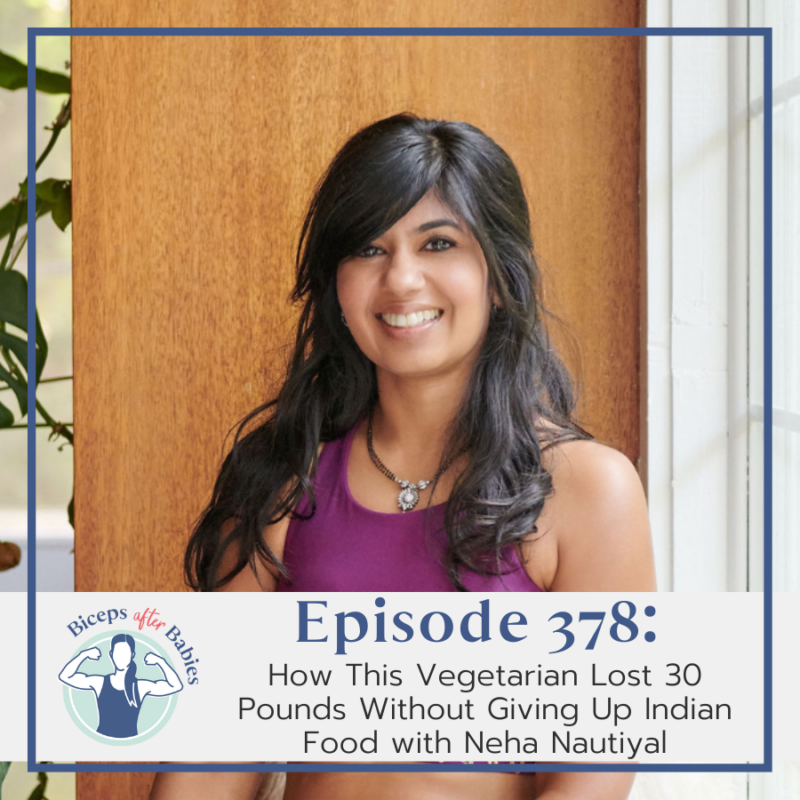
In this episode, I sit down with Neha Nautiyal, a vegetarian macro coach who lost 30 pounds, without giving up her beloved Indian food. If you’ve ever felt like macro counting means sacrificing your cultural dishes or eating separately from your family, Neha’s story will show you a different way. We talk about how she overcame the challenge of fitting high-carb, low-protein traditional meals into her macro goals, and how she ditched the “either/or” mindset to find balance. This conversation is about more than just food. It’s about embracing your culture while still making progress toward your goals. If you've ever felt stuck between two worlds, this episode is for you.
Follow me on Instagram and Tiktok!
Highlights
- Neha’s Background and Journey into Macro Tracking 03:33
- Sharing Lessons from Experimentation 10:19
- Common Mistakes When Tracking Ethnic Foods 13:10
- Navigating Family, Cultural Expectations, and Social Events 16:22
- Coaching as Guidance and Emotional Support 21:22
- Reclaiming Visibility and Finding Her Voice 25:10
- Final Thoughts: Macros as a Sustainable, Personal Tool 33:47
Links:
Neha Nautiyal’s Instagram
Neha's List: Ways to Adapt Any Dish to Be Macro-Friendly
Introduction
You're listening to Biceps After Babies Radio Episode 378.
Hello and welcome to Biceps After Babies Radio. A podcast for ladies who know that fitness is about so much more than pounds lost or PR's. It's about feeling confident in your skin and empowered in your life. I'm your host Amber Brueseke, a registered nurse, personal trainer, wife and mom of four. Each week my guests and I will excite and motivate you to take action in your own personal fitness as we talk about nutrition, exercise, mindset, personal development and executing life with conscious intention. If your goal is to look, feel and be strong and experience transformation from the inside out, you my friend are in the right place. Thank you for tuning in. Now, let's jump into today's episode.
Hey, hey, hey, welcome back to another episode of Biceps After Babies Radio. I'm your host, Amber Brueseke, and if you ever thought to yourself, how the heck am I supposed to hit my macros when the food that I love doesn't even fit, you are going to love this episode because today I'm chatting with Neha, a macro coach who is vegetarian. So all my vegans and vegetarians listen up and she's also Indian. She comes from a cultural background that really has a lot of carbs and not a whole lot of protein as she said herself during the episode and she shares that food is a big deal in her family as it is for many many cultures and the problem was trying to mesh the two worlds together, trying to mesh macro counting with her Indian culture and all the food that her and her family had eaten for all of her life. And when she first started macro counting, she thought that it meant that she had to cut all of that out. She thought it meant that she had to eat a separate dinner from her family. She thought it meant that she couldn't eat any of the Indian food that she loved and she learned very quickly that that wasn't the case.
So if you're someone who feels like it has to look a certain way or you can't eat food with your family or you can't enjoy your cultural foods, this episode is going to turn that on its head because in this conversation Neha walks us through how she went from bringing her own egg white omelet to family dinners to bridging the gap, hitting her goals and still being able to enjoy the cultural foods that she grew up on. Neha let me know that when she started counting macros, she wished a resource like this existed. Somebody who talked about how to count macros and eat Indian food or how to eat your cultural foods and be able to mesh those two worlds. But this episode isn't just about tracking ethnic foods. It's about bridging and breaking the either or mindset, right? This idea, this realization that you can have both progress and the foods that you love. So if you have ever felt like you had to choose between those two things, trust me, this episode is going to be a game changer for you. Let's dive in.
Amber B 03:00
I am so excited to welcome to the podcast Neha Nautiyal. Neha, how are you doing this morning?
Neha Nautiyal 03:06
I'm doing really well.
Amber B 03:08
I am so excited for this conversation because I think it's one that like you were saying before we hit record is just not one that's had enough and you kind of had to stumble and figure this out on your own and if you can prevent people other people from having to do that, that's a huge win. So..
Neha Nautiyal 03:23
Absolutely.
Amber B 03:24
Let's start with an introduction. Who are you? What do you do? Where did you come from? Who do you help? All the good things.
Neha Nautiyal 03:33
Sure. So I am Neha Nautiyal. I'm a certified macro coach now, but prior to that, I was a high school chemistry teacher for almost 10 years. I then did a coding bootcamp, became a software engineer and then during that time, I had two girls and I basically grew up with body image issues. I have a close relative who had an eating disorder and in Indian culture, which I'm a part of, any event that you go to, any relative that you meet, they are very quick to let you know whether you gained weight or lost weight.
Amber B 04:12
Oh.
Neha Nautiyal 04:13
So that was definitely always on my mind. And so I've constantly dieted basically my whole life. All the extreme measures that I've taken always worked until after my second pregnancy and I had all this extra belly fat and I hit my 30s and nothing was working and I was starving myself, spending hours in the gym, hours in the kitchen, nothing was working. I was part of some Facebook groups and everybody kept talking about macros. I lost the belly fat when I started counting macros, kind of planted the seed. I was like, okay, I don't know what that is. But then someone posted your podcast episode number 30.
Amber B 04:59
Like, yeah.
Neha Nautiyal 05:01
And I was like, action item. I need to listen to this. It was amazing. I ended up binging like the first 75 episodes of your podcast and it got me hooked. I have to say.
Amber B 05:15
You're a real fan, man.
Neha Nautiyal 05:18
I mean, I was saying the intro with you. I knew the whole spiel.It was just so informational, so raw, all of the details, everything that you provide, the resources, the people to follow on Instagram, just everything. All the information was something new and I was a teacher. So as a teacher, I love to learn. And this was something new. This was something challenging to me. It was personal to me because I had that goal. And so I immediately started to track my own macros. Of course, first three months, nothing happened. I was completely unsuccessful. I didn't know what I was doing wrong. There's just so much misinformation out there as much as information. And then I found a macro coach on Instagram who was vegetarian and I was born and raised vegetarian. My whole family is and that was really important to me. And within the first week of working with her, I lost a pound after I hadn't been able to lose for years. And I was hooked. I was like, I got this but I was such a perfectionist that whatever macros she gave me, I tried to hit the macros no matter what. And so my husband is from India and he loves Indian food. Our whole family loves Indian food. I refused to eat it during my first cut.
Amber B 06:45
Because it didn't fit.
Neha Nautiyal 06:46
It didn't fit. I didn't know how to make it fit.
Amber B 06:49
Yeah. Yeah.
Neha Nautiyal 06:50
Indian food, as you already know, most people already know, high in carbs, high in fat, not high in protein, especially for vegetarians.
Amber B 06:57
Yeah. Yeah.
Neha Nautiyal 06:59
And so I just avoided it. I just made my own egg white omelet while everybody else was eating Indian food. I brought my own food with me to the restaurant.
Amber B 07:07
Yeah.
Neha Nautiyal 07:07
While I was successful in that cut and I lost the last 10 pounds that I had been dying to lose for years, when I went to maintenance, I gained it all back because I went back to eating what I normally ate.
Amber B 07:20
Yeah.
Neha Nautiyal 07:22
And..
Amber B 07:22
It's like you don't want to not eat Indian food for the rest of your life. You're like, I'm willing to do it for this cut.
Neha Nautiyal 07:27
Exactly.
Amber B 07:28
For the rest of your life and that doesn't work.
Neha Nautiyal 07:31
Exactly. And I was so restrictive in that first cut that I was like, yeah, just like you said, I'm willing to do it temporarily.
Amber B 07:38
Yeah.
Neha Nautiyal 07:38
But then when I went to maintenance, I was so restrictive in my cut. I didn't want to track anymore.
Amber B 07:42
Mm-hmm. Yeah, you look swinging your way. I see that a lot. It's like I'm so hyper, hyper strict on my cut that then it's like you can only do that for so long. And so then when you're not on it, then it's like you swing the other way.
Neha Nautiyal 07:54
Exactly. So then I was continuing to work with her this entire time, a macro coach, and we went to India for the first time as a family that winter.
Amber B 08:04
Mm-hmm.
Neha Nautiyal 08:04
It was an epic trip. My girls were little like maybe six and eight something like that. And I just missed Indian food so much that when I came back, I started cooking non-stop and having the knowledge of what macros were. I was like, all right, my kitchen is a laboratory. So I was a high school teacher as well before chemistry and I was like, I'm going to make this work. I'm going to make this fit. How am I going to use the knowledge that I've gained about what are good protein sources, how to make Indian food and combine the two together. So then I experimented a lot that summer. I did my second cut. I was so successful and I've kept the weight off. I've lost over 30 pounds in total out of my entire weight loss journey and I became a macro coach because I felt like I need to tell other people. They do not need to give up their foods cultural foods are just so they have so much meaning so much tradition and you can include them and it's it does take trial and error, but I wanted to help people make those easy swaps if I could do that.
Amber B 09:17
I love that. I would love to dive into some of your experiments because I think what's awesome about this conversation that you and I are having is you had a realization that I don't want to go the rest of my life not being able to eat the foods that are culturally significant and meaningful to me. And so you decided I'm going to figure I'm going to figure this out. I'm going to figure out how to make it work and you went to work doing some experiments and figuring it out. And what's awesome about you being able to come on and share today is that you can kind of help people sidestep maybe some of the work that you had to do and be able to just hey just learn from Neha and then you don't have to go and do quite as many experiments. You're still going to have to experiment because everyone's different, but maybe we can have you skip a few of them because Neha is going to share a little bit her her insider tips as to what she figured out that made that worked. So will you give us a couple of those tips? Like what are the some of the things that you learned over that experimentation process that allowed you to have both and hit your macros lose the weight that you wanted and be able to eat the Indian food that you wanted to eat and that was culturally significant to you.
Neha Nautiyal 10:19
Yes, especially as a vegetarian and a lot of Indians are vegetarian. I know many that are not especially as a vegetarian. You need to know your protein sources and you need to pick your protein first. So a lot of times growing up. I thought no doll lentils had enough protein little until I started tracking. I was like, oh my God, there's not a lot of protein. There’s a lot of carbs!
Amber B 10:42
You know, little protein there's a lot of carbs.
Neha Nautiyal 10:45
Exactly, not enough protein to make it a good protein source good supplement, but not entirely Fortunately, I love yogurt and so there's a dish called Raita. We mix, I mix in my version grated cucumber, grated carrots, cumin, a little bit of salt and sugar and I use Greek yogurt now instead of plain yogurt. So up the protein and I mix Raita with everything. So it's still flavorful. It's still delicious and I use a little bit less carbs. So little bit less rice, little bit less roti and I add so much yogurt. That's one way. I just love yogurt in general. There are some typical dishes that you can make with yogurt and I actually replaced the yogurt with Greek yogurt just to up the protein in those dishes as well. That's my number one tip. Additionally adding your protein.
Another is to literally add veggies. So when we make Dahl, we add spinach, we add zucchini just to have that high-fiber high-volume foods in order to keep you full. Again less rice, less roti. Another option is when there are certain dishes that use lentils and rice. I use more lentils and less rice because when they're mixed together nobody can tell you..
Amber B 12:07
Yeah, the portions is like doesn't really matter that much.
Neha Nautiyal 12:11
Yeah, as long as you have a little bit of both. It's like had more lentils. That's okay. And then again with the veggies, more salad. There's a kachumber tomato salad that we have typical cucumbers and tomatoes. You don't need to add any oil, right? You can just add lemon juice, salt and pepper and it's perfect. So then that goes into another tip. Everybody loves to add on the butter, the ghee, the oil you just have to use less you can still have that for flavor, but you use less fat automatically becomes less calories. You don't realize how many calories you're consuming when you're adding all that in. And then another tip is when you when you cook with paneer, you can actually replace it with tofu.
Amber B 13:00
Ohhh.
Neha Nautiyal 13:00
Low-fat paneer.
Amber B 13:01
Ahhh.
Neha Nautiyal 13:02
Because most of the time the texture is the same but you have significantly less fat and higher protein.
Amber B 13:10
Yeah. Oh, that's good. Those are super great. Really tangible things that people can can go away from this episode and actually go and implement and, and try. What are some common mistakes when people are trying to incorporate ethnic foods and maybe we're not even just talking about Indian like this applies to other ethnic cuisines as well. But what are some common mistakes when people are trying to do what you did which is like the both end it's like track macros and trying to track ethnic foods.
Neha Nautiyal 13:39
The number one mistake is there are so many different recipes for the same dish.
Amber B 13:45
Yeah.
Neha Nautiyal 13:45
Some people add a little bit more spices or the fat or a different type of lentil. The base is the same. The foundation is the same. But when the recipes aren't the same, it's really hard to be accurate. Now, I have found that this is only really an issue when you're not seeing any progress because if you're using a tracking tool, like I use MyFitness Pal because I have all my recipes saved in there. Sometimes you can use a standard one that's already in the tracking app, but it unless you're not seeing progress. It's not that big of a deal. If you want to be more accurate. I do recommend at least one time while you're making your dish to weigh out your ingredients and then make a recipe and that leads into the second mistake of serving size when you're able to create your own recipe and you can weigh the final pot and then you take out from that pot. Every everyone has a different bowl size, serving size. I have a different serving size than my husband and my kids. And so you can't really say I had one bowl of Dahl, what does that actually mean? Or a one cup of you know, sub to your veggies. It's a little bit tricky. And again, it only makes a big difference if you're not seeing progress and you want to be more accurate in your tracking.
Amber B 15:06
Yeah, two really good points that you just brought up. One is that what I hear you saying is learning the skill of being able to create a recipe is almost even more important when you have something like a big bowl of Dahl and it's not like a casserole that you cut into like 12 slices, which is a little bit easier to like estimate. It's like how big was that scoop that I that I use so that skill of learning how to create a recipe is is an important skill and sometimes it's intimidating for people. But once I found once people do it one, two, maybe like three times, it's like, oh, I get this and then you can create all of your recipes and that's really helpful. The other thing that I really wanted to highlight that I so appreciate you bringing up is that if it only matters if you're not seeing results because I think sometimes you know, the perfectionist in us, that type A in us kind of comes out and it's like, oh, I have to track every single recipe down to the gram every single time or I'm not going to get results and you're kind of here like no, no, no, like we can go there if we need to go there, but that's not assume that we have to be so precise or accurate. I love that.
Neha Nautiyal 16:08
Exactly. Something I learned from you was macro tracking is a tool.
Amber B 16:14
Yeah.
Neha Nautiyal 16:14
And you have to use the tool to your benefit.
Amber B 16:18
Yeah.
Neha Nautiyal 16:18
It's not something that should take away. It's something that should add to your life.
Amber B 16:22
For sure. Yeah, I would love to hear your experience with family and other like cultural events because you're right like food and culture are so linked and I have to imagine that you go to family events or you're supposed to bring the Dahl to the you know, the dinner and and how have you been able to navigate those conversations with your loved ones? Is it something that you've had to navigate to be able to have this conversation with people like why does this have yogurt in it? It doesn't usually have yogurt in it. What does that look like for you?
Neha Nautiyal 16:58
99% of the time nobody notices.
Amber B 17:01
They don't even notice which is so..
Neha Nautiyal 17:02
Nobody notices. Yeah, so I have made there's a recipe that I'm obsessed with it's tofu tandoori tacos. Usually you make with paneer. Nobody's asked me anything. Oh, this is this tastes weird. What is this? No, you add your Raitan, your mint chutney and it tastes amazing no matter what you put on some garlic naan. I'll put it on some, you know, Joseph's pita bread. No big deal.
Amber B 17:28
Yeah, what I, what I love about your answer is that I think in our minds. We all sometimes like we'll work ourselves up into thinking something's going to be a bigger Dylan and actually is and so we have this whole story of how it's going to play out and how our auntie is going to like disown us from the family because we cooked food differently and then it's like you're saying no, I just show up and don't say anything and most of the time people don't even notice and it's just I think it's so funny how we just kind of hyperinflate some of these experiences and most of the time is like nobody cares.
Neha Nautiyal 17:58
Exactly. So then I do work with a lot of moms and one of their biggest concerns is they don't want to cook something separate for their husband or for their kids.
Amber B 18:08
Yeah, which is what you did on your first cut, right? It's like you're like, I've been there. I know what that's like.
Neha Nautiyal 18:13
Yes, exactly. And it's awful and it's time-consuming and there's extra dishes and it's just awful. But guess what? What's healthy for you? Healthy for you, macro-friendly for you is also macro-friendly for everybody else.
Amber B 18:25
Sure. Yeah.
Neha Nautiyal 18:26
Kids need protein too. Your husband needs protein too. Your partner needs protein too. It's okay. It's good for everyone. My father-in-law actually has diabetes and heart disease and so making it more macro-friendly helps the entire family and like we just talked about that nobody even notices. Maybe they suspect, oh wait, is there, you know, cauliflower like steamed blended steamed cauliflower in here? Is it silken tofu blended? Like, you know, I've tried so many tricks that now at this point my big one is like,
Amber B 18:56
Everyone is trying to get, what does she do to that?
Neha Nautiyal 18:58
Exactly. Exactly. Yeah, but now it's more of a game and of course they'll still gobble it up.
Amber B 19:03
You know what I love about your story is that, okay, follow me on this. So you were telling yourself in order to lose the weight you had to cook a separate meal. And so you did that and you lost the 10 pounds but it ended up coming back and I just think it's so funny how we think it has to be some way. It's like, well, if I'm going to get results, I have to not eat Indian food and I have to cook my own meals and that's going to be the key to success. And what you actually found was the exact opposite because when you were able to lose the weight and actually keep it off, it was the exact opposite approach where you're like, no, I'm going to actually eat Indian food. I'm going to make it work for me and I'm not going to make a separate meal. I'm going to eat the same thing as my family and it's just so funny. Like I think a lot of us and if you're listening to this like starting to question some of those assumptions that you have of what you need to do to be successful because a lot of times those assumptions are just that they're just guesses that aren't actually they don't actually pan out to get the results that they that you want. So I'm curious if you look back in your journey and you compare maybe those two different time periods that first cut that we ended up getting a lot of the weight back and and the second time that you were more successful at for a longer period of time. Are there any other differences that you can pull out as to why the second time was more successful than the first?
Neha Nautiyal 20:19
Absolutely. I think having a coach guiding me and and the number one thing she did wasn't tell me what to do, but she was telling me that what I was doing was all right, all normal, all part of the process just to keep going and validating what I was going through validating my emotions. The scale is up. That's okay. That's normal. Here's what we do from that information, you know, I didn't lose a pound as I as I was expecting to that's okay, you know, here's what we do from that information and just really letting me know that it's about the long game. It's not about the short term. It's about building a lifetime and just habits that will keep me for life.
Amber B 21:08
Sure.
Neha Nautiyal 21:08
And I can adjust no matter if I have another kid or go on vacation or go to a restaurant or meet whatever auntie or travel to India again. It doesn't matter where I go. I'll be able to have these habits.
Amber B 21:20
Yeah.
Neha Nautiyal 21:20
And these skills.
Amber B 21:21
Yeah, so good. It's I think of it like a guide, you know someone if you're going on a hike and you go with somebody who's been on the hike before then when you get to the part where you're like, oh, there's a I have to cross this River. Oh my gosh, where did I go wrong? And they're like no actually this is it like we just we just crossed the river. It's going to be fine and you're going to be on the other side and you can kind of calm down and be like, oh, okay. The river is normal. I'm just I just got across the river but it's like he's done it before so she can kind of tell you I know the way I've done it before this is normal. You're not weird.
Neha Nautiyal 22:00
Exactly. And I think you and I are very similar in that type a perfectionist mentality. So I didn't need the accountability.
Amber B 22:06
Sure. Yeah.
Neha Nautiyal 22:06
I kept my accountability myself. I didn't need the motivation. I was motivated. I think the guide part was much more useful.
Amber B 22:12
Yeah. Yeah. It's just validating the experience that you're not weird. This is not wrong. We're not on the wrong path. Yeah, nothing is happening out of ordinary.
Neha Nautiyal 22:21
Nobody talks about it. And that's why I want to talk about it. Yeah, because I want to make it seem like this is okay. This is normal. Going through the trial and error going through the process. If the scale doesn't budge. That's okay. And I didn't hear that growing up. It's over 30 years before when she told me I was like, oh, this is okay like I thought that my scale line had to go down. I didn't know it could fluctuate.
Amber B 22:46
Yeah. Yeah, again, it's just like knowing how are you supposed to know what's normal if you've never been taught that that is that is normal and I think to your point, it's so easy on social media. I think that there's this idea that in order to be a good coach, you have to have it all together and and your line does just go straight down, you know, like that's that's a good coach.
So you only show like the things that are working. You only show the success that you're having and in reality that's setting people up for a totally warped perspective of what it actually looks like to go through the process because what it actually looks like to go through the process for anybody is way messier than just every single day. The scale goes down but people don't show it because there's this idea that if I show that then I'm invalidating myself as a coach, which is so it's so silly, but I think that that social media plays into that role.
Neha Nautiyal 23:38
Absolutely. And I know you have daughters. I have two daughters as well and I am so grateful for everything that I'm learning because I can just pass it on to them.
Amber B 23:49
Yeah.
Neha Nautiyal 23:49
And they don't have to go through what we went through.
Amber B 23:52
Yeah, so good from a I want to go back because at the very beginning you started talking about your experience with other people in your life kind of keeping track of your weight for you. It's like why is that your job? That's not your job. But you know, it sounds like maybe that is somewhat of a cultural thing of just kind of like watching out for people and hey, you're getting a little pudgy like let's let's rail that rain that in.Is that something is that a cultural thing for Indians or is that a familial thing or what's your pulse on that?
Neha Nautiyal 24:26
Yeah, I mean from the moment that I could remember when I mean my I grew up in U.S. My parents grew up in India. So anytime I went to visit them, I hadn't seen the family in so long there that they would immediately say, oh, you're looking very healthy or oh, you're you're not looking healthy at all. And I in my head it just felt normal to hear that but now as I've gotten into this health and wellness space, it's I think this new generation is realizing you can't comment on things like that because that can contribute to so many issues, mental health, body, relationship with food. I think it's just previous generations going down and go in them hearing it and thinking it's okay to pass that on.
Amber B 25:17
Yeah, and what an awesome thing that for you to be able to be that trailblazer, that breaking of the chain, because I do think that they're like you said, it's like we model what we saw as as children and when you don't know better, you don't know better. I think some of the damaging parts of even just knowing that people are monitoring you is, is the extrapolation that we make in our mind about what other people are thinking about us because they were very clear that they were looking at you and they weren't judging you and they were thinking about your weight. And so now it's not even just like a or other people thinking about me. It's like no, they confirmed they are and that's easy to continue to repeat moving on throughout life of like, yeah, people are judging me all the time and I have to maintain a certain aesthetic and that I think that in of itself regardless of whether they're saying you're looking healthy or you're not. It's just the knowing that people are judging you. It's a very hard thing to carry through your life.
Neha Nautiyal 26:11
And then them judging me how I look definitely led into other areas of I don't want to be visible. I don't want to talk. I want to hide my voice.
Amber B 26:21
Yes.
Neha Nautiyal 26:21
And so I was I mean, I'm a straight-A student, but I remember in sixth grade. I got a B+ in participation, oral participation because I didn't want to talk.
Amber B 26:32
Yeah, you just played small because we got people are going to judge me and they're going to think things about me
Neha Nautiyal 26:37
Exactly. So having created my own business, becoming a macro coach, losing the starting with macro counting and losing the last 10 pounds has done numbers on not just my body but really my mind and my soul and I feel like I found my voice. I feel like I found my place and I just want to shout from the top of the mountaintops to everyone about what I'm learning because it was not there for me.
Amber B 27:07
Yeah. Well and what I love about your story is it's such a great example of it's not just about the weight loss, you know, it's like that started the process and obviously that does desires like tips the scales for why you started this process, but along the way you learn so many more important things that touched all these other areas of your life. I mean, I think it's so cool to me that you've been able to connect the not wanting to be visible with the judgment that you received early on and, and really stepping out into that. I mean you can even tell the story of you asking to be on the podcast because it says, it plays into this desire and willingness to be visible for where for a long time. That was something that was really intimidating for you. Tell that story.
Neha Nautiyal 27:53
Oh my gosh. Yes. Okay. So, I, I mean Amber, I really, I feel like I owe so much to you because I would not be where I am now without having heard that podcast that having learned so much about macro counting and mindset, a lot of mindset from listening to your podcast and then I did purchase something from you. I, I can't remember what it was right now, but then you shared something about Brad Bizjack and joining rewired. I did the one-week challenge. I loved it so much that when the offer came out to work with him, I did not hesitate. I instantly purchased it because I thought I have come so far. What else am I capable of? I feel like you know, just like you said the losing the last 10 pounds was like opening the gates. It was like what else am I capable of? What else can I do? Because I'm on top of the world and I want to keep going and so I've been doing, going through rewired, and it I can't remember the exact module that I was in but if you don't ask for something that you want the answer is always going to be no. And so I knew that I wanted to give back to you, to your audience, to the world about macro counting and how it affects cultural foods and restriction and I knew that I had a voice in that. I knew that I had a story worth sharing and so I texted you and I asked and I said I have this topic. I've asked your team before, I didn't get a response. What do you think? And you responded. Yes. You thought it was a story worth sharing too.
Amber B 29:43
Well, and I think I think the thing that's really cool is like, you had tried before and listen, we don't I don't I get lots of people who want to be on the podcast, lots and we say no to a lot of people and I think it's just it's really cool that you were like I'm going to try again and I have a voice and I have something that's important to share and I think it's valuable and I want to share it and so I'm going, to I'm going to risk rejection again and try again and I think that that speaks a lot to your growth. I think it speaks a lot to the message and how I really I say this for anybody who owns a business when the message that you have to share becomes more important to you than being liked or than being praised by other people. Then that's, that's game over because now it's like the message like I'm willing to get rejected. I'm willing to have people not like me. I'm willing to have people say mean things about me because the message that I have is so important and that's where I really see you getting to is like this message has to get out and I'm just I'm just here to share it and whatever it takes I'm going to do it and I think that is such a beautiful place to be able to get to and I and I and I see macro counting as like this just it was just like the start of the journey and you thought it here was like I lost the 30 pounds. That's the end of the journey and it's like no, that's just the start of the journey and that's what gets me so excited.
Neha Nautiyal 31:06
Yes, I mean thousand times. Yes, and I am seriously fanning right now because I mean you are one of my, you are the gateway like I learned about all of this through you and your podcast is so resourceful. I recommend it to every single one of my clients.
Amber B 31:25
I love that. That means that means the world because again, it's like my message. That's where I'm at. It's just like we've got to get this message out got to get more women to understand and to learn and to have hopefully have the experiences that you're having the the biggest wins for me as a coach are when I see women take the concepts that I'm teaching and apply it in other areas of their life, right that they write the book that they never thought they could write. They go back to school. They leave a relationship that's not healthy for them. They start a business. It's like tapping into that just the power that we have individually as women to be able to go and create and change the world that that's what gets me up in the in the morning is like that. So it's like being able to see you and see what you've grown and see what you've done is just it's it's everything. That's exactly exactly why I do what I do. So I'm so glad that you're able to come and share that story.
Okay is if there is there anything that you want to communicate or if somebody is listening, maybe it's maybe it's like let's pretend that was you listening to this podcast episode at several years ago. What would you tell yourself or somebody who is in a situation like you if you could go back and give her some words of wisdom some advice? What would it be?
Neha Nautiyal 32:40
So I have heard many times that people think macro counting is can be considered obsessive or an obsession. But I really want to emphasize that macro counting is a tool and how you use the tool is really up to you. It is not meant to take up significant amount of time. But as with anything new it's going to take time to learn.
Amber B 33:05
Sure.
Neha Nautiyal 33:05
So it might take time in the beginning. There'll be a steep learning curve, but it is such an important tool. Even if you do it temporarily, two weeks to a month even just to learn about your habits because you can't change what you don't know.
Amber B 33:21
So good.
Neha Nautiyal 33:21
And so I really think that macro counting is a game-changer in terms of nutrition, not just weight loss, but just becoming stronger feeling good in your body. When you feel good, you look good. And when you look good, you feel good. Yeah, and so I really you macro counting gets a bad rep, but I really think that everyone should give it a try.
Amber B 33:45
Yeah, so good. Well, awesome. If people are wanting to work with you Neha, they're wanting to reach out or connect with you. How do they do that?
Neha Nautiyal 33:52
I'm most active on Instagram. My handle is macrofriendlydesi.
Amber B 33:57
Love it. And we'll link all of that up in the show notes. So if you're wanting to go reach out to her, you can go to the show notes to find any of those links. Thanks so much Neha for coming on and sharing with my audience.
Neha Nautiyal 34:07
Thank you so much.
Amber B 34:09
I just love that conversation with Neha. She's so real, so relatable, so just like anybody else and I hope you caught the big takeaway, that you don't have to ditch the foods you love to reach your goals. I'll say it over and over and over again. The other big takeaway that I hope you were listening for and caught there at the end was that your weight loss journey, your fitness journey is just the beginning because the lessons you learn, the takeaways you have, the aha moments you have in this journey bleed out into all these other areas of your life and you can take those lessons and apply them and be successful in other areas and that is what I love about the tool of macro counting. Macros aren't here to make your life hard. They aren't here to make you choose between the foods you love and the body you want. They're a tool like Neha said and how you use that tool is totally up to you. It's about learning how to make it work for your life, your family, your culture, your food, period. That is what makes it sustainable. So a big thanks to Neha for sharing her story so openly and for being living proof that you don't have to choose between progress and the types of food that you love the most. That wraps up this episode of Biceps After Babies Radio. I'm Amber. Now go out and be strong because remember my friend, you can do anything.
Outro
Hold up, sister friend. Do you love Biceps After Babies Radio? If so, the best way to say thank you is to subscribe to the podcast and leave a review on iTunes. I know every podcaster wants you to leave a review, but it's because those reviews help the podcast to reach more people. And I do truly want to know what you think. If this episode resonated with you, will you also please share it? Either send the link to someone who would find it valuable or take a screenshot and post it to your social media and tell your friends and family why they should listen. Make sure you tag me @biceps.after.babies so I can hear your feedback and give you a little love. And you know, if you aren't already following me on Instagram or Facebook, that's the perfect time to hit that follow button. Thank you for being here and listening to Biceps After Babies Radio.

Leave a Reply