






Show Notes
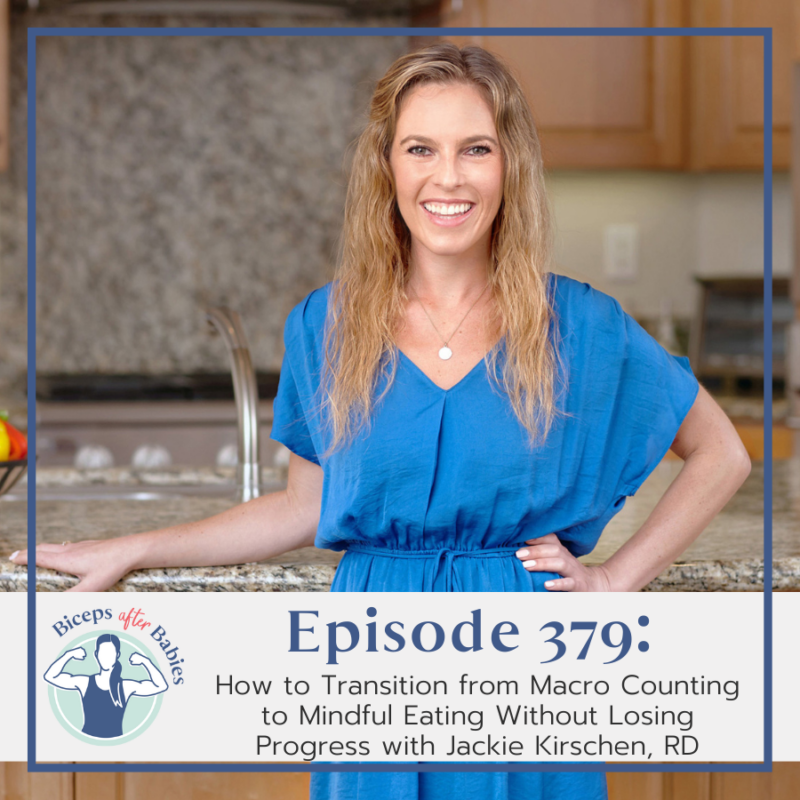
In this episode, I’m joined by Jackie Kirschen, a Weight Loss Coach & Mindful Eating Dietitian, who shares her powerful story of losing over 65 pounds, overcoming binge eating, and healing her relationship with food… without being tied to a food scale. We dive into how to bridge the gap between macro counting and mindful eating so you can maintain your progress without tracking forever. Whether you’re a die-hard tracker, ready to step away, or unsure of what comes next, this episode offers guidance on building body trust, making confident choices, and creating lasting freedom with food. Let's dive in!
Follow me on Instagram and Tiktok!
Highlights
- When Tracking Is Useful 06:04
- Mindful Eating vs. Intuitive Eating 13:15
- Why Mindfulness Is Challenging, Especially with Food 17:23
- Root Motivation Behind Weight Loss 21:50
- Trusting Yourself Through Trial and Error 27:46
- How to Practice Mindful Eating While Tracking Macros 32:40
- Differentiating Physical Hunger from Emotional Hunger 36:14
Links:
Jackie Kirschen’s Instagram
Introduction
You're listening to Biceps After Babies Radio Episode 379.
Hello and welcome to Biceps After Babies Radio. A podcast for ladies who know that fitness is about so much more than pounds lost or PR's. It's about feeling confident in your skin and empowered in your life. I'm your host Amber Brueseke, a registered nurse, personal trainer, wife and mom of four. Each week my guests and I will excite and motivate you to take action in your own personal fitness as we talk about nutrition, exercise, mindset, personal development and executing life with conscious intention. If your goal is to look, feel and be strong and experience transformation from the inside out, you my friend are in the right place. Thank you for tuning in. Now, let's jump into today's episode.
Hey, hey, hey, welcome back to another episode of Biceps After Babies Radio. I'm your host, Amber Brueseke. And today I am joined by registered dietician and mindful eating coach, Jackie Kirschen. And she brings a powerful personal story of losing 65 plus pounds, overcoming binge eating and healing her relationship with food, all without being chained to a food scale. And so in this episode, we're diving into how do we bridge that gap between macro tracking and mindful eating. Because I'm really clear. I think macro counting is a really essential and valuable tool for a lot of women. And at the same time, I'm not someone who thinks that you can or should check macros for the rest of your life. For me, it's a valuable piece, a valuable tool to learn about your food. But in the long run, I want you to be able to move away from tracking and still be able to be in control and make good choices and really get to that place of mindful eating. And Jackie's really here to help us talk about what can that bridge look like? How do we bring in the best of both worlds, of not feeling restricted, being able to make decisions and really, you know, in essence building trust with our bodies. So whether you love tracking or you hate tracking, or you're just wondering what comes next after we're done tracking, this conversation is going to cover all of that in all of the best ways. So let's get into it.
Amber B 02:20
I'd like to welcome to the podcast, Jackie Kirshen. Hey, how are you doing?
Jackie Kirschen 02:25
Good to see you.
Amber B 02:26
I'm really excited to have this conversation. I was on Jackie's podcast. And so we did that interview first and now we're turning the tables and now I get to interview her for my podcast. So let's start with an introduction. Jackie, just kind of tell us a little bit about yourself and who you are and what you do.
Jackie Kirschen 02:42
Yeah. My name is Jackie. I'm known as the Mindful Nutritionist. I don't have like Biceps After Babies on all of it, but I started out as the mindful nutritionist. I took my personal Instagram with 599 followers and now I'm at 48,000, which is a while to me. And I started teaching women how to permanently and sustainably lose weight while eating the foods they love without counting calories. And so I went through my own personal 65 pound weight loss journey during my freshmen slash sophomore year in college when I was at Emory. And I stumbled upon mindful eating accidentally. And that's when I just had this passion to really support women in healthily and sustainably losing weight. I struggled with weight my entire life, starting from the age of nine. And then mindful eating, I say saved my life, not once, but twice. Also from, I struggled with an eating disorder and we can get into that taking that all or nothing perfectionist. Right. And also after two babies. So I feel like I've been through multiple weight loss journeys using my same mindful eating method. And now I'm so lucky. I get to teach hundreds of women. I've taught over 500 women how to do this. And the most important aspect is it's really stopping diet culture at you. Like I have a three-year-old and just being able to watch Olivia, we go to Trader Joe's and she gets her lollipop and she has half of it. And she's like, I'm done and throws it away. And I'm like, what? Like, I just, I never grew up with that. It was always hiding the food and, Oh, I'm going to have this. And Oh, I already screwed up. Or like my parents didn't allow me to eat those things. So I'd eat it all at my friend's house. So it's really, really awesome to get to help women lose weight and become the healthiest version of themselves while also like stopping that diet culture and not passing it on to their kids and having their families become mindful eaters as well. It's awesome.
Amber B 04:43
Yeah. It's so awesome. And you know, one of the reasons I wanted to have you on is because while I teach macro counting as a tool and it can provide a structure and it can provide a lot of knowledge and information about your body, it's not something that I think that you have to do for the rest of your life. And I think being able to transition away from tracking, being able to transition into more of that intuitive, that mindful approach, that in middle ground is, is really, really important and is something that, you know, I think you can provide some, some help and some resources and some context for the listeners to be able to make that shift. But what do you see as, and I would love to hear just your ideas about that bridge. What we're talking about of when is something like calorie counting or macro counting helpful? When is maybe more of a like losing weight without tracking or without calorie counting more helpful. And then I think on the other side of it, we would even get into the conversation of like mindful eating without even trying to change your body, right? It's just mindful eating as a way of a relationship with food without even trying to change or lose weight. So can you kind of just talk to me about some of those camps and maybe like who falls into those and what types of the transition that you see for women as they maybe fall into each of those camps and then want to transition into another camp?
Jackie Kirschen 06:04
Yeah. So postpartum brain. So if I forget any parts of that, I will ask you again. But so let me first talk about the women that want to use calories, macros and understanding data as like what we talked about earlier, like just data and being able to not have that emotional tie to it and really using it as, okay, how is this going to support my body and practicing it with mindful eating behaviors? So the way that I teach my clients to lose weight is without tracking, but, but, but always it's not, but it's actually, and I have a lot of clients that when they're stuck and when they're not seeing progress or if they're stuck in a plateau or something like that, I always say knowledge is power. You need to understand, what are you putting into your body? You can't just say, I'm just going to eat all the crap and all the food and just expect myself to lose weight.
Amber B 07:03
Cross my fingers and hope for the best.
Jackie Kirschen 07:05
Exactly. That's not. So that's why when people come into my program, they're like, Oh my God, I'm going to eat whatever foods that I want. And they'll lose weight. Like, no, you're not going to eat the tub of ice cream. You're going to make a mindful choice and a mindful decision. So the way that I blend the two, and for example, I have a client Terry who I was just talking to. She is actually in remission from cancer. So she had a lot of stuff happening. She was on steroids, all of the different treatments. So there was a lot of things that caused weight gain for her. So she had never seen any weight loss. She worked with dietitians, all the things, and she finally has hit 12 pounds with us. It wasn't 12 pounds overnight, but it was slow and sustainable and even just in her message to me, like I cannot believe I'm losing weight. But I did say to her, I want you to track for a week because I want you to understand because I could tell based off of her food journals, I use pictures. So my clients take pictures and I can see it and I could tell she was under eating. She wasn't getting enough protein. There wasn't enough fiber. Like I can tell cause I'm an expert in this. This is my job. But I said to her, I'm going to actually turn on your calories so you can start to understand number one, how much you're putting in your meal. Sometimes it was less, sometimes it was too much. So we did that for a period of time and it was really eye opening to her because it was like, Oh my God, even I'll give you an example of myself during my weight loss journey. This is like the funniest story. And I was working with my nutritionist. I had started losing weight and I remember talking to your daughter about college. This is what happens. You go to the salad bar, you get the container, you just like load up on all the things.
So I got one of those like side containers of just a shit ton of beans and feta cheese. Cause it was like protein and, and, and cheese protein. Like I was just like on this, like, Oh my God, whole foods, protein, Amber, I probably ate like a cup and a half of beans and like probably half a cup of feta cheese, full fat feta cheese. I thought I was being super healthy. Little did I know I was consuming hundreds of calories, hundreds of grams of carbohydrates, hundreds of grams of saturated fat. So when I wasn't losing weight for weeks after weeks, and again, this was my snack. That's when my nutritionist was like, okay, well, if we went through it, she's like, well, what's the portion size of it? I was like, but why does it matter? It's beans and cheese. It's healthy. And that's when my eyes were like, Oh my God, here I was. I thought I was making a healthy choice, but too much of anything is not good. And that's when I started to actually practice. Okay, well, what does half a cup look like? What does two tablespoons? And so that's what I do with my clients. So that's when I would say when I noticed that clients need some education, what is a healthy portion? What is something that is actually going to give me 20 to 30 grams of protein? Some of my clients will eat one egg for breakfast and they're wondering why they're starving an hour later. I'm like, dude, it's six grams. It's not enough. You gotta understand. And when you put in that legwork in the beginning and understand, you don't have to do it later. You don't have to do it forever because then you'll know that an egg is six grams.
And again, you can roughly say, okay, like two to three eggs. That's a good amount of protein for me. So that is in that camp of, I do think it is important. Knowledge is power, understanding what you're putting into your body. And then we can slowly transition you off to saying, okay, how I help you move away from the, again, numbers is asking yourself those questions. What nutrition is this giving me? Like if I would have asked myself that question, well, the beans and cheese is giving me protein. It's giving me fat, but how much? And then I would have been like, oh my God, that's like a shit ton. That portion. It's like literally like fills up this entire container. It was, it was heavy. Like I would just like, not asking myself smart questions. How is this going to make me feel? Oh my God, that is a ton of beans.
I'm probably going to be like, you know, super gassy after it. Like I just didn't ask myself smart questions of how's it gonna make me feel? How's this going to help me reach my goals? Well, it is, but not this portion of it, a smaller portion. So that's when I transitioned away to saying, okay, well, what about tapping into those internal cues? Right? No one's going to feel good after eating two full cans of beans. Like I don't know anyone's GI system that can handle that. So do you see what I'm saying? It's, it's understanding. What are the macros, the calories, the grams of protein, all of those things. But then at what point can you move away and just trust your internal cues, trust your body, and just ask yourself smart questions. What is this giving me? Am I physically or emotionally hungry, right? Am I eating out of boredom? Am I eating because it's habit? When you can start answering those questions confidently, that's when it's like, okay, now I'm mindfully eating.
Amber B 12:16
Yeah. I think you're so spot on that. Like the general population, they're just concept and understanding of nutrition is so lacking.
Jackie Kirschen 12:23
Yeah.
Amber B 12:23
You know, it was just like, we don't know person sizes. We don't know what's in our food. We don't know how many carbs or fat or protein or fiber or any of these things. It's just there. The dearth of knowledge for general population is so small that sometimes we do just need that like educational component of, Oh, uh, peanut butter isn't a protein. It's a fat with a little bit of protein in it. Right? Like,
Jackie Kirschen 12:46
Oh my God.
Amber B 12:47
They don't even know that. Or, or that a banana is carbs. Like just a lot of people just like have no concept of the nutrition and that that isn't that knowledge, like you said, is power. Um, but, and it doesn't mean that we have to hyper control it or hyper fixate on it or that, you know, that that's really healthy for us. You've used the term a couple of times and I want to make sure that we define it because I think you have a really great definition for it, but when you're using the word mindful eating, what do you mean by that?
Jackie Kirschen 13:15
Yeah, it's so well, before I answer that, I just want to say, if you are like, Oh, like I don't have a lot of knowledge about nutrition. I just want to like give you peace of mind. If I were starting out in this noise of social media and stuff, I would also be fricking confused. So like, I just want to make people feel better. Like the amount of just confusion out there. It's like, do I eat eggs? Do I not eat egg yolks, coconut oil, not lard, like a fad. Do I eat butter outside? Like it just, it's wild. So I just wanted to like realistic expectations with everyone. We can all use more knowledge and it's very scary. Like what knowledge we're trusting. So when it comes to mindful eating such a great question, cause I usually get people are like, well, is this intuitive eating? And I'm like, no, because when you think of intuitive, they blend. And that's where it's like, it's so funny. I'm such like a black and white person, which I'm still working on. But like mindful eating is very gray. It is like super gray. There's no black and white. So the definition of mindful eating is making conscious present choices. That is literally, it's about intentionality and it's being present. So think about when you are mindfully eating a bowl of ice cream, right? We're on that theme, right? You're going to sit down and have that bowl of ice cream and look at it. Be grateful that you get to have this, be excited that you're going to eat it. You sit down without the Netflix, without the Tiktok, without that. And you're just sitting down in quiet and tasting it deeply and enjoying it. That is the definition. And you stop when you feel satisfied. That's the definition of mindful eating.
Intuitive eating is again, it's, it's connecting to those internal cues as well, but without a weight focus, without changing your body, mindful eating does not have a weight loss focus. I use it. I found the power of, Whoa, when I actually started stopping, when I felt satisfied, instead of cleaning my plate, that's when I was like, this shit is powerful. Like, and that's when I started to lose weight. So the way mindful eating was created was not for a weight loss method. I use it as a weight loss method, but I also use it during my, my, uh, getting pregnant, right? Healing from my relationship, from my eating disorder, getting back to my internal cues. That's why I love, I think every person on this planet should be practicing mindful eating because mindful eating is just listening and connecting to your body and making present and conscious, conscious and thoughtful choices. Like who wouldn't want to practice that? Who shouldn't be proud? Every single person should it's the way that you use it. So when I used it, postpartum was a little bit different than when I was actually pregnant. When I was pregnant, I was just trying to eat whatever didn't want to make me like throw up. Right. And also gaining a healthy amount of weight. It also helped me when I was struggling with an eating disorder and it was actually bringing back that ice cream reintroducing that. So I could practice that instead of I have one bite and then I eat the whole tub and then I go eat 500 other things because I messed up. Right. So mindful eating, think about when you want to be mindful, you want to be present and conscious and intentional. You can use that mindful living, mindful eating, mindful, anything this, and that's why I love it because when I work with women, it transforms their relationships, their intimacy, the way that they react to their children. They're just more mindful in like all areas of their life, their careers. Like and it's so incredible because you're just more mindful.
Amber B 17:00
Yeah. It's just, it sounds like what you're saying is like you're just more conscious in your present and like who doesn't want that in all areas and aspects of their life? Why do you think that that is so hard for us with food? I mean, I think for, to be clear, I think it's hard in a lot of areas. I think it struggles to be like present and mindful in a lot of areas, but why is food such a struggle for a lot of us with that?
Jackie Kirschen 17:23
Yeah. And it's like what we talked about even on my podcast, it's, we want, first of all, instant gratification. Number one, I'm sorry. If you come to me being like, I want to lose 20 pounds tomorrow. You're not going to do that with mindful eating. Like I lost 65 pounds in a year and a half when I watched some of these TikToks of like, let me snap and like watch me lose half of my body. I'm like, I worked so freaking hard for a year and a half to reach my goal weight. Like it didn't happen overnight. And I failed and I stumbled and I hit plateaus and all of the things. So this whole like instant gratification of like, I'm just going to do this one thing and then it's going to work for me. I think that's very, it's unrealistic, unhelpful expectations, number one. And I don't think big pharma with GLP ones is helping with that also. That's a whole nother story.
But number two, it's really we like to see whether we're being good or bad, whether we've done it right or we've done it wrong. And that's where I struggle with the numbers is because sometimes you can get attached to, I think it just started even in my teens, you know, when my late grandpa, who is such an important part of my life, I'll never forget. I got like a 99 or 98, something on like a biology, like sixth grade, not important. Right. And I remember he said like, like, like I'm going to say facetiously. Yeah, it was facetiously. Like, you know, Oh, why not a hundred?
Amber B 18:50
Yeah.
Jackie Kirschen 18:50
Always like, and I'm like, really? And like, again, he was joking, but like, it was the same thing in soccer. Oh my God, I scored a hat trick. I scored, scored three goals. Okay. Well, why didn't you score four? Like, Oh my. So that's where bringing it back to weight loss. Like even for me, I lost 65 pounds and I don't really like sharing my goal weight because again, it was my body. I'm five foot, but so I hit my goal weight. And then now what? Yeah. And that's when it was 10 pounds less. And that's when it was five pounds less. And then it was like that body fat percent, 19, 17, 13, nine, seven. I lost my period. I like, I struggled with IVF. I lost like so much because of the obsessiveness of, okay, now what? Just keep pushing that goal goalposts farther and farther and farther. So that's why I love what I do is because it's okay. You lose this weight and now how do you maintain it? So you can practice mindful eating during weight loss and to maintain it. It's just, it's literally different questions. Instead of being like, how is this going to help me lose weight? You're focusing more on how is this going to make me feel? How's this going to help my workout? How is this going to help my sleep? How is this going to help me be a better mom chasing after four kids? You know, like it's just, it's a different end goal. And that's the one thing with diet culture that there is no end goal. You just, you always have to be on a diet. You always have to be losing weight. You always have to get skinnier. You always have to get smaller. You always have to get into different smaller pants size. It's just when, when is good enough? When do we stop? And when we start tying our like who we are and our happiness to a number on the scale, you're never going to be happy.
So I think that it's really, really tough when it comes to weight loss because you have to get back to that. Why? And go deeper and deeper and deeper. I want to lose weight. Okay. Why? You know, it's the, you ask it like five, six, seven times. I don't know who created that, but it's like so true. I want to lose weight. Okay. Why? Well, I want to be healthier. Why? Well, I want to be there for my kids and I want to be able to get on the floor and tummy time and do all those fun things. But why? Well, I want to be a grandma when they have like, and you just get to the real reason not I want to be 120 pounds or, you know, it's so much deeper than that.
Amber B 21:22
What's behind that?
Jackie Kirschen 21:23
Exactly.
Amber B 21:24
Yeah. Um, it's so interesting. You're your story where, you know, maybe we were far on one side of the continuum and it sounds like you like kind of went to the middle of the continuum and then kept going to the other side of the continuum. Can you talk a little bit about that experience? And, and did you hit a, uh, ground zero and like what caused you to come back from maybe that other side of the extreme?
Jackie Kirschen 21:50
Yeah, it was, it was super clear. So I went to study abroad in Italy and I lost an extra 10 pounds kind of on accident because of the lifestyle. I was walking everywhere. I was eating delicious food. I ate gelato every night. I drank wine. I was in Italy. And so, and I didn't want to be stuffed in this like little gym in Italy. Like, so I picked up running and I just like started running around the Arno river and like, it was just like such a beautiful way of living. And I got back for, um, it was my junior year and I do think the environment that I was in, it was also those accolades of God, what happened to you? You look so good, Jackie. And I was like, why did I not look good when I like, and this again was the extra 10 pounds. So then it was like, Ooh, I gotta keep going. Right? Like everyone thinks I look amazing. My boyfriend's showing me off at the time, like all of these things. So it, it got so obsessive to the point where I started looking at, okay, well I want to have the thigh gap or I don't want to feel my role when I go like this. And it just became so like the vanity. And I just didn't know when to stop. So then I started eating less and moving more and I started eating less and running more and it just, and that's when the binges started to happen. And I believe my struggle with binge eating was purely biological in the beginning. And then it became psychological. Cause then I just didn't trust myself around peanut butter, granola, like all of these, like again, fewer foods. So yeah, I hit rock bottom.
I mean, I did lots of awful, awful things, awful things that I'm not proud of, but that happened to control my weight. And when my parents picked me up my senior year and I was even scared to see them because like my double zeros like would fall, I remember it just like falling off of me. Like I defended my thesis. And I just was like, I had no clothes that fit me anymore. And my dad, when he said to me, he was like, you look like a Holocaust survivor. You're coming home. And I knew I had a problem. I didn't want to address it. So that's when I started working more in therapy. And I'll be honest, like working with an eating disorder therapist, like, I'm sorry. It was really hard for me because talking about what I was going through with someone who had never struggled with their weight and never had experienced when you experience a binge, it's like you're in a trance. Like you're just like, wait, where's the box of cereal? Where's the girl scout cookie? Like it just, it's just, it's this out of body experience. So I was very aware and I think when I lost my period and at the time I was young and I like, I didn't care because it was like, Oh, I don't have to worry about that. But you know, it just, I wish I did care because I struggled with fertility and all of those things. So I hit that ground zero that, that rock bottom and it took a lot of rebuilding.
And that's when I said to myself, how did I get into this? And I really lost my way with mindful eating. And that's why it saved me twice because then I started to say, but I used to like, I enjoyed the gelato. I was in Italy. Like I lost the weight. It's like you and your ice cream with your six pack. Like I lost, like why can I not just have this little bit and like be okay? So it really came down to, I started to figure out how to trust my body and myself again. And under, so the biggest thing when it came to, I used to run a 10K every day again, not cause I wanted to because that's just being normal.
Amber B 25:40
Cause you had to, yeah.
Jackie Kirschen 25:41
Just 6.2 miles. It couldn't be 6.1. It had to be 6.2. I literally could have a fever. I used to have to ask my dad when like he's a doctor, kind of like a doctor's note. Like, please tell me like, should I run today? He's like, what is wrong with you? But I'll never forget. I, um, one summer, I was really terrified. I was going to be a counselor and take, um, it's something called birthright where you take kids to Israel and you go for two weeks. I wasn't going to have the ability to go on a casual 10 K run. Like I was for two weeks. I said, I am going to trust that I can maintain my weight and go to Israel and eat food and enjoy and do my job and come back. And if I want to get back into running, and that was like a huge, like with my exercise, that relationship with exercise of like, again, controlling my calories. And that was a game changer. Cause I came back, I fit into my clothes. I, and I just knew I'm not going to get back into running. I have to heal. And so I started walking through my grad program and I would just walk and I just, I try to find a way to mindfully move my body. So it was, it was a long, messy road. I wish I could say like this is what happened. And this is like the moment that it all got fixed. But it was just a lot of putting the pieces back together. And the main point was that I had to just learn how to trust myself again, learn how to trust myself with exercise. I didn't have to run six miles a day to maintain my weight. I could not run. I could walk. I could still eat food without burning calories through exercise. And I could still make, there was just a lot of rebuilding that trust. And again, today's diet culture society does not make that easy.
Amber B 27:31
Yeah. For sure.
Jackie Kirschen 27:32
And I don't wish I, yeah, I don't wish that upon anyone else. So I understand why a lot of people struggle, but it is something that you just have to like, ask yourself those questions and be like, is this healthy?
Amber B 27:43
Yeah.
Jackie Kirschen 27:44
If it's not, you can do something about it.
Amber B 27:46
I want to have a conversation because I love this conversation around building trust around yourself, because I think ultimately that's what most women want is to build trust around themselves. And it feels so far away for so many to be able to do that. And you know, you had an experience where you kind of ran a little experiment on yourself. It's like, I don't know if this is going to work, but I'm going to try not running for these two weeks and see what happens. And it had a positive result. And that helped you to build that trust in yourself. Oh, I can be okay. Like giving this up. What would you say to the woman? Because it doesn't always work out that way. Right. It's like, I'm going to trust, I'm going to try this trust thing and sometimes it blows up in women's faces. Then it goes the opposite direction. You know, like what would have happened had you did gain five pounds and now you're really scared about it because now it's like, I don't know if I can trust myself or I can let go of this thing that I've been holding onto. And that makes it just a little bit more complicated. So around this conversation about building trust around yourself, how would you coach or work a woman through building that with herself? Even if things don't go the way that she expects or the way that she wants, how do we still build, continue to build that trust?
Jackie Kirschen 29:00
Test and tweak, test and tweak. This is the motto that I am living by in 2025. This is what I wish, I wish I would go back to my younger self. And this is what I do with my clients. Because when you start practicing mindful eating and do this, every single person coming into my program, I'm not going to give you a plan and be like, okay, go do it. Like, good luck. Goodbye. Like, no, we have to be food detectives. Like we have to figure out what makes you feel satisfied. What form of movement makes you feel good? How can we incorporate this into your life? Your life shouldn't revolve around this test and tweak. And I love, like, I appreciate that because now knowing you're, you know, scientists, like I did, I did do an experiment and guess what? If I would have gained five pounds, so what? So what? Like that is just, okay, well, maybe I can find another way that I can enjoy movement that doesn't. I mean, even when I did, I always butcher her name, the bikini body guide, Kayla. It's.
Amber B 30:03
Oh yeah. I heard of her.
Jackie Kirschen 30:04
I did it to the fricking T when I was starting my journey and I just like ballooned. And, and like, I was looking at all of these like shredded six pack in this. And I was like, what is wrong? Like I'm working out, I'm following it. I'm doing it. I'm eating. Well, again, granted, I was eating less and less and less that, but I have PCOS like that, that form of movement is not supportive for my body. Right? I have a version of PCOS that it's so important that people know PCOS is not a one size fits all right. Like it just did not support. So to me, I wish I could go back, go back to myself and say, okay, you actually gained weight during, during this bikini body guide and you're not one of these. Like, but guess what? Let's find something else that feels really good too. And I did when I found Pilates and not every day, but one to two times a week. Cause I know that I put on muscle very quickly. That was my sweet spot. And I know slow, slow like type of cardio is really, really great for me. And maybe one hit run, maybe one Hills run. Something like that is really supportive, but not four times a week, which I was doing with the 28 minutes and as fast as you can and dripping in sweat and like test and tweak. So I was, I remember it being like, what is wrong? How am I gaining weight? Like kind of like you, I was working out so much. It made no sense. Well, now it makes sense. It wasn't the type of movement that supported my body and I was starving myself. I didn't realize until I learned that I needed to eat calories to lose weight, to function and test and tweak. Like again, you just have to, but you have to trust that you will get there. It's kind of like what we talked about the one step forward, two steps back. When you're in the two steps back, there's purpose, there's purpose behind it. And you ask yourself, okay, well where can I go from here? Look forward, where, what direction and how am I going to get 10 steps forward?
Amber B 32:15
So good. I, I, I think sometimes women think, okay, I'm counting macros now, I'll do that mindful eating thing later. And I think that you would say, Hey, we could probably incorporate some mindful eating now. We don't, we don't have to wait. That's not a like one, two step process. It's like you can actually incorporate mindful eating now, even while you're counting macros, what would be some ways that you would suggest a woman do that?
Jackie Kirschen 32:40
So especially if you are counting macros and you're following your method and it is important again, that knowledge is power. I would introduce mindful eating behaviors and practices, right? So some of my favorite questions, right? Am I physically or emotionally hungry? Am I eating because it's the clock? Am I eating? Because Joe Schmo on internet said, don't eat after seven. Otherwise it's going to turn into fat. Like, no, let's tap back into your internal hunger and fullness cues and eating when you're physically hungry, not because your husband said something stupid and then you're going to go into the pantry to deal with your emotions. No. So that is where I would first start is identifying physical versus emotional hunger, mind bliss versus mindful choices. Then when it comes to, you know, you want to be able to slow down. And I know in macros again, like hitting certain macros and things like that. But what's also really important we talked about is your internal cues. Like maybe you don't need to finish your breakfast. Maybe you don't need to finish your plate. Sure. Maybe you'll hit your macros if you do, but that doesn't mean that you have to finish your food, actually eating until you feel satisfied and saving it. And maybe you have it in a little bit that is more beneficial for you because that also teaches you not that all or nothing clean plate, full plate have to eat at this certain time. And that's where I struggle with a lot of women who are coming into my program being like, well, I eat breakfast at bop, bop, bop, bop, bop. I'm like, Oh, that's so interesting. I didn't realize you were a robot. And that you like, and they're, it's so funny. They're like, but I do better with that structure. I'm like, I'm not saying not to have structure, but I'm also saying to tap into that internal hunger and fullness, your leptin and your ghrelin. Like you have those hunger and fullness hormones. If you are at a whack with them and you don't understand them and they're going all over the place, you gotta fix that. You gotta get back in tune with those things.
So, I would say incorporating mindful eating practices. Another very important thing is we digest things when we are regulated versus unregulated. So when you think about the nervous system, you're going to digest something differently when you're like being chased after a bear versus when you're sitting with your piece of pizza in Italy with your glass of wine. And you're just like having this, like you're just going to process things differently. So that's another thing like sit down, eat your food, just be outside. Even if it's for the, I work with a lot of nurses, right? And they're always like, I'm in between patients and this and that for five minutes, right? Don't be charting while you're downing your sandwich. Right. So it's just about practicing, pausing, eating till you're satisfied. Asking yourself, is this physical versus emotional? And also just, just taste your food. Take a minute, be grateful for it. I think that's honestly the biggest reason why I lost more weight in Italy. It's that that's European, like that conviviality. It was just like a slower, like it's just, you were just happier. But everything about the lifestyle, not only was the food obviously fresh and delicious, but I just think the way of life and if you can incorporate that mindful living into your macros, you're in a separate life.
Amber B 36:12
Like the best of both worlds.
Jackie Kirschen 36:13
Yeah.
Amber B 36:14
I want to talk a little bit about that question that you said of is this physical hunger versus emotional hunger? Because I think that is a question that a lot, not a lot of people are asking and differentiating between those for a lot of people feels very hard. Can you give any insight into what would be the difference? Someone is asking themselves a question and they're like, I literally don't know. Right. Cause they've never asked themselves a question or they've never distinguished between the two. Can you give some like signs and symptoms or tips about what might they might be looking for that can help them to know is this physical hunger versus is this emotional hunger?
Jackie Kirschen 36:50
Yeah. So well first let's define the two, right? So physical hunger comes on gradually, right? Emotional hunger is like, boom, just hit me. I want ice cream. Like it's very like, Oh, and it's very specific. It's like a craving where, where you're physically hungry. Most food is going to satisfy. And it's not like diet culture. We're like, if you can eat like a salad, you're fine. Like, no, no, no, no, no. Like that doesn't sound satisfying to any of us, but it comes on gradually and food will satisfy you where emotional hunger is very, very specific and it comes on very quickly. So that is usually how you can define the two. And I always like to walk people through the self-coaching model where it's really understanding that when it comes to identifying emotional hunger, it really stems from your thoughts and a lot of people don't recognize that. So where you have a cue or some sort of circumstance, you can't change it. So how the model works is a cue leads to a thought, leads to a feeling, leads to an action, leads to a result. So the cue is something that you can't control, right? So I give this example inside my program, where again, one of your coworkers sent an email that they just, you're so frustrated because now you have to deal like with all the corporate and all the, like, you have to redo this. And then you have to just like bureaucracy and all of the things, right? So you're just pissed, frustrated, stressed. You can't change. Sorry. That's not how life works. You're there. You're coworker, right? It's going to happen. You can't change the cue, but your thought can go one of two ways. You can either be like, I'm so fricking annoyed. This is so unfair. I hate this. You get home. I just want a glass of wine. I just want to forget about this. I just want to not feel this emotion. And you know, what makes me feel better is, Oh, there's leftover pizza. And you know what, while we're at it, like, you know, the studs, the spiral.
So that thought leads to the feeling and the craving of, I want all of these things. I never get to have them. I had such a bad day. I deserve this. Again, all these unhelpful thoughts, which lead to the action of eating the shit in the portion that doesn't help you and leads to what results duh, you're not going to lose weight, but you can change your thought instead of having that, Oh, this is what happened. I'm so pissed. I want to unwind. I deserve this. I, I, Oh, I haven't had this in such a long time. Like what about a helpful thought of, okay, this is annoying. I'm pretty upset. What's going to help me manage this stress that I'm feeling? How am I going to de-stress? How am I going to make myself not feel so much anger? I don't care what you do, but address that thought, that helpful thought of maybe it's calling another coworker and bitching and complaining to that person. Maybe it's going on a walk and listening to this podcast. That's what helps me getting outside and getting movement and just like detaching. Maybe it's talking to your partner about it. Maybe it's journaling. Another thing that helps me is I send a text message to myself. If I want to bitch someone out, I will send a text. It just feels so good because I get it out. But I also know me sending that to the person is not going to be helpful
Amber B 40:13
Not gonna be helpful.
Jackie Kirschen 40:14
Anyone. Right.
Amber B 40:15
Yeah.
Jackie Kirschen 40:16
But it really does help me. Cause I just like, get to like authentically just say the shit that I want to say. And then I feel better. And then I also didn't blow up a relationship, but then I come back and that, that bottle of wine or that pizza, that ice cream, that's not screaming my name. I don't have that, that craving for it. I have more of a balanced, regulated approach, which will lead me to making a more mindful choice, which will then that action leads to a better result, which is still, you know, and I don't like saying following the plan, but being more on your journey, more making more aligned choices. So you have to recognize it all starts from your thoughts, the way you, you can either have a helpful thought or an unhelpful thought, and that's going to change the game.
Amber B 41:02
Yeah. That's so, so good. And such a, um, I mean, I think if more women could in that moment, ask themselves that question of, is this emotional hunger or is this physical hunger and answer that and be honest with themselves. I mean, it would change so much of a lot of women's relationship with food or a lot of where they struggle with food, because I feel that emotional hunger gets, we think it's, we think it's physical hunger. And then we're eating to solve a problem that can't be solved through food as, as good food is as delicious as it is, as much as it feels like it takes the edge off or it takes it away for a moment, it never is actually going to solve the underlying.
Jackie Kirschen 41:38
But it’s so temporary. And I just want to also preface that, like what we're talking about sounds very like easy. It's very hard to do guys.
Amber B 41:46
Yes.
Jackie Kirschen 41:47
It is very hard when you're in that moment, in that heightened state, in that emotional state. Oh, just let me pause and ask myself this question. Like, no, I'm sorry. It's, that's not the way it's the same thing. When I was struggling with my binge, right? Just call my dad, Jackie, just call your dad, tell him how you're feeling. Don't eat the whole thing. Like, no, I didn't have that strength and that trust. So that's where you can implement some of practicing that part of the pause or like, what are those things that will help slow you down? What is going to help you actually ask yourself that question. And I have to say that is different for everyone. And that is going to take a lot of trial and error, test and tweak. I can't tell you how many times I binged before I actually was able to call my dad and be like, I think I'm about to do this. I cannot believe I'm calling you and telling you this, I need help. And like, and then I started to trust myself. What I say to my clients all the time, what you practice grow stronger. My therapist actually said that to me. So I'll give her credit, but it's so true. The more I practice pausing, the more I practice not reaching for the food to cope with my whatever emotion, the more I practiced asking myself that question sooner, sooner, sooner, the easier it become. And that's when I stopped self sabotaging.
Amber B 43:08
Yeah. Gosh, I think that, that whole concept of just being willing to practice something over and over again would solve so many problems. Cause I think we do, we have this expectation that it's just going to go well the first time. And if it doesn't go well the first time, then, well, that didn't work. So now I'm onto the next solution. And, and that's just not how it works. It's just like anything else. You didn't drive a car perfectly. The first time you didn't tie your shoes perfectly. The first time you didn't ride your bike perfectly the first time. But some idea we have is like I'm going to stop binging the first time I decide that I want to do that. Like it's not going to, it's not going to happen. And anyway, the way that you learn anything is you try it, you fail at it, you iterate and you do it again and you try and you fail and you iterate and you do it again. And that's how we learn anything. But for some reason that, that feels too much when it comes to our health and fitness journey. And I love what you're saying. You're like test and tweak, test and tweak, test and tweak. That is the way to be able to be successful.
Jackie Kirschen 44:03
Yeah. But I also get it because diet culture has just instilled that it's going to fail and you're going to move to the next ones. Yeah. So it's like, it makes sense. But at the same time you have to be stronger. You have to understand it's not you that failed. It's that the diet failed you.
Amber B 44:19
Yeah. Yeah. That's a hard thing that I have. I have a hard time with it because a lot of times what happens with a lot of women and you probably see this as well as they just internalize that failure, right? It's like they do, they, they fail, they fail the diet. And then they internalize is that there's something wrong with me because it works for other people. I saw it work for my friend. So then it, because it worked for her and it didn't work for me. Now there's something wrong with me. And it's like that, you're not actually the problem like that. We don't need to internalize that as, as an issue with you and, and moving beyond that and being able to find something that does work for you, right? Iterating, testing, trying, you know, there are things that work for different people at different times and being willing to go and experiment and find that thing that's going to work with for you.
Jackie Kirschen 45:01
Yeah.
Amber B 45:02
Makes all the difference in the world. Okay. Well, this has been fantastic and so good. If somebody is wanting to find out more about you, they're going to find about your programs. They're interested in incorporating more of a mindful approach where, where can they find you?
Jackie Kirschen 45:15
Yeah. So I hang out mostly on Instagram, the.mindful.nutritionist and Mindful Weight Loss Academy is like my MACROS 101. It's my baby. I've helped over 500 women and sustainably and permanently lose weight with mindful eating. And I know it doesn't sound crazy, sexy, cool. It's not like the, you know, eat this stick of butter and all your fat will melt away. But if you want slow, sustainable, permanent weight loss without numbers, without feeling like you're constantly starting over or dieting, I mean, mindful eating is perfect for you. So I also have my podcast lose weight mindfully and I'm excited to air your episode. And yeah, I would love to support anyone who's ready to transition. Mindful Eating can absolutely save you.
Amber B 45:57
I love that. Thanks so much for coming on the podcast today.
Jackie Kirschen 45:59
Thanks for having me.
Amber B 46:01
Oh, it was such a great conversation with Jackie. I love how she broke down the idea that macro counting and mindful eating don't have to be like opposites. They don't have to be, we don't have to fight against ourselves, right? We can use both of them strategically and intentionally to really support your goals and help to improve your relationship with food, which in my eyes is a win, win, win. So if you took nothing else from this episode, I hope that you take that you are not failing because you can't track forever. In fact, finding freedom with food might look like learning to let it go while still making intentional, aligned choices. I really see macro counting and mindful eating as being a lot closer to each other than sometimes I think people think. And that wraps up this episode of Biceps After Babies Radio. I'm Amber. Now go out and be strong because remember my friend, you can do anything.
Outro
Hold up, sister friend. Do you love Biceps After Babies Radio? If so, the best way to say thank you is to subscribe to the podcast and leave a review on iTunes. I know every podcaster wants you to leave a review, but it's because those reviews help the podcast to reach more people. And I do truly want to know what you think. If this episode resonated with you, will you also please share it? Either send the link to someone who would find it valuable or take a screenshot and post it to your social media and tell your friends and family why they should listen. Make sure you tag me @biceps.after.babies so I can hear your feedback and give you a little love. And you know, if you aren't already following me on Instagram or Facebook, that's the perfect time to hit that follow button. Thank you for being here and listening to Biceps After Babies Radio.

Leave a Reply