






Show Notes
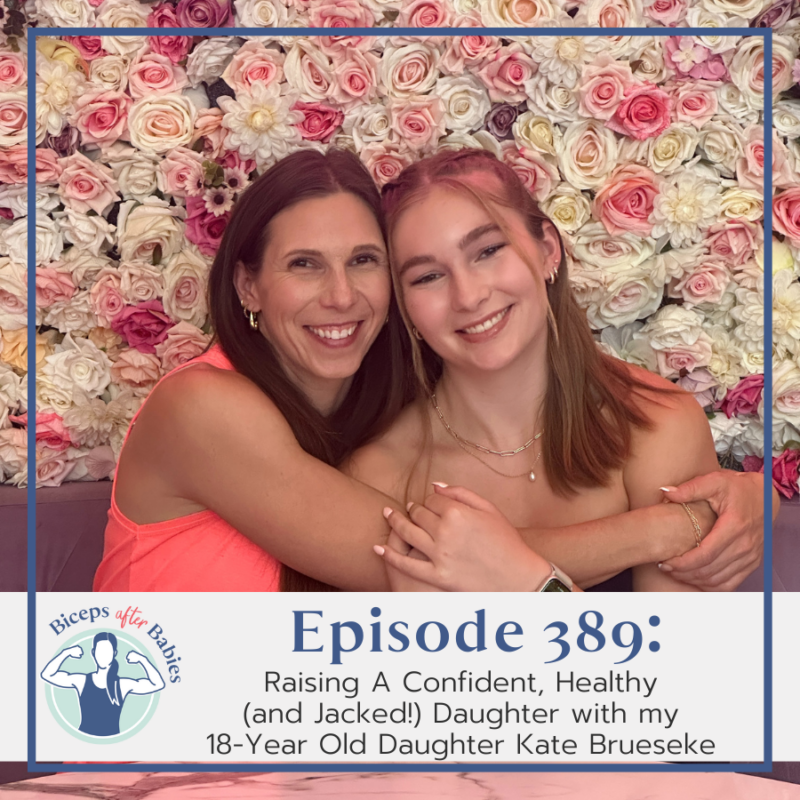
In this special episode, I sit down with my daughter Kate to reflect on her growth since her first time on the podcast at age 12. Now that she’s 18, Kate opens up about building confidence through cheer, strength training, and embracing her vegetarian lifestyle, as well as navigating the exciting and sometimes overwhelming transition into college life. We also dive into parenting lessons I’ve learned along the way, like giving kids independence, letting them fail safely, and modeling imperfection with grace. This heartfelt conversation is about more than just raising strong, confident kids; it’s about embracing growth, authenticity, and resilience together.
Follow me on Instagram and Tiktok!
Highlights
- Kate's Reflection on Growth and Learning to Sit with Uncertainty 01:02
- Redefining Confidence 04:49
- Building Confidence Through Challenge: The Cheer Team Story 07:19
- Body Neutrality 09:35
- Motivation, Independence, and Finding a Personal “Why” 13:23
- Reflection on Parenting and Identity Formation 19:18
- Building a Fitness Routine and Finding Consistency in Change 22:01
- What Builds a Strong Parent–Teen Relationship 27:50
- Developing Confidence Before Relationships and Boundaries 32:16
Links:
Episode 39: Raising Confident, Healthy Daughters with My 12-Year-Old Daughter Kate Brueseke
Episode 249: Raising Body-Positive Teenagers With My 15-Year-Old Daughter Kate Brueseke
Introduction
You're listening to Biceps After Babies Radio Episode 389.
Hello and welcome to Biceps After Babies Radio. A podcast for ladies who know that fitness is about so much more than pounds lost or PR's. It's about feeling confident in your skin and empowered in your life. I'm your host Amber Brueseke, a registered nurse, personal trainer, wife and mom of four. Each week my guests and I will excite and motivate you to take action in your own personal fitness as we talk about nutrition, exercise, mindset, personal development and executing life with conscious intention. If your goal is to look, feel and be strong and experience transformation from the inside out, you my friend are in the right place. Thank you for tuning in. Now, let's jump into today's episode.
Amber B 00:48
Hey, hey, hey! Welcome back to another episode of Biceps After Babies Radio. I'm your host, Amber Brueseke. And today I have a very, very, very special guest back on the podcast for the third time is my oldest daughter, Kate. Hey, Kate, welcome.
Kate Brueseke 01:02
Hello.
Amber B 01:03
So Kate was on the podcast, we just looked it up. She was back on the podcast on episode 39. And she was 12. And then back again at 249. And you were 15. So we did three years in between. And now it's been another three years. And you are 18.
Kate Brueseke 01:23
18.
Amber B 01:24
Yeah, so I thought it was high time to have Kate back and just share a little bit of wisdom from her. I think it if you're listening to this podcast episode, it probably would be really fun to go back and listen to episode 39. And then episode 249. And then come back and listen to this one because you'll get to literally see.
Kate Brueseke 01:42
Really a journey huh.
Amber B 01:43
Yeah, it's a journey. You're gonna see Kate grow up in like real time, which is really exciting. Have you gone back and listened to those episodes?
Kate Brueseke 01:50
No, absolutely not.
Amber B 01:52
Yeah. It's one of those things that like
Kate Brueseke 01:53
I it's really beautiful how much someone can grow up in six years and how you can absolutely just not agree with anything you've said six years ago,
Amber B 02:00
Which I think is actually really, really valuable. Yeah, it's a really valuable thing. I think a lot of times people dig their holes too deep and not being willing to like question things that you used to believe is actually really healthy. I'm reading the book Think Again by Adam Grant. And that's like the whole premise of the book is when we get into trouble when we aren't willing to question
Kate Brueseke 02:18
When you double down.
Amber B 02:19
Yeah, we are willing to question the things that like, things evolve, things change, and things I used to believe before maybe aren't actually true. And we get really stuck if we're not willing to question those things and think again. So I think it really is a beautiful transition and a beautiful journey.
Kate Brueseke 02:33
Yeah.
Amber B 02:34
Okay, so I want to talk a little bit about confidence, because we hit on it at 12, we hit on it at 15. And I think it's just interesting to see how your confidence has shifted, how your confidence has grown over the years. And actually, you know what, before we do that, will you just give people a little bit of an update of like, where you are in life? What just you know, where are you just finished and where you're off to so that they kind of have a little bit of context?
Kate Brueseke 03:00
Yeah, so I graduated high school, what, like, two months ago now. And so I'm going to college in mid September. So I'm kind of in like that weird in between period where like, I kind of have to decide what I'm going to not do with my life, but like what the next step is, or is like kind of like you've kind of always been on like a trajectory of like, well, you're in middle school, and then you're in high school, and you're just going to take these classes, and you're gonna take these tests, and the kind of end goal is just to graduate. And now it's like, well, I get to decide, do I want to go to college? Do I want to pursue something else? I want to do a four year degree, do I want to do a community college? And what I want to do with that time in between that. And so that's kind of really exciting to figure out that.
Amber B 03:37
Yeah, it's really the first time that you got to decide what's next.
Kate Brueseke 03:40
Yeah. Yeah.
Amber B 03:40
You know, it's like you had to go to high school.
Kate Brueseke 03:43
Government made me and I was just kind of like, I'm like, make the best of it. But yeah, it's exciting.
Amber B 03:49
And so it's been a little stressful of trying to figure out what it is that you want to do with your life. So talk a little bit about that.
Kate Brueseke 03:56
Yeah, I mean, there's a lot of I honestly, like, that was a big focus that I had, like a few, like, meltdowns over in like, sophomore and junior year of high school of like, Oh, I actually have no idea where I'm going. But I think what was really cool about my senior year is that I kind of allowed myself to be like, I don't know where I'm going. And that's okay. Like there's a lot more of my life left, like I'm only 18. And hopefully I'll get to live a lot longer than that. And it's like, I have time to figure it out. And it's like, as long as I kind of figure out what I'm doing, just next, like, I'll have time to figure out what the steps are after that. And I'm just kind of focusing on being here now and just trying to like, hope for the best.
Amber B 04:38
Yeah. I mean, I think there's there's beauty in being able to sit and be okay with not knowing.
Kate Brueseke 04:43
Yeah, to sit in like the unknown of like, well, I don't know what life has to hold for me. I guess I just have to find out.
Amber B 04:48
Yeah. And you don't. And I think some people are not great at that.
Kate Brueseke 04:52
Yeah, I wasn't. Still, I'm not great at it.
Amber B 04:54
Yeah. Yeah. Learning to do that. So I want to talk a little bit about confidence, because it, you know, I've got to see you grow up, obviously, if you go back and listen to the episode where you're 12, and then the episode with 15, I think you're going to hear different levels of confidence as you're growing and building and confidence happens as you learn to navigate things and get feel comfortable with your ability to be able to navigate whatever is thrown at you. So I want to hear what you would describe your relationship with confidence, like now at 18, and how it's evolved maybe over the last couple years, or what you're present to in that evolution.
Kate Brueseke 05:27
Yeah, I think honestly, I used to think that confidence was kind of a, like a singular goal, almost, of like, well, once I am confident, I will feel 100% about everything I'm doing. And there will be no question and like, no one else can tell me what to do, I will just know what I'm doing. And that's it. And I, I honestly don't think that's quite true anymore. I think it's kind of a bit of a moving target of like, well, I just want to feel confident in myself, and find that like, self comfort, almost to be like, I'm confident in doing what I'm doing now. But maybe like, I have some questions about some other things. And I'm like, open to like, asking for help. And like being confident enough to ask for help is something that I think is not really in the textbook definition of confidence. But I think it's also really important of like, you like, confidence doesn't mean you are independent. Like there are different things like relying on people is also something that is like, comes with being confident.
Amber B 06:21
Yeah. Well, and it's not about, I think it speaks to the whole think again principle. It's like, it's not about just like doubling down.
Kate Brueseke 06:28
Yeah.
Amber B 06:29
It's about being willing to question, willing and willing to navigate the messiness. But there's like you said, there's a confidence inside yourself that you're gonna be able to navigate it and get on the other side. You don't know what it's gonna look like.
Kate Brueseke 06:40
Yeah.
Amber B 06:40
But you are confident that you're going to be able to get to the other side of it. And I think that that's, that's really impressive. One thing and I mean, I'm going to share this story. And you can add in any details of it that you would like. But I will say, one huge leap and confidence I saw in you was when you joined the cheer team.
Kate Brueseke 06:59
Oh, sure. Yeah.
Amber B 06:59
So, so just like give a little background to the story. When you went into high school, you decided to join the color guard and you and your best friend did it together.
Kate Brueseke 07:07
Yeah.
Amber B 07:07
Because that was felt safer.
Kate Brueseke 07:08
We wanted to. We wanted to volleyball, but we because of COVID, our eighth grade volleyball team got like canceled.
Amber B 07:15
That's right.
Kate Brueseke 07:15
So we like had no volleyball experience. We're like, well, I guess we'll do this instead.
Amber B 07:15
Yeah. So you end up signing up for color guard, did color guard freshman year. And then going into sophomore year, there was a part of you that wanted to do cheer, but I think was like a little afraid of, of trying out and like joining something new. And so you kind of
Kate Brueseke 07:34
It became a little too late in those.
Amber B 07:36
Yeah. So, so then it was like that you had to make the decision end of freshman year. And it was like, not until beginning of sophomore year that you're like, Oh, I really wish I would have done that. But it was like, it was a little bit of like, it was new and it was hard and it was outside of your comfort zone. And so you did color guard for a second year. And then by the end of that year, you're like, no, I really, I really do want to do cheer.
Kate Brueseke 07:54
Yeah.
Amber B 07:54
And I have to say, I was incredibly proud of you because most of those girls have been on the squad since freshman year. Right. You're coming even before like, yeah, they'd been doing cheer forever. You'd never done cheer. You'd done gymnastics and you chose to try out. You went to tryouts, like not really knowing anybody, feeling a little bit of like fish out of water.
Kate Brueseke 08:14
Oh, yeah.
Amber B 08:15
And I was just so proud because it was like, not even about making the team. It was about, this was scary and outside of your comfort zone. And you had the confidence that like, no, this is something I want. And I'm willing to tolerate the discomfort of going out and getting it. And for me watching as a parent, that was such a pivotal moment for me when I was like, yes, she's, she's confident to go after what she wants. And she's gonna, she's gonna be able to figure it out.
Kate Brueseke 08:37
Yeah, because I remember honestly, when I told you the first time that I was like, I think this is something I want to do. You were a little like, scared for me. And like, I mean, obviously, like, I don't want to be in like a place that is going to be like harmful for me or like scary for me. And I think you obviously felt that and I felt that. But I think that was an important jump for me to make to be like, the things that I want out of my life are not in my comfort zone. Like I have to kind of push those boundaries if I want to like, end up somewhere that I'm going to be happy.
Amber B 09:03
Yes. Yeah. And I think that's really important. So seeing that as a big leap in your confidence. And then I've seen another big leap in your confidence in the last year, as you prepare to go off to college of being like, knowing that you're going to be able to be okay, and that you're going to be able to, again, navigate the things that are put in front of you. And we can't anticipate everything that's going to happen. So confidence, again, isn't like being able to anticipate or know exactly what's going to happen. It's feeling that whatever happens, I'm going to be able to navigate it. And I feel very confident in your ability to be able to navigate whatever it is that life throws at you.
Kate Brueseke 09:35
Thank you.
Amber B 09:35
Yeah. Okay, so let's talk a little bit about body neutrality. Because the last time we sat down at the podcast, Mike, you had some really incredible insight back at 15, about how even making positive comments about someone's body can actually be problematic. And that, you know, focusing on bodies, whether it's positive or negative really takes away from who that person actually is, which is such a wise thing to say it at 15. So what does that look like for you today? How do you practice body neutrality?
Kate Brueseke 10:05
Yeah, I think that's definitely still something I think about a lot of like, telling someone like, you look really great, you look really skinny, you look really like, built or whatever. Like, I mean, like, obviously, it's supposed to be a compliment. But I think focusing on that person as an individual is so much more powerful. I think you see him, I see a lot on like, social media of those, like, that are like posts that are like, well, when you're gone, no one's going to remember your like, pant size, or like, what you looked like, they're gonna remember like the memories they had with you, and like, how kind you were and stuff like that. And so I think that's really something I try and focus on is being, I mean, the person who's comfortable in myself, and then also comfortable in like, extending those kind of comments to others and being like, I just wanted to know that like, what you said to me was really kind. And I see that a lot. And I, I think that's really important to think about, as well. And I think there's something of that that's like, social media has like a large impact on that of like, wanting you to like, look a certain way. And I think once you can kind of see past that a little bit and be like, well, what can I do? What can who can I be? What can I do? What can my body do? It's like, that's something that's maybe a little more healthy to focus on than exactly what you look like.
Amber B 11:16
Talk to me a little bit about what the transition has been like for you in terms of being in the gym and weightlifting and training on your own.
Kate Brueseke 11:26
I mean, I went to like CrossFit classes with you guys when I was in like, middle school. And I think that was really cool because it gave me like a very technical foundation of like, what different lifts are supposed to look like. And so I think that honestly, helps me to kind of set goals for myself that are more like, I mean, obviously, I think everyone has aesthetic goals, but I think more progressive of like, I want to be able to lift this much, or I want to be able to run this far. And I think that has actually really helped me in like, making progress in the gym is like having a like numerical goal that I can work towards instead of a, like, maybe not, I mean, obviously, they're still attainable. But like, aesthetic goals are so much more like flimsy.
Amber B 12:10
Yes.
Kate Brueseke 12:10
But it's like, well, once you reach that, like, you're obviously going to want to like go a little bit further. And it's like a little bit more.
Amber B 12:17
What are some of your number goals in the gym?
Kate Brueseke 12:20
I, well I recently actually have like, tried to start running because I've always been so bad at it. Like it's always been like something that was like, well, if I'm ever in a situation where I need to run away from like, like an animal that is chasing me, I'm dead in two minutes. Like I'm just it's not anything that I've ever been good at. So I've been trying to like, do like endurance stuff of like, I want to be able to run for 30 minutes without stopping and like reach that which I still can't do, but we're getting there. And then I've, I mean, I want to, I've been benching for so long, and I still can't like, I wanted to like, bench 120 for so long. Haven't gotten there yet, but we'll get there.
Amber B 13:00
120 is a high number.
Kate Brueseke 13:02
I know. And I was like, confidently was like, one day I'll get there. Like maybe by the time I'm 18, I'll get there. I've been in the gym for like, whatever. It's one day I'll get there.
Amber B 13:11
And your squat has been going up.
Kate Brueseke 13:14
I don't know what it is right now. But yeah, I mean, honestly, it was hard for me. Like form was really hard for me. It was something I had to learn a lot. But yeah.
Amber B 13:23
And I want you to kind of speak a little bit to what I have helped you do versus what you figured out on your own, because I think a lot of people may be like, Oh, well, of course she like lifts and like can do all these things because like her mom is her mom. But you have done a lot of this on your own. And it's been self motivated.
Kate Brueseke 13:43
Yeah. I mean, I mean, great jumping off point, like to have like parents who lift and my mom have a gym in the backyard. Great low barrier to entry of not having to get a gym membership. It's just right in my backyard. But yeah, I think there is a certain point and I think it was around my sophomore it was actually like when I started cheer that I was kind of like, well, I now need my body to do things it's never done before.
Amber B 14:06
I'm a base and I have to be strong.
Kate Brueseke 14:08
I need to lift another person into the air.
Amber B 14:10
Yeah.
Kate Brueseke 14:10
And that was like something I'd obviously never had to do before. And so I kind of had to shift from being like, well, I'm just kind of working out to work out and like, it makes me feel good. So I guess I'll do it to like, now I have a practical purpose of like, this is what I need to do. And what can I do to help me get there. And I was at the time it was a lot of building strength. A lot of like, I mean, total body strength was a big thing. So I kind of rode that wave for a while. And I was like, well, now I'm self motivated to perform as well as I can. And honestly, since the season's ended, it's kind of been like a big transition point of like, well, now it's my exactly why I'm not like going to practice five days a week. I'm like, I don't have a competition coming up. What do I want to do and so that's kind of honestly, when I started getting into the running thing is like kind of having more just like I want to feel good in my body. Like I want to be strong and I want to like, feel comfortable in myself and feel like I'm prepared for anything. So I kind of Yeah, that's my that's my why hasn't these days.
Amber B 15:10
Yeah. And I think you know, what will happen is that that why will change. And I think what's really important is that you do have some sort of why like there is some reason that you're doing it just creates context around doing the hard thing of like going for a run. It's because you want to get better at it. It's not because I'm like you should run or
Kate Brueseke 15:29
If there's an arbitrary like reason like you're not actually gonna do it just because like someone else told you to.
Amber B 15:34
Yeah. One of the things that I didn't quite know until I was going to some of the like end of the year stuff when it came to cheer was how everybody like, references you as like, the jacked one on the team, or like the strong one on the team.
Kate Brueseke 15:48
And isn't that a confidence boost?
Amber B 15:49
Talk a little bit about that.
Kate Brueseke 15:51
I mean, yeah, I mean, I think there's I mean, it's a lot of like, girls in their teens who are like, obviously, like, I mean, a lot of girls don't lift until they're like, kind of a little bit older. But I was in the gym at like 14 doing CrossFit with you guys, which I don't think is very typical. And so I was always kind of like, that was a part of my life. And I don't think it's a lot of a lot of people's lives. And so it was kind of always something that was really important to me. And it translated really well.
Amber B 16:19
Yeah, into what you're doing,
Kate Brueseke 16:20
Into what I was doing. And so that was really nice to be able to like, apply my strength for once, instead of being like, well, I guess I go to CrossFit, but now I get to like, use it.
Amber B 16:28
Yeah. And do fun things like throw people and throw flips and things like that.
Kate Brueseke 16:32
Exactly. Sounds cool.
Amber B 16:34
Yeah, yeah. It was a proud mom moment. I'm like, Oh my gosh, everyone calls like she's like the jacked one on the team. Heck, yeah!
Kate Brueseke 16:40
And I think yeah, I think once they started like to see me is that they're like, and where does that come from? And then they found me on my Instagram.
Amber B 16:47
Yeah, it's all my kids always naturally. It's a funny moment when like their friends find me on Instagram, especially the boys. They like think that that's real embarrassing.
Kate Brueseke 16:57
I think it's a little cooler than they do. Yeah, I think they'll come around.
Amber B 17:01
Yeah. Yeah. Right now they just think what I do is cringe. But that's okay.
Kate Brueseke 17:04
That's fine. If you're not cringe, you're doing something wrong.
Amber B 17:07
So I would love for you to speak from a kid's perspective, because there's gonna be a lot of moms that are listening to this, moms of girls, moms of boys, moms of younger kids, middle kids, older kids. I'm curious if you can do a little bit of reflection on what do you think was helpful that we did as parents in, in raising you around confidence, around lifting, around healthy eating? What did we do that was was helpful so that parents who are listening can be like, Oh, I can snatch on to that and try to implement that with my kids as well.
Kate Brueseke 17:35
I think a lot of it honestly, like I mean, this kind of work for me is you never really told me how to think you kind of like let me come to my own conclusions, but you specifically like modeled your own brand of confidence and your own brand of strength. And I think I mean, kids are really perceptive, like more than like, I think a lot of people give them credit for like, people pick they pick up on that stuff.
Amber B 17:55
Yeah.
Kate Brueseke 17:55
Like they see how you talk to other people, they see how you like talk about yourself. And I think picking up on those cues really, like, I mean, I obviously like it wasn't realizing it at the time, but it really built my understanding of strength to be like a lot stronger than I think I would have been if you hadn't been as into strength training and like you were into powerlifting for a while. And it was like watching you go through that kind of journey of what you wanted to do with your body was like, I mean, really inspirational of like, well, this kind of just like shaped my worldview. I'm like, well, this is what women do. This is what people do. I mean, which really like, now my brain is kind of like latched on to that and been like, well, okay, now what I what do I do?
Amber B 18:40
Yeah, I think what you're saying is something that I have really figured out as a parent is that it, it doesn't matter what I say to you guys. It's like we could sit down and have a conversation, a structured conversation about something that's never going to be as influential as what I'm modeling, or how I speak or, or what I eat or what I do with my time or any of those things. Those are always going to speak much louder than me just trying to sit down and have like, one conversation with you about it.
Kate Brueseke 19:07
And then I mean, once you're going through like a rebellious phase, it's like whatever your parents tell you to do, you want to do the opposite. So it's like, yeah.
Amber B 19:15
Navigating that super fun.
Kate Brueseke 19:16
Really awesome.
Amber B 19:18
Is there anything that you feel like we could have done better?
Kate Brueseke 19:23
Oh, um…
Amber B 19:24
Or something you wished you would have learned or…
Kate Brueseke 19:29
I don't, nothing really like comes to mind right away. Um…
Amber B 19:35
Or something other parents can be mindful of, like making sure they don't do with their kids.
Kate Brueseke 19:42.
I'm not like, I mean, obviously like I just, I got nothing.
Amber B 19:49
Oh, okay. We're doing something right then. If there's, if you don't have a whole list already in your head of mistakes that we've made. Um, I, I think, I think one of the things that I hope that we've done really well, and you already spoke to it is, is really helping you to navigate life the way that you want to navigate life, right? Not like allowing you to explore. And we have ways that we do things. We were just talking about this yesterday when we were talking about being type A, the two parents that you come from. And you know what, not that you'd have to model exactly how we go through the world, but like, that's who we are. And obviously it's where you come from, but then you get to figure out how you want to be a part of the world and how you want to experience the world.
Kate Brueseke 20:27
I think having like a parent who's like kind of very unapologetic about who they are is like, kind of allows you to be like, well, I don't need to be exactly like them, but like, I do need to be…
Amber B 20:34
That's them. That's them. They can be them. Who am I? Yeah. Yeah. And I think that's what young adulthood is a lot about is like answering that question of like, who am I? And as you transition away from like leaving the nest too, you get to explore more of like, that's who my parents were. And you have all these experiences, at least I did when I went to college of like, oh, my parents, that's, it's actually really weird that my parents said that.
Kate Brueseke 20:54
That was a little strange.
Amber B 20:55
That's not how all parents are, or all families are. And so then you get asked the question is like, well, who do I want to be? Or how do I want to show up in the world? And I think you're in for a lot of exciting development over the next couple of years as you answer that question for yourself. And my hope is, is that we're always like a soft landing point for like, whoever it is that you decide that you want to be and what you want to study and where you want to go and, you know, whatever you want to do and what success looks like.
Kate Brueseke 21:18
Yeah. That's super exciting.
Amber B 21:19
Looks like to you. So, um, what are you most excited about in the next phase?
Kate Brueseke 21:25
Honestly, as I mentioned, I kind of have no idea where I'm going, but I'm kind of excited to figure it out. And, um, I mean, there's a part of me that's like really sad that I'm not going to be living here a hundred percent of the time, but there's also a part of me that's really excited about where I'm going. And it's like, to be in a different environment is really cool because there's not, I mean, you're being challenged at every aspect of your life, right? Like you're not sleeping in the same bed you've been sleeping in for 18 years. You're not like surrounded by the same people you have been. Um, and so I'm really excited to branch out and, uh, see, I mean, I have no idea what I'm studying as of right now. So, I mean, that's maybe step one, but
Amber B 22:03
You have a declared major, but you're not quite sure that it's not super confident actually going to be in the major. That's okay. I changed my major after the very first semester in college. So
Kate Brueseke 22:12
Yeah. Didn't end up in microbiology or whatever.
Amber B 22:15
Biochemistry. I was a biochemistry major and I took one semester of that and I was like, Hmm, yeah, that's not, that's not it. She's not it. And I bounced around a lot before I landed on nursing. So you got time and you got space. Uh, how do you plan on, you know, what is your plan in terms of, uh, lifting and, uh, exercise when you go off to college?
Kate Brueseke 22:36
Yeah. I mean, honestly, it's not a small part of the reason I chose where I'm going, but they've got like a really nice, recently remodeled gym. Like multiple stories.
Amber B 22:45
It’s huge. We toured it.
Kate Brueseke 22:47
We did tour.
Amber B 22:48
We toured the gym. Like, it's so us, like
Kate Brueseke 22:48
We didn't even make it to most of the campus, but we did,
Amber B 22:51
We did tour the gym. Yeah. That's really funny. Um, classic,
Kate Brueseke 22:57
Of course. So I guess, I mean, it's quite accessible for me. Um, and I plan to like, honestly, once I get there to just figure out like how many, how often can I get in there? And like, what does that look like with my class schedule? But I want to keep like strength training and like being as strong as I can, especially in like a new environment. It's good to like
Amber B 23:17
Get that one 20 bench
Kate Brueseke 23:18
One day I will get there. Um, but it'll be nice to have like kind of a constant, like a, well, as long as I, even though I'm not in the same house or like in enough, everything is different. Like at least I'm still doing the same workout. Jim's always the same. Gym is always the same. Gym will always be there. Um, so that's really exciting for me. And we, they will have probably a lot more than our, our shed gym.
Amber B 23:40
Yeah, for sure.
Kate Brueseke 23:41
In terms of equipment. So that's really exciting.
Amber B 23:42
You'll get to branch out a little bit and try some like cable machines and different like machines as well. Um, you went vegetarian at 14. And so I know people are going to want an update on that.
Kate Brueseke 23:54
Yes.
Amber B 23:55
So give us a little vegetarian update.
Kate Brueseke 23:56
Still vegetarian. Um, I guess it must've been like five years now, four years. Yeah, it was 14.
Amber B 24:03
2021 probably five years in November. Cause you started in November. Yeah.
Kate Brueseke 24:07
Um, yeah, still vegetarian. Um, feeling really good about it. Honestly. Don't really remember a time before I was vegetarian. Um, and I think that's been really cool of like evolving without eating meat. It's like weirdly like something that is like very unique. Um, about me and kind of like evolving with what that means for me. Um, and lately I've been kind of developing like my cooking skills.
Amber B 24:36
Oh my gosh. So much.
Kate Brueseke 24:37
I mean, it's like really been like a big hobby for me now. And it's like, I think making new recipes that like, instead of like, well, what I used to do was just take what I already liked and just remove the meat from it. And so I would have like, maybe like pasta and chicken. And so I just take the chicken out and just have pasta. But now I'm trying to like, kind of make a more comprehensive of like, well, what can I get in terms of a plant protein source or like an alternate protein source and make kind of like that kind of whole meal instead of like, kind of like chop it in half and see what happens.
Amber B 25:08
Yeah. Yeah. You've become quite the chef in the kitchen and coming up with fun creations. And, um, are you ever sad that like none of us are vegetarian?
Kate Brueseke 25:19
I was at first, because I mean, to be a young teenager, I think is a little bit. Isolating just kind of in any form and to like be a 15 year old and not, and be like different from your family in any way is always going to be hard. Um, but I think as I've grown up, it's honestly like kind of a little quirk about me that I've come to appreciate and been like, well, this is something that makes me different and how can I turn that into a bit of a strength? Um, and now it honestly doesn't bother me.
Amber B 25:46
Basically what you're pointing to is differentiation that you've been able to maintain connection with people and then be different from them. And that's hard as a teenager. That's why you're saying that like, it's hard when you're different from your family, when you're 15, because your identity is really wrapped up in that relationship. And, but as you get older, we can, we can maintain relationship with people and be different from them. And that's okay.
Kate Brueseke 26:07
And that's hard.
Amber B 26:08
Yeah, it is hard. And I, I mean, there's a lot of adults who haven't differentiated. Um, and so like, it's, it's cool to be able to see that it was like, yeah, that's, this is how I choose to live my life. This is cool for me. And that's cool for you. And we can still be friends and we can still be in a relationship because I don't have to be the same as you to be in relationship with you. And I think that's really healthy. Okay. So any suggestions you have or tips or a piece of advice, I mean, you're 18 now you're getting ready to go to college. You're mostly baked.
Kate Brueseke 26:39
My brain's almost cooked.
Amber B 26:41
Your brain's getting close to it. I mean, we still got some more years of the brain, the brain being like fully cooked, but I feel, I mean, one of the things that I'm really proud of as a parent is I'm going to be sad when you leave and I will, I will absolutely miss you when you leave, but there is no fear in that experience that you won't, that I haven't set you up for success or that, like I haven't, that you aren't going to be able to handle it. That's not any part of what I'm concerned about. I feel very confident in your ability to be able to navigate college and your ability to be able to be successful in whatever it is that you decide and choose that you want to do. So as a parent, that's a really good feeling to be sending you off feeling confident that you're going to, you're going to rock it. Um, what advice do you have for parents who are maybe wanting to get to that point, or maybe they're struggling with their teens and they haven't, don't have the relationship that they want with them, do you have any advice for parents who are just navigating the messy middle teenage years as someone who was just recently there?
Kate Brueseke 27:40
Recently managing the messy teen years, still managing the messy teen years. Um, I think honestly a big point for me was managing my independence. Um, and honestly, like, since I was, I mean, I think this comes with being the oldest is like kind of been like micro dosing independence since I was like maybe 10, um, but like kind of building up that confidence to be on my own and like be able to have fun just with like myself, like home alone and like, what can I do? Like I have the day, like, what am I going to do? And still feel like satisfied and like happy with myself. Um, and then I think also like empowering kids to like choose what they want to do, I think is really important. Um, and like kind of allowing them to try things and then like subsequently like fail at things I think is really important. Like, I, I mean, I did a few seasons of soccer and was bad at it. So I..
Amber B 28:37
Don't do soccer anymore.
Kate Brueseke 28:39
I do not do soccer anymore. I don't see myself doing it in the future, but I tried it and I saw that it wasn't for me and I moved on. And I think that's really powerful. And like allowing your kids to like not feel entirely comfortable in just like staying still, but like maybe allowing them to move forward and move out of their comfort zones. And I mean, obviously like being there when they do fail because everyone fails inevitably and
Amber B 29:04
Be that soft landing for them to explore. Yeah.
Kate Brueseke 29:08
Yeah. And allow them to like choose what they want to do with their lives and supporting it.
Amber B 29:11
Uh, I feel like you and I have a fairly good relationship. Um, and I'm curious what, why, what you think created that? I guess what I'm looking for is for parents who maybe feel like they wish they had a better relationship with their teen. What are any things that you did or I did that helped facilitate the development of a good relationship that maybe someone could take away from this episode and test out or try out with their own relationship with their teenager?
Kate Brueseke 29:39
I mean, I think something you can't really replicate is that we are a bit closer in age than certain people. Um, but I think with that has come a lot of comfort and being like, we're kind of going through life at the same pace almost of like, you're figuring out what you're doing. Cause I mean, everyone always says, and I'm also figuring out what I'm doing and where I'm going. And you've kind of been always that like, like shoulder to rely on of like, you can tell me anything. And like, honestly, for a long time, I was like, well, I'm not gonna because I'm 12 and I'm 12 and I don't really want anyone to talk to anyone. Um, but I think as I've grown over, grown older, I've kind of like come to the realization of like, you need to rely on the people around you. And like, I mean, you've always been there. So like, might as well rely on you.
Amber B 30:24
And do you feel like there's an element of, um, I'm still figuring things out alongside with you, um, that has been helpful? I guess what I sometimes I think as parents, we think that we have to have it all figured out and then we pass that along to our kids. And what it sounds like you're saying to me is like, no, it's been really fun to like navigate life simultaneously and see you navigate it and you fail and mess up and like get better. And like, I'm doing it alongside of you. So it's actually nice to have a parent who's not perfect because it makes me feel better as I navigate.
Kate Brueseke 30:56
Yeah. I mean, I've seen you try things. I've seen you fail at things. I've seen you like get up and try new things. And I think that's been really important in like me internalizing that it is okay for me to keep trying and to like keep moving forward and like also like rely on you to do the same and vice versa.
Amber B 31:13
Yeah. I will be really curious to see how, you know, the next couple of years shape up and what you end up creating and doing with your life. We had a really funny conversation yesterday. Like I was referencing before about, um, being type A and how you come from a, I mean different parents.
Kate Brueseke 31:27
A surgeon dad.
Amber B 31:28
I mean, honestly, dad's probably a little more type A than I even am. I'm like type B compared to dad. Um, but then you're even a little bit more type B than, than I am. And just, you know, again, it's like, there's nothing wrong with any of those. It is just leaning into who, yeah, discovering more and leaning more into who you are and, and becoming comfortable with that. I think that's what I just really want for my daughters, for my sons is like, find out who it is that you are and be really comfortable in your own skin. And I think you were kind of pointing to that when you said just being able to be alone and like create my own routine and create my own, you know, be okay being by myself is like just a comfort with who you are, not feeling like you have to conform to anything. You have to be what anybody else wants you to be, but it's like figuring out who you are and just being okay with that.
Kate Brueseke 32:17
Yeah. And I think, but like, it'll help, it helps me a lot with building my relationships with other people is like, well, I've spent a lot of time figuring out who I am and what I want on my own, that it's a lot easier to take that to the table and be like, well, this is who I am. Take it or leave it.
Amber B 32:31
Sure.
Kate Brueseke 32:31
Like, this is like, there are a few things about myself that I'm not willing to compromise for anyone. And if that doesn't fit with you, then like, I guess like this maybe isn't going to work as well as we want it to. And that's just how it's going to be.
Amber B 32:43
I was talking a little bit about you at the beach with some of my friends and I was kind of just making the point they were asking about boys. And I was kind of making the point that I feel like you're at the place where it's like, if like a guy would need to like add something to your life, it's like you're not, you're not missing anything. It's like, I got it. If you're going to like add something to my life and yes, I'd love to be in relationship, but I think sometimes when you lack confidence, you're looking to other people to give you that confidence, to tell you that you're okay. And what I think is just really impressive about you is you're able to sit in that place of like, I'm okay. I'm, I like who I am. I'm confident in who I am. And then yes, you're now, you're going to attract somebody who like adds to that and enhances your life. Not someone who you're like clinging to, to tell you that you're okay.
Kate Brueseke 33:28
Totally. Yeah.
Amber B 33:29
And I think that's really healthy dynamic and way to go through life. All right. Any last words of wisdom for all the moms who are wanting to know how to raise a daughter as well adjusted and confident and jacked as you are.
Kate Brueseke 33:44
Inflating my ego at age 18 and really well. Um, yeah. I mean, honestly, I think everything we've talked about of like being like sympathetic to each other. And like, I mean, I think the reason that we are, another reason we're so close is that we're kind of like, we give each other grace to like mess up and like take time and like be like, okay, well, I'm sorry. I take, I don't actually mean that. And it's like, we can move forward and we are both growing, uh, individually and together. And I think that is something that's really beautiful.
Amber B 34:20
I do hope I, something that has been on my mind and I'm curious, I mean, you kind of pointed to it, so I'm, I'm, it's gratifying to know that it's like worked on some level is like, it is really important for me, for you to know that I'm not perfect and for me to repair those times and come to you and say, Hey, I did that wrong. Can I do that again? Or, Hey, I didn't handle that the way that I wanted to handle that. And can I do it again? Again, I think sometimes we feel like as parents, we just have to be perfect and get everything right. And I think it's actually really healthy when we get things wrong to then repair that with, with the person and model that for you so that you know, Hey, we're going to get things wrong. What matters is on the other end that you repair it, that you do something different and then you change it moving forward. And honestly, if that's, that's the way to go through life, if you try to go through life, not messing it up at all, like it's going to be, you're not going to be very successful, but it's like when I know that I've done something wrong or I wish I would have handled something different doing that repair piece. Um, I hope to model that for you so that you feel like you can go through the world in the same way.
Kate Brueseke 35:23
Yeah.
Amber B 35:24
All right. Well, it's been super fun. Thank you. We have an episode every three years, so I guess we need another one in like 21. Oh my gosh. Okay. We'll have another episode at age 21.
Kate Brueseke 35:36
Yikes.
Amber B 35:36
Yikes on bikes. All right. Love you goose.
Kate Brueseke 35:39
Thank you. Love you too.
Amber B 35:40
All right. That wraps up this episode of Biceps After Babies Radio. I'm Amber. Now go out and be strong because remember my friend, you can do anything.
Outro
Hold up sister friend. Do you love Biceps After Babies Radio? If so, the best way to say thank you is to subscribe to the podcast and leave a review on iTunes. I know every podcaster wants you to leave a review, but it's because those reviews help the podcast to reach more people. And I do truly want to know what you think. If this particular episode resonated with you, will you also please share it? Either send the link to someone who would find it valuable or take a screenshot and post it to your social media and tell your friends and family why they should listen. Make sure you tag me at biceps.after.babies so I can hear your feedback and give you a little love. And you know, if you aren't already following me on Instagram or Facebook, that's the perfect time to hit that follow button. Thank you for being here and listening to Biceps After Babies Radio.

Leave a Reply